Few roads have inspired both a timeless song and one of America’s most beautiful scenic drives. Yet “Seven Bridges Road” manages to do exactly that.
Many people immediately think of the beautiful harmony made famous by the Eagles. Others picture the winding stone bridges hidden among the forests overlooking Lake Superior in Duluth, Minnesota. What surprises many travelers is that these are actually two completely different places connected by one unforgettable name.
While the legendary song traces its roots to a quiet country road in Alabama, the scenic Seven Bridges Road in Duluth has become one of Minnesota’s most photographed drives. Both tell remarkable stories that deserve to be remembered.
Whether you’re planning a road trip through northern Minnesota, love discovering America’s hidden history, or simply wondered where the famous song got its name, let’s take a drive down both roads.

The Alabama Road That Inspired a Classic Song
Long before the Eagles introduced millions of listeners to “Seven Bridges Road,” singer-songwriter Steve Young found inspiration while living in Montgomery, Alabama during the late 1960s.
The road that sparked his imagination was Woodley Road (County Road 39), a quiet two-lane stretch of pavement running south from East Fairview Avenue near Cloverdale Road.
Hidden among the rolling countryside were seven small bridges crossing streams and low wetlands. Friends often spent evenings driving the road, talking, listening to music, and enjoying the peaceful escape from town. Those late-night drives eventually inspired Young to write the haunting ballad that would later become one of the most recognizable harmony songs ever recorded.
Although Steve Young originally recorded the song in 1969, it gained worldwide popularity years later when the Eagles included their live version on Eagles Live in 1980. Their rich vocal harmonies transformed the song into a classic that continues to introduce new listeners to the mysterious name “Seven Bridges Road.”
Ironically, many fans spend years searching for the famous road, only to discover another Seven Bridges Road waiting nearly 1,200 miles away in northern Minnesota.
Discovering Seven Bridges Road in Duluth, Minnesota
If you’re looking for breathtaking scenery, towering forests, historic craftsmanship, and spectacular Lake Superior overlooks, the Seven Bridges Road in Duluth is the destination you’ll want to experience.
Located along the eastern end of Skyline Parkway, this scenic drive winds roughly four miles through one of Duluth’s most picturesque valleys. The road follows Amity Creek beneath towering pine, maple, birch, and spruce trees before climbing toward Hawk Ridge.
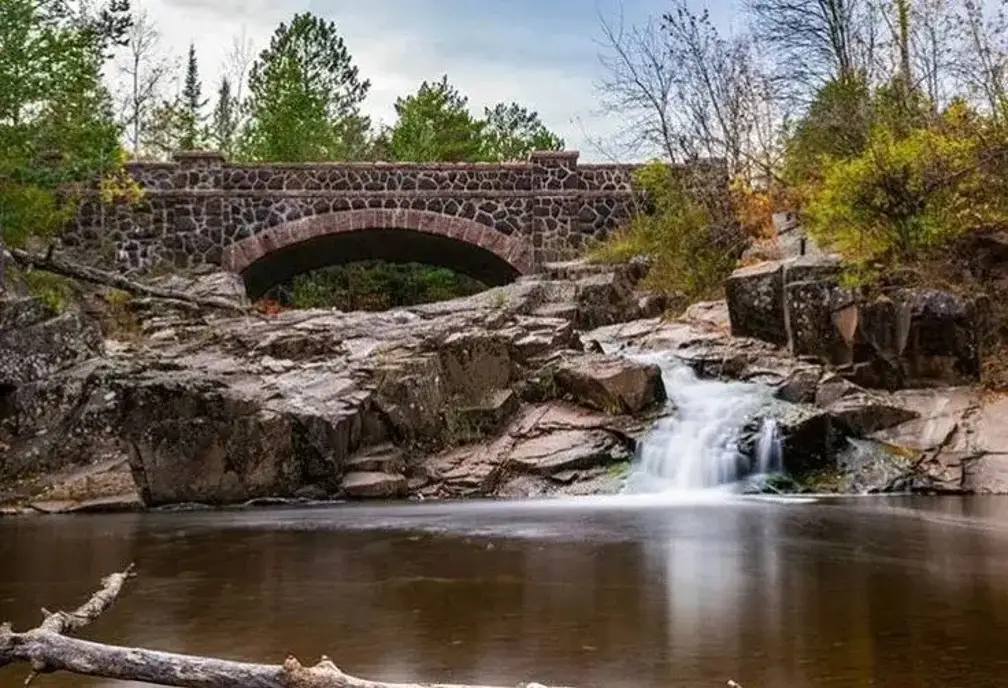
The drive earns its name by crossing seven magnificent stone arch bridges that seem to blend naturally into the surrounding forest. Instead of towering concrete structures, these bridges appear almost timeless, constructed from native basalt and bluestone that perfectly complements the rugged North Shore landscape.
Driving slowly through the shaded valley, it’s easy to understand why this route has become one of Minnesota’s hidden scenic treasures.
In autumn, brilliant shades of red, orange, and gold transform the drive into one of the finest fall color routes in the Midwest. During spring, Amity Creek rushes beneath the bridges as snowmelt fills the valley with the sound of moving water. Summer brings hikers, cyclists, birdwatchers, and families looking for a peaceful afternoon drive, while winter blankets the stone arches with fresh snow, creating an entirely different kind of beauty.
Every season offers a reason to return.
Samuel Snively’s Remarkable Vision
The story behind Duluth’s Seven Bridges Road begins with one man’s dream.
Samuel F. Snively was far more than a successful farmer. He believed Duluth possessed some of the most spectacular scenery in America and wanted others to experience it.
Owning hundreds of acres overlooking Lake Superior, Snively often explored the wooded ravines surrounding Amity Creek. During those walks, he imagined a winding parkway that would showcase the area’s natural beauty while preserving the landscape for future generations.
Rather than waiting for someone else to make it happen, he donated approximately sixty acres of his own land and worked with neighboring landowners to secure additional property needed for construction.
His goal wasn’t simply to build another road.
He wanted to create an experience.
Construction began in 1899, initially known as Spring Garden Boulevard. As work continued, local residents often referred to it simply as Snively Road, a name that still survives on portions of the original alignment today.
For visitors enjoying the drive more than a century later, it’s remarkable to realize much of what they see exists because one citizen refused to let his vision remain only a dream.
Building Seven Bridges Worth Remembering
The original roadway crossed Amity Creek using wooden bridges.
Unfortunately, Minnesota’s harsh winters quickly took their toll.
By the early 1900s many of the wooden crossings had deteriorated beyond repair, forcing Duluth’s Park Commission to rethink the entire project.
Instead of rebuilding with timber once again, landscape architects Morell & Nichols designed elegant stone arch bridges intended to complement the surrounding landscape rather than dominate it.
Local craftsmen carefully constructed each bridge using native stone gathered from the region.
Even today, more than a century later, the craftsmanship remains impressive.
Rather than feeling like modern infrastructure, the bridges appear as though they have always belonged in the valley.
Each crossing becomes another reason to slow down, roll down the windows, and simply enjoy the drive.
A Road That Nearly Disappeared
Like many historic landmarks, Seven Bridges Road has faced its share of challenges.
Weather, flooding, vehicle accidents, and decades of exposure gradually damaged portions of the historic stonework. By the 1990s, preservation had become a growing concern.
Recognizing both the historical and architectural significance of the bridges, the City of Duluth launched an ambitious restoration effort beginning with Bridge Number Two.
The restoration carefully preserved the original appearance while strengthening the structures for future generations.
Today, ongoing preservation continues to protect one of Minnesota’s most distinctive scenic drives without sacrificing the character that makes it so memorable.
More Than a Scenic Drive
One of the things I enjoy most about scenic roads like this is that they encourage you to slow down. Seven Bridges Road isn’t about getting somewhere quickly. It’s about appreciating everything along the way.
The drive follows Amity Creek as it tumbles over rocky ledges and small waterfalls beneath a canopy of towering trees. There are countless places where you’ll be tempted to pull over, roll down the windows, and simply listen. The rushing water often replaces the sounds of traffic, making it easy to forget you’re only minutes from downtown Duluth.
Photographers quickly discover why this drive has become a favorite. Every bridge frames the creek a little differently. Sunlight filters through the trees, reflections dance across the water, and each season transforms the landscape into something entirely new.
If you’re visiting in late September or early October, bring your camera and allow extra time. Fall colors along Seven Bridges Road are spectacular, with brilliant reds, oranges, and golds surrounding the historic stone bridges.

Don’t Miss Hawk Ridge
As beautiful as Seven Bridges Road is, the reward doesn’t end with the final bridge.
Continue climbing toward Hawk Ridge, where one of the finest overlooks in Minnesota awaits.
From this elevated vantage point, Lake Superior stretches across the horizon while Duluth spreads out below. On a clear day, the views seem almost endless.
Hawk Ridge is internationally recognized as one of North America’s premier bird migration locations. During autumn, thousands of hawks, eagles, falcons, and other raptors pass overhead as they begin their journey south.
Even if birdwatching isn’t your hobby, standing on the overlook during migration season is an unforgettable experience.
Things to Do Along Seven Bridges Road
Because the drive is relatively short, it’s easy to combine with several nearby attractions.
Some of our favorite stops include:
- Walk a portion of the Amity Creek Trail and enjoy the peaceful sounds of the creek.
- Explore Lester Park, one of Duluth’s oldest and most scenic city parks.
- Continue west along Skyline Parkway for additional overlooks of Lake Superior.
- Visit Enger Tower for another incredible panoramic view of Duluth.
- Spend time along the Lakewalk before enjoying dinner at Canal Park.
- Return in the evening to watch the sunset over Lake Superior.
If you’re traveling by motorcycle, this entire route becomes even more enjoyable. The gentle curves, shaded forest, cool lake breezes, and frequent overlooks make it an easy ride that encourages sightseeing instead of rushing from destination to destination.

Tips for Visiting Seven Bridges Road
A little planning can make your visit even better.
Drive slowly. This isn’t a road to hurry through. The bridges, creek, and surrounding scenery deserve your attention.
Visit early in the morning. You’ll enjoy lighter traffic, softer lighting for photography, and a quieter experience.
Allow at least one to two hours. Although the drive itself only takes a few minutes, you’ll likely stop numerous times along the way.
Watch for hikers and cyclists. Seven Bridges Road is popular with outdoor enthusiasts throughout the year.
Visit during autumn if possible. Peak fall color transforms the drive into one of Minnesota’s most memorable scenic experiences.
Frequently Asked Questions About Seven Bridges Road
Where is Seven Bridges Road?
The scenic Seven Bridges Road is located in Duluth, Minnesota, along the eastern section of Skyline Parkway near Lester Park and Hawk Ridge.
Is Seven Bridges Road worth visiting?
Absolutely. The combination of historic stone bridges, forest scenery, waterfalls, and Lake Superior overlooks makes it one of Duluth’s most scenic drives.
How long does it take to drive Seven Bridges Road?
The drive itself takes only 10 to 15 minutes without stopping. However, most visitors spend one to two hours exploring the bridges, trails, overlooks, and nearby parks.
Is Seven Bridges Road the same road mentioned in the Eagles song?
No. The song “Seven Bridges Road” was inspired by Woodley Road near Montgomery, Alabama. Duluth’s Seven Bridges Road is a completely different location known for its seven historic stone arch bridges.
When is the best time to visit?
Every season offers something special, but fall is especially popular because of the vibrant autumn foliage. Spring features rushing waterfalls, summer offers lush green forests, and winter creates a peaceful snow-covered landscape.

Final Thoughts
There are scenic drives that simply connect two places, and then there are roads that become destinations themselves.
Seven Bridges Road belongs in the second category.
Whether you’re drawn by the history behind one of America’s most recognizable songs or you’re searching for one of Minnesota’s hidden scenic gems, this short drive delivers far more than its four miles might suggest.
As we travel this beautiful country, we’re continually reminded that some of the best destinations aren’t the biggest attractions or the busiest tourist stops. They’re the quiet places where history, nature, and craftsmanship come together to create something memorable.
If your travels bring you to Duluth, don’t rush past Seven Bridges Road.
Roll down the windows, take your time crossing each historic bridge, breathe in the fresh Lake Superior air, and enjoy one of Minnesota’s most beautiful hidden treasures.
Sometimes the shortest roads leave the longest memories.
Happy travels,
The Cooper Shortcut Camping Journey Trio 😊 PlusOne!
The Perfect Union of RVs and Motorcycle
The Grand Canyons Beyond Arizona



Leave a Reply