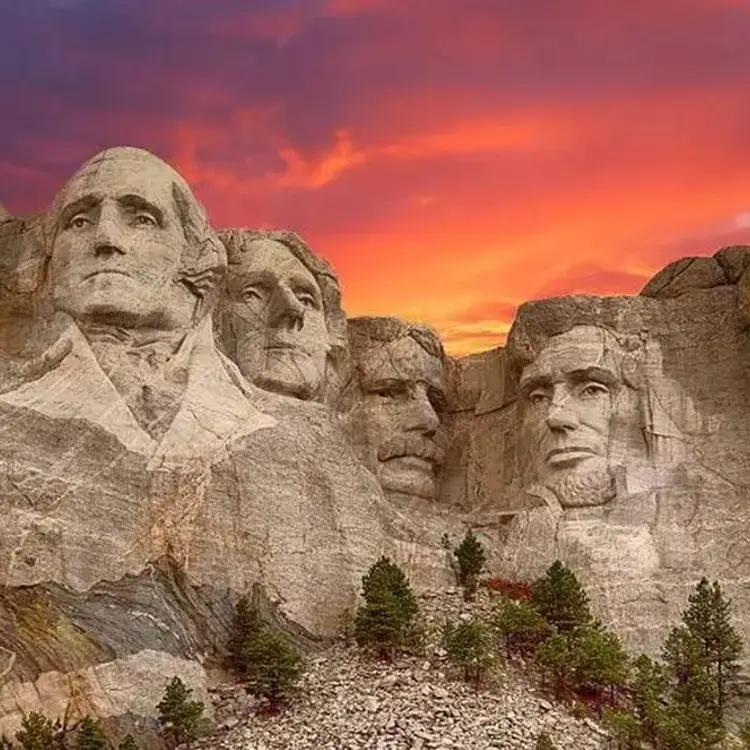
There are places you visit because they’re famous, and then there are places that leave an impression long after you’ve gone home. Mount Rushmore National Memorial falls into the second category.
I’ve lost count of how many times Vicky and I have stood beneath those towering granite faces. Oddly enough, I don’t really care how many visits it’s been. Every time we round that final curve and the monument comes into view, it feels like the first time all over again. Pictures simply can’t prepare you for the scale. Standing at the base and looking nearly 500 feet toward the summit gives you a whole new appreciation for what was accomplished here.
If you’re planning a trip to the Black Hills of South Dakota, heading to the Sturgis Motorcycle Rally, or simply looking for one of America’s greatest road trip destinations, Mount Rushmore deserves a spot at the top of your itinerary.
Why Visit Mount Rushmore?
Millions of visitors make the journey to western South Dakota each year, yet no photograph truly captures the feeling of standing beneath four 60-foot-tall presidential faces carved into solid granite.
What surprises many first-time visitors is how much there is to experience beyond simply viewing the monument. History, engineering, walking trails, museums, ranger programs, and spectacular evening lighting ceremonies make this far more than a quick roadside stop.
If you’re spending several days exploring the Black Hills—as we always recommend—you’ll discover that Mount Rushmore pairs perfectly with attractions like Custer State Park, Needles Highway, Iron Mountain Road, Jewel Cave, Wind Cave, Crazy Horse Memorial, and Badlands National Park.
The Monument Almost Looked Very Different
The story begins in 1923.
South Dakota historian Doane Robinson wanted to bring more visitors to the Black Hills. His original vision wasn’t four presidents at all. He imagined enormous carvings of famous western figures, including explorers Lewis and Clark, Buffalo Bill Cody, and Lakota leader Red Cloud.
When sculptor Gutzon Borglum joined the project, he believed the monument needed national significance rather than regional appeal. His idea was bold: carve four American presidents whose leadership shaped the nation.
That decision transformed what could have been a regional attraction into one of America’s most recognizable landmarks.
Why These Four Presidents?
Each president was selected to represent a defining chapter in American history.
- George Washington — The birth of the United States and its first president.
- Thomas Jefferson — America’s expansion through the Louisiana Purchase.
- Theodore Roosevelt — Conservation, industrial growth, and America’s emergence as a world power.
- Abraham Lincoln — Preserving the Union during the Civil War and ending slavery.
Together they symbolize the nation’s founding, growth, development, and preservation.
The Mountain Wasn’t Always Called Mount Rushmore
Long before the monument existed, the Lakota people knew the mountain as “The Six Grandfathers.”
Over time it picked up several unofficial names, including:
- Cougar Mountain
- Sugarloaf Mountain
- Slaughterhouse Mountain
- Keystone Cliffs
The name “Mount Rushmore” came from New York attorney Charles E. Rushmore, who asked locals about the mountain while visiting during a mining expedition in the 1880s. The nickname stuck and eventually became official.
Understanding this history provides important context for the site. Today, many visitors also take time to learn about the cultural significance the Black Hills hold for the Lakota people and the continuing conversations surrounding the monument.
How Was Mount Rushmore Carved?
Construction officially began in 1927.
Over the next 14 years, more than 400 workers transformed the mountain into one of the world’s greatest sculptures.
One statistic still amazes me.
About 90% of the carving was accomplished with carefully placed dynamite.
Workers blasted away more than 450,000 tons of granite before using jackhammers, drills, and hand tools to create the incredible detail we see today.
Even more remarkable?
Despite the dangerous working conditions and workers hanging hundreds of feet above the ground, no one died during construction.
Fascinating Facts You May Not Know
Even if you’ve visited before, these lesser-known facts make the monument even more interesting.
The Faces Are Massive
Each presidential face measures approximately 60 feet tall, roughly the height of a six-story building.
Thomas Jefferson Changed Sides
Jefferson was originally started on Washington’s right side.
Unfortunately, hidden cracks in the granite forced workers to blast away months of work and begin again on Washington’s left.
The Granite Will Last for Ages
The mountain erodes only about one inch every 10,000 years, making Mount Rushmore one of the most durable monuments ever created.
A Baseball Team?
The workers even organized an amateur baseball team during construction. Life on the mountain wasn’t all blasting rock and hanging from ropes.
The Hidden Hall of Records
One of Borglum’s biggest dreams was never fully completed.
He envisioned a grand chamber carved deep behind the presidents where future generations could learn America’s history.
Congress eventually stopped funding the project before it was finished.
Nearly sixty years later, in 1998, the idea was partially fulfilled when porcelain tablets containing the Declaration of Independence, Constitution, Bill of Rights, biographies, and the monument’s history were placed inside the unfinished chamber and sealed within a granite vault.
Most visitors never realize this hidden room exists.
Best Things to Do at Mount Rushmore
Allow at least two to three hours to enjoy the memorial.
Walk the Presidential Trail
This easy walking trail provides some of the closest and most dramatic views of the sculpture. Different angles reveal details that aren’t visible from the main viewing terrace.
Visit the Lincoln Borglum Museum
Interactive exhibits, historic photographs, and films explain how the monument was designed and constructed.
Tour the Sculptor’s Studio
This preserved workshop displays original tools, scale models, and fascinating insights into Borglum’s creative process.
Enjoy Grand View Terrace
This is where you’ll capture those classic postcard-worthy photographs.
Stay for the Evening Lighting Ceremony
If your schedule allows, don’t leave before sunset.
As darkness settles over the Black Hills, the monument is illuminated against the night sky. It’s one of the most memorable experiences in South Dakota.
Tips for Your First Visit
Having visited several times, here are a few suggestions that have made our trips even better.
- Arrive early in the morning or later in the afternoon to avoid the busiest crowds.
- Wear comfortable walking shoes if you plan to explore the Presidential Trail.
- Bring a light jacket, even during summer. Temperatures in the Black Hills often cool quickly after sunset.
- Spend more than just an hour. The museum and walking trails add tremendous value to your visit.
- Combine Mount Rushmore with nearby attractions like Iron Mountain Road, Needles Highway, Custer State Park, Crazy Horse Memorial, and Badlands National Park for an unforgettable Black Hills adventure.
Our Journey
Every visit reminds me why this place remains one of America’s most treasured landmarks.
Whether we’re pulling into the Black Hills with our fifth-wheel, riding the Harley through the twisting roads around Keystone, or making another stop on our way to the Sturgis Motorcycle Rally, Mount Rushmore is always on our itinerary.

I’ve watched first-time visitors fall silent as they look up. I’ve seen children point in amazement while grandparents quietly take in the view. Somehow, regardless of age or background, everyone seems to pause for a moment.
That may be what impresses me most.
It’s more than four faces carved into granite. It’s a reminder of vision, determination, craftsmanship, and the enduring story of a nation. Every visit leaves me with the same thought:
“I’m already looking forward to the next one.”
Final Thoughts
Whether you’re planning your first trip or your tenth, Mount Rushmore National Memorial continues to inspire visitors from around the world. Beyond its famous faces lies a remarkable story of engineering, artistry, perseverance, and American history.
If your travels bring you to western South Dakota, don’t rush through your visit. Walk the trails. Explore the museum. Stay for the evening lighting ceremony. Then take a moment to simply stand beneath the monument and look up.
Like me, you may discover that no matter how many times you’ve been there, it never loses its sense of wonder.
Happy travels,
The Cooper Shortcut Camping Journey Trio 😊 PlusOne!
YOU MAY ALSO LIKE:
RV Towing Through Traffic Circles and Roundabouts
Navigating the Campground with Golf Carts



Leave a Reply