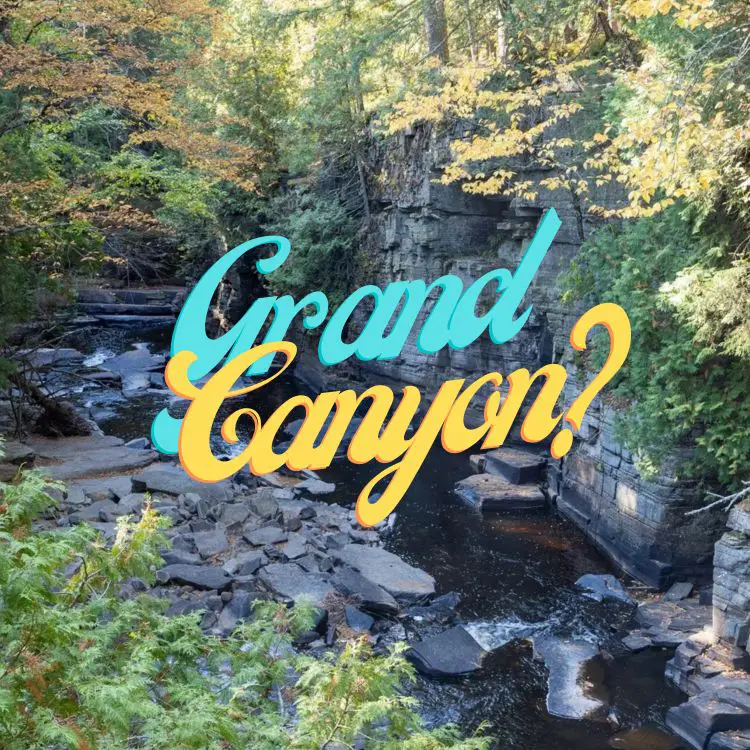
For years, Vicky and I dreamed about standing together on the rim of the Grand Canyon National Park in Arizona. Like many travelers, I assumed there was only one “Grand Canyon.” After all, when you type Grand Canyon into a search engine, Arizona naturally dominates the results.
Then something unexpected happened while planning one of our extended RV adventures.
As I continued digging through maps and travel guides, I discovered that communities all across America proudly claim their own version of a “Grand Canyon.” Some are towering river gorges, others are collapsed cave systems, and one is even hiding in Michigan’s Upper Peninsula.
That discovery completely changed our travel plans.
Instead of making a single stop at one famous destination, we began building an RV route that would take us to several of America’s lesser-known “Grand Canyons.” While none replace the grandeur of Arizona’s masterpiece, each offers something memorable—and most are far less crowded.
If you’re looking for unique road trip destinations, here are some spectacular canyons worth adding to your bucket list.
The Grand Canyon That Started It All

Grand Canyon National Park — Arizona
No list begins anywhere else.
Stretching 277 river miles along the mighty Colorado River, Grand Canyon National Park is one of the world’s greatest natural wonders. Millions of years of erosion exposed nearly two billion years of Earth’s geological history, creating a landscape so immense that photographs never quite prepare you for the first glimpse.
Whether you’re standing at Mather Point, watching sunrise from Yavapai Point, hiking below the rim on the Bright Angel Trail, or simply enjoying the endless overlooks along Desert View Drive, the Grand Canyon has a way of making you feel wonderfully small.
The South Rim remains open year-round and offers the most visitor services, while the North Rim, sitting roughly 1,000 feet higher in elevation, provides a quieter experience during its seasonal opening.
For us, this will be the first stop before discovering the country’s other remarkable canyons.

Canyon Falls — Michigan’s “Grand Canyon of the UP”
Many people are surprised to learn Michigan has its own “Grand Canyon.”
Located about seven miles south of L’Anse along US-41, Canyon Falls follows the beautiful Sturgeon River through a scenic forest trail before reaching one of the Upper Peninsula’s most impressive waterfalls.
The river squeezes through polished black rock before plunging nearly 30 feet into a narrow box canyon. The combination of rushing water, steep rock walls, and towering pines creates scenery that feels far removed from what many expect to find in Michigan.
It’s an easy stop for RV travelers exploring the Upper Peninsula and one we’ll gladly add to our future adventures.

Little River Canyon — Alabama’s Grand Canyon
Few people realize one of the Southeast’s deepest river canyons sits in northeastern Alabama.
Carved over countless centuries, Little River Canyon National Preserve follows the Little River as it flows across Lookout Mountain before dropping dramatically toward the Coosa River Valley.
Waterfalls, scenic overlooks, hiking trails, and one of America’s highest mountaintop rivers make this a destination that deserves far more attention than it receives.
History adds another layer, with stories of minor Civil War activity once taking place along portions of the canyon rim.

Grand Gulf State Park — Missouri’s Little Grand Canyon
Despite occasional confusion online, Grand Gulf State Park is located in Missouri, not Arkansas.
Often called the Little Grand Canyon of the Ozarks, this incredible collapsed cave system stretches nearly three-quarters of a mile between towering limestone walls reaching approximately 130 feet high.
Visitors can walk along rim trails overlooking the massive gulf or descend carefully beneath a natural bridge spanning nearly 250 feet across the opening.
It’s one of the Ozarks’ most fascinating geological formations.

Little Grand Canyon — Illinois
Southern Illinois hides one of the Midwest’s best hiking destinations.
The Little Grand Canyon Trail winds through hardwood forests before descending into a rocky canyon surrounded by sandstone bluffs rising nearly 300 feet above the valley floor.
Spring wildflowers transform the canyon into a colorful paradise, while autumn blankets the surrounding Shawnee National Forest in brilliant shades of red, orange, and gold.
If you enjoy hiking, this trail belongs on your list.

Linville Gorge — North Carolina
Known as the Grand Canyon of North Carolina, Linville Gorge Wilderness is rugged, wild, and unforgettable.
The Linville River slices through the Blue Ridge Mountains, creating a dramatic gorge nearly 2,000 feet deep.
Unlike more developed national parks, Linville Gorge offers a more adventurous experience with challenging hikes, spectacular overlooks, waterfalls, rock climbing opportunities, and remote backcountry camping.
For outdoor enthusiasts, this wilderness delivers unforgettable scenery.

Tennessee River Gorge — Tennessee
Just minutes from downtown Chattanooga lies one of Tennessee’s most beautiful landscapes.
The Tennessee River Gorge, often called the Grand Canyon of Tennessee, stretches roughly 27 miles as the Tennessee River winds through steep mountain ridges.
Scenic overlooks, hiking trails, river cruises, paddling adventures, and wildlife viewing make this one of the state’s hidden treasures.
Its close proximity to Chattanooga makes it an easy addition to almost any road trip.

Breaks Interstate Park — Virginia & Kentucky
Sometimes called the Grand Canyon of the South, Breaks Interstate Park straddles the Virginia-Kentucky border.
The Russell Fork River carved this spectacular gorge through the Appalachian Mountains, creating one of the deepest canyons east of the Mississippi River.
Visitors enjoy:
- Scenic overlooks
- Hiking trails
- Whitewater rafting
- Fishing
- Boating
- Wildlife viewing
It’s an outstanding destination for RV travelers who enjoy combining outdoor recreation with incredible mountain scenery.

New River Gorge National Park — West Virginia
One of America’s newest national parks quickly became one of our most anticipated destinations.
Although redesignated as a national park in 2021, New River Gorge National Park and Preserve has been attracting outdoor adventurers for decades.
The New River is believed to be among the oldest rivers on Earth and continues carving one of the deepest river gorges in the Appalachian Mountains.
Today visitors come for:
- Whitewater rafting
- Hiking
- Mountain biking
- Rock climbing
- Scenic drives
- The iconic New River Gorge Bridge
If you’re planning an Appalachian RV trip, this park deserves several days on your itinerary.
Frequently Asked Questions
Is the Grand Canyon worth visiting?
Absolutely. Whether it’s your first visit or your fifth, the Grand Canyon offers views that simply can’t be appreciated through photographs.
Which Grand Canyon Rim is best?
Most first-time visitors choose the South Rim because it’s open year-round and offers the most services. Travelers looking for fewer crowds often prefer the seasonal North Rim.
How many days should you spend at the Grand Canyon?
Two to three days allows enough time to enjoy scenic overlooks, hike below the rim, watch sunrise and sunset, and explore the visitor centers without feeling rushed.
What is the best time to visit?
Spring and fall typically offer the most comfortable temperatures and fewer crowds. Summer remains the busiest season, while winter brings quieter viewpoints and occasional snowfall along the South Rim.
Are there other “Grand Canyons” in the United States?
Yes. Several states feature spectacular gorges and canyons commonly nicknamed their own “Grand Canyon,” including Michigan, Alabama, North Carolina, Tennessee, Virginia, Missouri, Illinois, and West Virginia.
Final Thoughts
Sometimes the best travel discoveries happen by accident.
What started as simple research for one famous destination turned into an entirely new bucket-list adventure. While Arizona’s Grand Canyon remains one of America’s greatest natural wonders, discovering the country’s many “other Grand Canyons” reminds us that breathtaking scenery isn’t limited to one place.
As RV travelers, we love finding destinations that encourage us to take the scenic route instead of the fastest one. Every canyon tells a different geological story, every overlook offers a different perspective, and every stop creates another memory we’ll carry down the road.
Our plan is simple: begin at the Grand Canyon in Arizona, then slowly work our way across America discovering these remarkable hidden gems one adventure at a time.
If you’re planning your own RV journey, maybe it’s time to look beyond the obvious. You never know what incredible destination is waiting just around the next bend.
Happy travels,
The Cooper Shortcut Camping Journey Trio 😊 PlusOne!
YOU MAY ALSO LIKE:
Fascinating Facts About Mount Rushmore
RV Towing Through Traffic Circles and Roundabouts



Leave a Reply