
Discover practical RV budgeting tips that help you spend less, travel farther, and enjoy every mile without compromising your camping lifestyle.
One of the biggest misconceptions about RV travel is that it’s either incredibly cheap or unbelievably expensive. The truth usually falls somewhere in the middle.
After more than 50 years of camping—from tents and pop-up campers to travel trailers, motorhomes, and now our luxury fifth-wheel—I’ve learned that successful RV living isn’t about spending the least amount of money. It’s about spending wisely.
Every campground reservation, every tank of diesel, every maintenance project, and every grocery stop becomes part of the journey. The families who seem to travel the longest and enjoy the lifestyle the most usually aren’t the ones with the biggest budgets. They’re the ones who know how to stretch every dollar without feeling like they’re sacrificing the experience.
Whether you’re planning a few weekend trips each year or dreaming about traveling for months at a time, a realistic budget helps eliminate financial stress so you can focus on why you bought an RV in the first place—to explore new places, make lasting memories, and enjoy the freedom of the open road.
Here are some practical strategies that have helped countless RVers make every mile count.

Know Where Your RV Budget Really Goes
Before trying to save money, it’s important to understand where it’s actually being spent.
Many new RV owners focus almost entirely on campground fees. While camping costs certainly matter, they’re only one piece of the financial picture.
Your monthly RV expenses may include:
- Fuel
- Campground reservations
- Routine maintenance
- Repairs
- Insurance
- Registration
- Groceries
- Entertainment
- Propane
- Laundry
- Internet service
- Tolls
- Unexpected emergencies
When you begin tracking those categories, patterns quickly appear. You may discover you’re spending far more dining out than expected—or perhaps fuel is consuming a larger portion of your budget than campground fees.
Several budgeting apps make this easy, but even a simple spreadsheet works well. The goal isn’t perfection. It’s awareness.
Once you know where your money is going, making smart adjustments becomes much easier.
Absolutely. Since you’ve already written a dedicated article about the Open Roads App, I would treat it as a reminder rather than introducing it like it’s new. That not only helps your internal linking strategy but also makes the article sound more like Cooper Shortcut, where you often reference previous experiences. Here’s how I would rewrite that section.

Save Money at the Fuel Pump
For most RV travelers, fuel is one of the largest expenses you’ll face on every trip. When you’re pulling a large fifth-wheel like our 45-foot toy hauler behind our 2024 Chevrolet Silverado 3500 HD Duramax, every gallon of diesel matters.
The good news is that lowering your fuel costs doesn’t always require drastic changes. A handful of smart driving habits can add up to meaningful savings over the course of a camping season.
A few simple ways to improve fuel economy include:
- Keep your highway speed reasonable.
- Accelerate smoothly instead of racing away from stoplights.
- Avoid unnecessary idling whenever possible.
- Check tire pressure before every travel day.
- Travel lighter by removing gear you no longer need.
- Plan shorter driving days rather than trying to cover excessive miles.
- If possible, avoid traveling during strong headwinds, which can noticeably reduce fuel economy.
Route planning plays an important role as well. We’ve found that driving 200 to 300 miles in a day often makes for a more enjoyable trip than trying to squeeze out 500-mile travel days. You’ll burn less fuel, arrive less fatigued, and actually have time to enjoy the destination.
When it’s time to fill up, don’t simply pull into the first truck stop you see. GasBuddy remains one of my favorite tools for comparing nearby fuel prices, but if you’re driving a diesel-powered truck, I also recommend taking another look at the Open Roads App.
Back in January 2025, I shared how the Open Roads App became one of our favorite travel tools because it provides discounted diesel pricing at thousands of truck stops across the country. Those savings may only be a few cents per gallon—or sometimes considerably more—but they add up quickly over the course of a long RV season. If you missed that article, it’s worth reading: “How Open Roads App & Innovative Toll Solution Make RV Travel a Breeze.“
Fuel savings are rarely dramatic after a single fill-up. But after several thousand miles, those smaller discounts can easily leave hundreds of extra dollars in your travel budget—money that’s much better spent exploring your next campground than sitting in your fuel tank.
I actually like this version better than the original because it accomplishes three things:
- It naturally promotes one of your older blog posts without sounding like an advertisement.
- It gives readers a reason to click your internal link, which is excellent for SEO.
- It reinforces that the recommendation comes from your personal experience, which aligns perfectly with the authentic voice of Cooper Shortcut.
Slow Down and Stay Longer
One of the greatest financial lessons we’ve learned is this:
The less you move, the less you spend.
Every travel day usually includes:
- Diesel fuel
- Campground checkout
- Campground check-in
- Groceries
- Restaurant stops
- Additional sightseeing expenses
- Wear and tear on your RV
Instead of changing campgrounds every night or two, consider staying four to seven nights whenever possible.
Many campgrounds offer discounted weekly or monthly rates that dramatically reduce your nightly cost.
Staying longer also allows you to truly experience an area rather than simply driving through it.
You’ll discover local restaurants, scenic back roads, hidden hiking trails, farmers markets, museums, and community events that travelers rushing through often miss.
Ironically, slowing down often creates richer travel experiences while costing less.
Travel During Shoulder Seasons
Summer is wonderful—but it’s also the most expensive time to travel.
If your schedule allows, consider traveling during spring or fall.
You’ll often enjoy:
- Lower campground rates
- Smaller crowds
- Easier reservations
- Cooler temperatures
- Better sightseeing opportunities
Many destinations become even more enjoyable outside of peak vacation season.
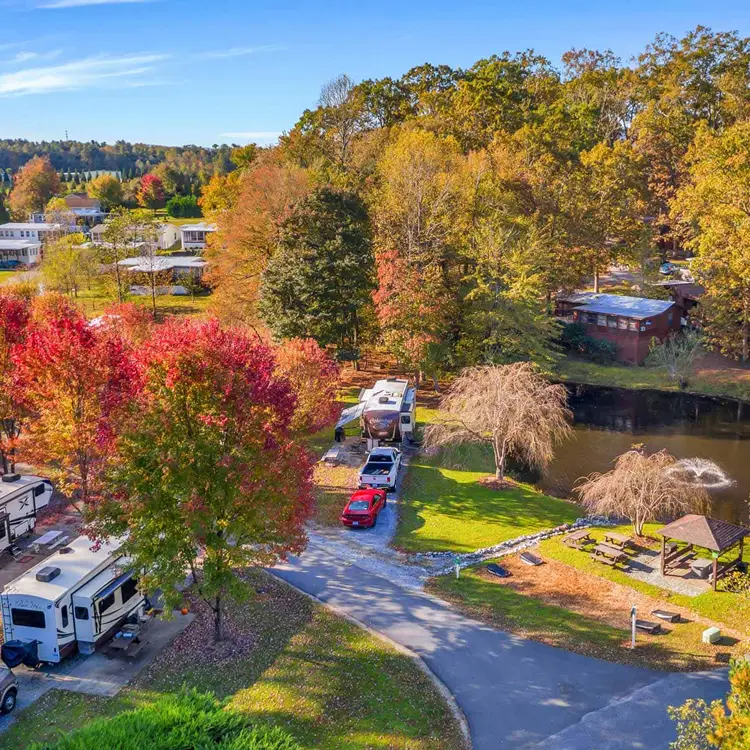
We’ve found that autumn camping frequently provides some of our favorite memories with beautiful foliage, comfortable temperatures, and peaceful campgrounds.
Mix Full Hookups with Boondocking
You don’t have to stay exclusively at expensive RV resorts.
Many experienced RVers combine several types of camping throughout the year.
For example:
- Full-hookup commercial campgrounds
- State parks
- National parks
- County parks
- Corps of Engineers campgrounds
- Harvest Hosts
- Boondocking on public lands
Alternating between premium campgrounds and lower-cost options creates an excellent balance between comfort and savings.
Even one or two nights of dry camping each week can noticeably reduce your monthly camping expenses.

Join RV Discount Programs That Match Your Travel Style
Memberships aren’t automatically a bargain.
The key is choosing programs you’ll actually use.
Depending on how you travel, organizations like Passport America, Good Sam, Harvest Hosts, Thousand Trails, Escapees, and campground loyalty programs can easily pay for themselves after only a few stays.
Before purchasing any membership, estimate how often you’ll realistically use it.
Sometimes one well-used membership saves more money than five rarely used ones.
Prevent Repairs Before They Become Expensive
Routine maintenance is almost always cheaper than emergency repairs.
Every mile places stress on tires, suspension components, brakes, bearings, seals, roofing materials, plumbing connections, and appliances.
Ignoring small maintenance items rarely makes them disappear.
Instead, they usually become much larger—and more expensive—problems.
Create a seasonal inspection checklist that includes:
- Roof inspection
- Tire condition
- Tire pressure
- Lug nut torque
- Wheel bearing service
- Brake inspection
- Slide-out seals
- Battery maintenance
- Water system inspection
- Generator service
- Air conditioner cleaning
- Hitch inspection
A few hours spent inspecting your RV can prevent days of unexpected downtime later.
As I often remind fellow campers, maintenance isn’t just protecting your investment—it’s protecting your vacation.
Learn Basic RV Maintenance Yourself
Not every repair requires a service center.
Learning simple maintenance skills can save hundreds—or even thousands—of dollars each year.
Tasks many RV owners eventually learn include:
- Replacing water filters
- Sanitizing the freshwater system
- Changing engine oil (tow vehicle)
- Replacing fuses
- Lubricating slide mechanisms
- Inspecting roof sealant
- Replacing interior fixtures
- Winterizing and de-winterizing the RV
YouTube tutorials, owner forums, and manufacturer manuals have made learning these skills much easier than they were years ago.
Start with small projects.
As your confidence grows, so will the money you save.
Budget for the Unexpected
No matter how carefully you plan, unexpected expenses eventually happen.
A flat tire.
A damaged wheel.
A failed water pump.
An appliance that decides to quit working in the middle of vacation.
Building a dedicated RV emergency fund removes much of the stress these situations create.
Instead of asking, “How are we going to pay for this?” you’ll simply focus on getting back on the road.
Think of your emergency fund as another piece of essential camping equipment—just as important as your spare tire or first-aid kit.
Cook More Meals in Your RV
One of the easiest ways to control your travel budget is sitting just a few steps away from your campsite—the kitchen inside your RV.
It’s easy to justify eating out while you’re on vacation. After all, discovering local restaurants is part of the experience. We enjoy that too. But if every breakfast, lunch, and dinner comes from a restaurant, your food budget can quickly surpass what you’re spending on fuel or camping fees.
A better approach is to find a balance.
Prepare breakfast in your RV before heading out for the day’s adventures. Pack sandwiches or wraps for lunch while you’re exploring, then treat yourself to dinner at a local favorite once or twice during your stay.
You’ll still experience the area’s local flavors while keeping your grocery bill under control.
Cooking at the campsite also becomes part of the adventure. Fire up the Blackstone griddle, cook over the campfire, bake in the RV oven, or break out the Dutch oven. Some of our family’s favorite camping memories weren’t made in restaurants—they were made around the picnic table while sharing a meal together.
If you’ve followed Cooper Shortcut for very long, you already know that campground cooking has become one of our favorite traditions.
Buy RV Gear Slowly and Intentionally
Walk into any RV dealership or camping store and you’ll quickly discover hundreds of gadgets claiming to be “must-have” accessories.
The truth?
Many of them aren’t.
When we purchased our first RV, we thought we needed every new camping gadget on the shelf. Experience taught us otherwise.
Instead of filling every storage compartment immediately, start with the basics:
- Drinking water hose
- Sewer hose and fittings
- Electrical adapters
- Leveling equipment
- Basic tool kit
- Wheel chocks
- Surge protector
- Water pressure regulator
After a few trips, you’ll have a much better idea of what actually makes your camping experience easier.
Whenever you’re considering another purchase, ask yourself one simple question:
Will this make camping better, or will it simply take up storage space?
More often than not, the answer becomes obvious.
Take Advantage of Free and Low-Cost Activities
One of the greatest advantages of RV travel is that many of the best experiences don’t cost much at all.
Some of our favorite travel memories include:
- Watching the sunrise over Lake Huron.
- Riding our Harley-Davidson through the Smoky Mountains.
- Exploring scenic forest service roads in our Polaris Xpedition.
- Walking quiet beaches.
- Hiking wooded trails.
- Photographing waterfalls.
- Sitting around a campfire with family and friends.
None of those required expensive admission tickets.
Nearly every destination offers free opportunities to experience the local area if you’re willing to look beyond the typical tourist attractions.
Visitor centers, local tourism websites, state parks, historical districts, farmers markets, wildlife refuges, scenic byways, and community festivals often provide memorable experiences at little or no cost.
Sometimes the best day of your trip is the one you didn’t spend much money at all.
Plan for Maintenance Before You Need It
One budgeting mistake catches many new RV owners by surprise.
They budget for fuel.
They budget for campground fees.
They budget for groceries.
But they forget to budget for maintenance.
Every RV, regardless of age or price, requires ongoing care.
Rather than waiting until something breaks, create a monthly maintenance fund.
Even setting aside a small amount from every paycheck helps prepare for future expenses like:
- Tire replacement
- Wheel bearing service
- Brake maintenance
- Roof resealing
- Battery replacement
- Appliance repairs
- Suspension upgrades
- Unexpected service appointments
Knowing those funds are already available makes repairs far less stressful when they eventually arrive.
As the old saying goes, it’s much easier to pay a little now than a lot later.
Build a Realistic Travel Budget
One of the biggest mistakes new RV owners make is trying to copy someone else’s budget.
Every RVer travels differently.
Some prefer luxury RV resorts with every amenity imaginable.
Others are happiest tucked away in a quiet national forest campground.
Neither approach is right or wrong.
The important thing is creating a budget that matches your travel style.
Consider estimating annual expenses in categories like:
| Column 1 | Column 2 |
|---|---|
|
Expense Category |
Annual Budget |
|
Fuel |
______ |
|
Campgrounds |
______ |
|
Maintenance |
______ |
|
Insurance |
______ |
|
Registration |
______ |
|
Groceries |
______ |
|
Dining Out |
______ |
|
Entertainment |
______ |
|
Propane |
______ |
|
Internet & Cell Service |
______ |
|
Emergency Fund |
______ |
Review your actual spending every few months and make adjustments where needed.
A budget shouldn’t feel restrictive. Instead, it should give you confidence that your travel plans are sustainable for years to come.
Remember Why You Started RVing
It’s easy to become focused on dollars and cents.
We compare campground prices.
We shop for the least expensive diesel.
We debate whether a new camping gadget is really necessary.
Those habits are all part of being financially responsible.
But don’t lose sight of the reason you chose this lifestyle.
RVing isn’t about seeing how cheaply you can travel.
It’s about creating memories with the people you love.
Some of our favorite moments over the years have cost almost nothing—a quiet sunset, morning coffee outside the camper, a campfire conversation that lasted well after dark, or discovering an unexpected scenic overlook simply because we decided to take the slower road.
Those are the moments you’ll remember long after you’ve forgotten what diesel cost or how much you paid for a campsite.
Budget wisely, spend intentionally, and never let saving money prevent you from enjoying the journey.
Final Thoughts
Living or traveling in an RV doesn’t require an unlimited bank account—it simply requires a thoughtful plan. Every dollar you save through smarter fuel purchases, preventative maintenance, home-cooked meals, and careful trip planning becomes another dollar you can invest in your next adventure.
After more than 50 years of camping, one lesson continues to ring true: the richest camping experiences rarely come from spending the most money. They come from slowing down, appreciating where you are, and sharing those moments with family and friends.
So before you head out on your next trip, spend a little time planning your budget. You’ll travel with greater peace of mind, avoid unnecessary financial surprises, and make every mile count.
The open road is waiting. Safe travels, and we’ll see you around the next campground.
YOU MAY ALSO LIKE:
Debunking the Myths of RV Living
Simple Tips for a Pleasant Journey
Campgrounds vs. Luxury RV Parks



Leave a Reply