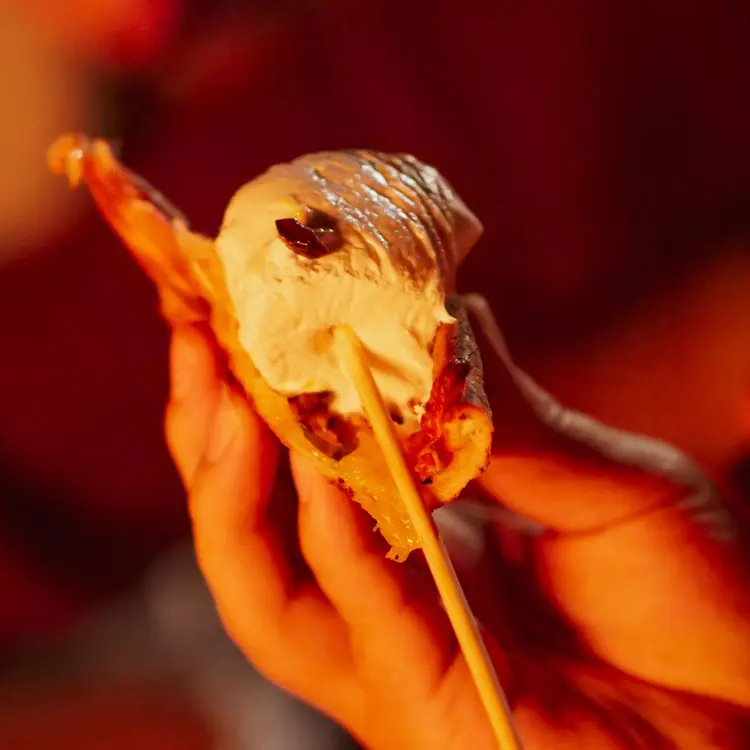
There probably wasn’t anything particularly remarkable about a package of graham crackers sitting in Grandma Cooper’s kitchen.
That was the thing about Grandma.
Something didn’t have to be remarkable for there to be a story behind it.
You could be eating something you had eaten a hundred times before and suddenly learn that somebody had invented it, somebody else had changed it, and somewhere along the way we had probably forgotten why it existed in the first place.
Graham crackers were one of those things.
To us kids, a graham cracker was just a graham cracker.

Grandma knew better.
And if she started telling you about a fellow named Sylvester Graham, you might as well settle in.
Because Grandma Cooper had a flair for sharing history in a way that made you listen.
Grandma Knew “Too Much” Wasn’t New
Today we hear people describe our world as an era defined by indulgence and excess.
Too much food.
Too much sugar.
Too much sitting.
Too much spending.
Too much of just about everything.
Grandma would probably have listened for a while before reminding us that we weren’t the first generation to discover the problem of too much.
That is where Sylvester Graham enters our story.
He was born in Suffield, Connecticut, in 1794. His father, a clergyman, died when Sylvester was young, and Graham grew up with poor health and an unsettled childhood. He eventually entered the ministry and became a Presbyterian minister.
But preaching from a pulpit would become only part of what made him famous.
Graham looked around at America during the early 1800s and decided people weren’t living very well.
Grandma probably would have appreciated that part.
She might not have agreed with everything he did about it, but she certainly understood the idea that people could make life unnecessarily complicated.
Graham saw Americans eating refined white flour, meat and heavily seasoned foods. Alcohol was common. Coffee and other stimulants bothered him. He believed all that indulgence affected not only the body but a person’s character.
His answer was simplicity.
Whole grains.
Vegetables and fruit.
Fresh air.
Cleanliness.
Plenty of sleep.
Temperance.
Moderation.
There were quite a few more rules in Graham’s philosophy, some of which Grandma probably would have raised an eyebrow at, but the heart of his message was something she would have understood:
Just because you can have more doesn’t mean more is better.
That sounds much more like Grandma Cooper.
Then There Was the Bread
Of all the things Sylvester Graham worried about, bread became one of the biggest.
White bread was fashionable.
Graham didn’t like it.
He believed the process of refining flour removed important parts of the wheat. He preferred coarse, unsifted whole-wheat flour and encouraged families to make bread from it.
There was another problem. Commercial bread of the period could be adulterated, and Graham accused some bakers of adding substances such as chalk or plaster to make bread whiter or heavier. He wanted people eating bread made from unbolted whole-wheat flour instead.
That flour eventually became known as Graham flour.
The bread became Graham bread.
And before long, there were Graham biscuits and crackers.

Grandma liked the simplicity of that original idea.
Nothing fancy.
Don’t take a perfectly good grain, remove half of what nature put there, dress it up and then convince yourself you’ve improved it.
I can almost hear her.
“What was wrong with it the way God made it?”
That would have been Grandma.
Sylvester Graham probably would have nodded.
Grandma Might Have Liked Graham—For a While
This is where I think the conversation between Grandma Cooper and Sylvester Graham might have become interesting.
Graham wasn’t simply suggesting people eat a little better.
He was serious.
Very serious.
His followers became known as Grahamites, and some lived in boardinghouses where Graham’s principles shaped everyday life. Their diets were plain. Alcohol was out. Meat was discouraged. Fresh air, bathing and disciplined habits were part of the program.
Graham’s ideas were tied to the religious and reform movements sweeping America at the time, when temperance and personal self-control were often viewed as ways of improving society itself.
Grandma understood discipline.
She understood doing without.
She understood that what we wanted and what we needed were two very different things.
But Grandma also understood something Sylvester Graham occasionally seemed to forget.
Life was supposed to have some joy in it.
I suspect Graham could have made it through a meal at Grandma’s table.
I’m not nearly as certain Grandma would have lasted very long at his.
Grandma, Open the Windows
Here is where things become even more familiar.
Graham believed people needed fresh air.
Open the windows.
Get outside.
Walk.
Keep your surroundings clean.
Bathe regularly.
Sleep properly.
Don’t spend your life shut inside an overheated room.
Does any of that sound familiar?
Anyone who grew up around an older generation probably remembers hearing at least some version of it.
Grandma didn’t need a health book to tell her fresh air was good for you.
She came from a generation when opening a window was considered a perfectly reasonable solution to quite a few things.
Feeling sluggish?
Go outside.
House stuffy?
Open a window.
Can’t sleep?
Maybe you need some fresh air.
Children driving you crazy?
Send them outside.
That last one may not have been part of Grahamism, but it was certainly effective.
And Graham didn’t stop with fresh air. His approach to health emphasized simple food, clean living, regular habits and restraint.
Some of his medical reasoning was wrong. Some of his moral conclusions went far beyond anything we would recognize today as nutrition advice.
But mixed among all of it were ideas that don’t sound particularly strange nearly two centuries later.
Eat more whole grains.
Eat fruits and vegetables.
Get outside.
Sleep.
Don’t overindulge.
Grandma could have saved him a very long lecture.
And Then We Got Hold of the Graham Cracker
This may be my favorite part of the story.
Sylvester Graham didn’t create the sweet graham cracker we pull from a box today.

The early crackers associated with his ideas were much plainer, made from the coarse whole-wheat flour he promoted. Over time, commercial bakers changed them.
They became sweeter.
More appealing.
More convenient.
Eventually, the National Biscuit Company—Nabisco—was producing graham crackers commercially.
In other words, America took the name of a man who spent his life preaching against indulgence and put it on a sweet snack.
Grandma would have appreciated the irony.
But we weren’t finished yet.
Oh no.
We took Sylvester Graham’s cracker and added a marshmallow.
Then we added chocolate.
Then we toasted the marshmallow over a campfire until it was golden brown, put the whole thing together and called it a s’more.
Somewhere, Sylvester Graham may still be shaking his head.
What Would Grandma Have Done With a S’more?
This is where I don’t have much trouble imagining Grandma Cooper.
I don’t think she would have given us a lecture about the sugar.
I don’t think she would have worried that the chocolate violated Sylvester Graham’s philosophy.
And I certainly don’t think she would have scraped the marshmallow off the cracker in the name of dietary reform.
Grandma knew there was a difference between enjoying something and living in excess.
That difference matters.
One s’more around a campfire with your family isn’t the problem.
Sometimes that s’more is part of the memory.
It is the laughter when somebody burns the marshmallow.
It is the child who catches theirs on fire and waves it around while everyone hollers.
It is melted chocolate on fingers.
Sticky marshmallow on a cheek.
And somebody saying, “I’ve got room for one more.”
Perhaps that is where Grandma and Sylvester Graham would have parted company.
Graham spent much of his life trying to protect people from indulgence.
Grandma taught us how not to let indulgence control us.
Those aren’t quite the same lesson.

The Graham Cracker Took a Cooper Shortcut
Sylvester Graham’s influence didn’t disappear when enthusiasm for Grahamism began fading.
The whole-grain and vegetarian movements continued. Graham was involved in the American Vegetarian Society when it was organized in 1850, and ideas associated with dietary reform eventually traveled into other health movements.
Some of those ideas even found their way to Battle Creek, Michigan, where health reform, vegetarianism and eventually the breakfast cereal industry became intertwined.
Think about that journey for a moment.
It started with a minister born in 1794 who thought Americans were eating the wrong kind of bread.
He promoted whole wheat.
People made Graham bread.
Then Graham crackers.
Commercial bakers sweetened them.
Someone eventually added chocolate and marshmallows.
And now campers carry boxes of them to campgrounds all across America.
If that isn’t a Cooper Shortcut, I don’t know what is.
Which leaves me wondering:
If the graham cracker had never been created, would we have ever invented the campfire s’more?
Maybe.
Someone probably would have found something to put that chocolate and marshmallow between.
But it wouldn’t be the same.
Grandma’s Lesson Wasn’t Really About Graham Crackers
That’s another thing Grandma Cooper was good at.
You could begin with a graham cracker and somehow end up talking about life.
Sylvester Graham believed what we put into our bodies mattered.
Grandma would have agreed.
He believed excess could hurt us.
Grandma would have agreed with that too.
He believed simple living had value.
Now we were really speaking Grandma’s language.
But Grandma’s version of simple living wasn’t a collection of rules designed to remove every pleasure from life.
It came from knowing when enough was enough.
There is a difference.
You don’t need the biggest house because somebody else has one.
You don’t need something new because what you already own is old.
You don’t need another helping simply because food remains on the table.
And you don’t need to deny yourself every small pleasure to prove that you have self-control.
Sometimes enough is a simple meal.
Sometimes enough is a quiet evening.
And sometimes enough is sitting beside a campfire with the people you love while holding a graham cracker, chocolate and a marshmallow.
Although Grandma probably would have understood if you had two.
Final Thoughts
Grandma Cooper never needed to turn ordinary life into a classroom.
Life already was one.
A package from the cupboard could become history.
History could become a conversation.
And somewhere inside the conversation there was usually something worth carrying with you.
Sylvester Graham lived in a different time and held some beliefs that haven’t aged particularly well. But his belief in whole foods, fresh air, moderation and simpler living still sounds surprisingly familiar.
Maybe Grandma would have said that was because good sense doesn’t really go out of style.
We just keep giving it new names.
And perhaps that is the part of this story I like best.
A man who preached restraint ended up lending his name to something we use to make one of camping’s sweetest indulgences.
There is a lesson hiding in there somewhere.
Grandma probably would have found it.
Then she would have handed you another graham cracker.
Just don’t overdo it.
Until our next journey together,
The Cooper Shortcut Camping Journey Trio 😊 PlusOne
YOU MAY ALSO LIKE:


Leave a Reply