There is something about visiting family that changes the way you travel.
When Vicky and I head to Three Rivers, Michigan, we’re not checking destinations off a list. We’re slowing down to enjoy time with my sister, Judi. Those visits almost always include wandering through the historic downtown, enjoying a meal at the Riviera Theatre and Bar, and taking another look at places we’ve passed dozens of times before.
That’s one of the unexpected gifts of returning somewhere.
The first visit introduces you to a town.
The second begins to tell its story.
By the third or fourth visit, you start noticing details that most visitors drive right past.
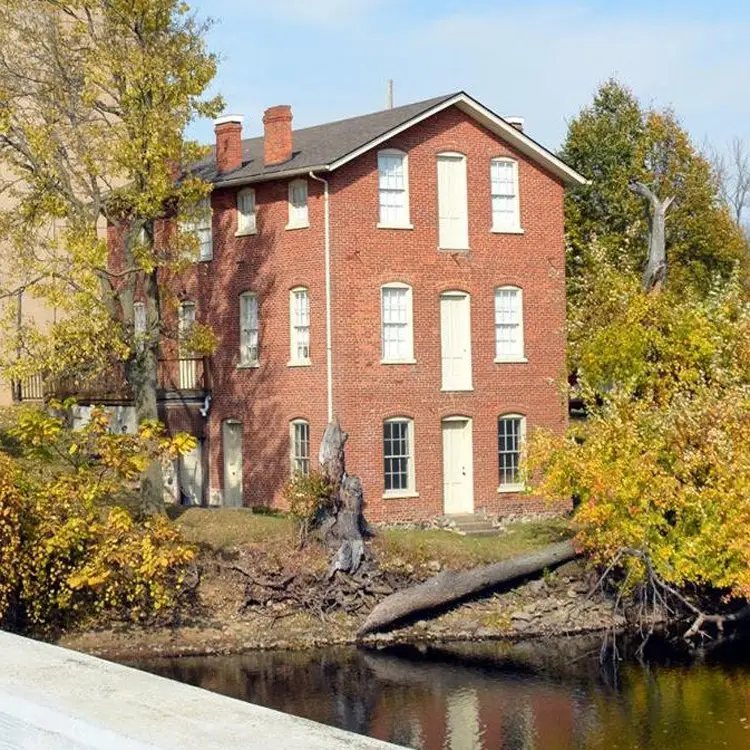
One of those places sits quietly overlooking the St. Joseph River—the Sue Silliman House.
Sometimes History Waits Patiently
Not every historic landmark announces itself.
The Sue Silliman House isn’t surrounded by crowds or tour buses. It simply stands where it has for well over a century, its brick walls looking out over the river that helped shape Three Rivers from its earliest days.
As we walked toward the historical marker, I couldn’t help but think about something I’ve noticed over the years.
History becomes more interesting the older we get.
When we’re young, history often feels like something tucked away inside textbooks. Later in life, we begin realizing that our own everyday moments are quietly becoming tomorrow’s history.
The family photographs we take today.
The letters we write.
The stories we tell our grandchildren.
Even this journey across Michigan.
Someday they’ll all belong to someone else’s history.
Maybe that’s one reason Vicky and I enjoy sharing these places. They’re reminders that ordinary people often leave extraordinary legacies.

A House Built Beside Three Rivers
Long before automobiles crossed modern bridges, travelers found this location because of the rivers.
Near the property, a Potawatomi trail crossed the St. Joseph River. It was here that the St. Joseph, Portage, and Rocky Rivers came together, giving Three Rivers the name it still proudly carries today.
Arthur Silliman arrived in the area in 1847 and eventually built this brick home during the 1870s.
Like many hardworking families of the time, the building served more than one purpose.
The lower level housed Arthur’s blacksmith shop, where horses were shod and wagon repairs kept travelers moving. Upstairs was home, where family life unfolded one ordinary day at a time.
Those two worlds—work and family—shared the same roof.
Standing there today, it’s easy to imagine the sounds that once filled the property. The ring of a hammer striking hot iron. Wagons arriving from dusty roads. Children running through the yard overlooking the river.
Those sounds have long faded, but the house remains.
The Daughter Who Preserved More Than a Home
In 1914, Arthur deeded the property, known as Riversbye, to his daughter, Sue Silliman.
If Arthur built the house, Sue preserved its purpose.
For forty-two years she served as Three Rivers’ librarian and historian. She also devoted herself to preserving local history through the Daughters of the American Revolution, serving on local, state, and national boards.
She understood something many communities eventually discover.
Once stories disappear, they rarely return.
Before her passing in 1945, Sue donated far more than a home.
She left behind her papers.
Her research.
Books she authored, including St. Joseph in Homespun.
Most importantly, she left a record of the people who built this community long before any of us arrived.
It’s difficult not to admire someone who spent an entire lifetime making sure future generations would know where they came from.

Looking Beyond Downtown
Many visitors spend their time enjoying the downtown shops and restaurants—and for good reason.
We’ve certainly enjoyed more than a few evenings at the Riviera Theatre and Bar after exploring downtown with Judi.
But places like the Sue Silliman House remind us that history rarely stops where the sidewalks end.
Sometimes it’s tucked away just a few blocks beyond the busiest streets.
You simply have to be willing to wander a little farther.
That’s usually where the stories are waiting.
Around the Campfire
Is the Sue Silliman House worth visiting?
If you enjoy local history, absolutely. It’s a small museum, but its story reaches well beyond its walls. It offers a glimpse into the early development of Three Rivers and the people who cared enough to preserve its past.
When is it open?
The museum typically welcomes visitors during the summer months, from June through September, operating Wednesday through Sunday from noon until 4:00 p.m. Admission is free, although it’s always wise to confirm seasonal hours before making the trip.
Is it family friendly?
Yes. Children may not appreciate every historical detail, but the riverside location, the old brick building, and the connection to local pioneer life make it an enjoyable stop for families exploring Three Rivers together.
How much time should you plan?
Most visitors can comfortably explore the museum in 30 to 60 minutes. It pairs nicely with a stroll through downtown, lunch at one of the local restaurants, or an afternoon discovering more of Three Rivers’ historic district.
Can you camp nearby?
Leidy Lake Campground is one convenient option for RV travelers wanting to spend a little more time exploring the area. From there, it’s an easy drive into town to enjoy both the historic district and the Sue Silliman House.

Final Thoughts
Grandma Cooper often reminded us that people matter more than possessions.
The older I get, the more I believe history teaches the same lesson.
Buildings are important because of the lives lived inside them.
Books matter because someone took the time to write them.
Communities endure because ordinary people quietly choose to preserve what could easily be forgotten.
Sue Silliman spent much of her life protecting the story of Three Rivers.
Today, because she did, visitors like us can slow down for an afternoon and discover a chapter we might otherwise have missed.
As we walked back toward the truck, I found myself thinking about that earlier observation.
History does become more interesting with time.
Perhaps that’s because, eventually, we realize we’re writing a little of it ourselves.
Until our next journey together,
The Cooper Shortcut Camping Journey Trio 😊 PlusOne
YOU MAY ALSO LIKE:


Leave a Reply