There are some things that quietly become part of everyday life.
We seldom stop to think about who invented them, why they exist, or what life looked like before they arrived. Light switches. Seat belts. Barcodes. ZIP codes.
Grandma Cooper had a way of noticing those little things.
Whenever she addressed a letter, she carefully wrote every line in neat handwriting, paused for just a moment, and finished with those five familiar numbers. To her, they weren’t an afterthought. They were part of doing the job right.
She often reminded us:
“Simply because something becomes old doesn’t mean it is useless.”
The older I’ve become, the more often I find myself thinking about those words.

Some Things Are Worth Doing the Slow Way
These days nearly everything arrives by email.
Bills arrive electronically. Birthday wishes appear as notifications. Contracts are signed with the click of a mouse. Even conversations that once took pages of handwritten letters now fit inside a few lines of text.
I’m certainly not against technology. It has made many parts of life easier.
Yet somewhere along the journey, I discovered something unexpected.
As a Realtor®, I’ve built more than a little business by doing something many people consider outdated.
I write letters.
Not mass-produced advertisements.
Not postcards covered in flashy slogans.
Real letters.
Introductions.
Thank-you notes.
Follow-up messages.
Sometimes they arrive in a mailbox on an ordinary Tuesday afternoon when nothing else inside is personal.
People notice that.
Perhaps it’s because I’m getting older.
Perhaps Grandma Cooper rubbed off on me.
Or perhaps people simply appreciate knowing someone invested a few extra minutes instead of clicking “Send.”
Grandma would probably smile and say there are still a few things worth doing by hand.

Around the Campfire
“Grandma, where did ZIP codes come from?”
She would probably lean back in her rocker before answering.
“You know, Bobby, there was a time when people didn’t use them at all.”
That surprises many folks today.
The ZIP code feels like it’s always existed.
In reality, it’s younger than many of us.
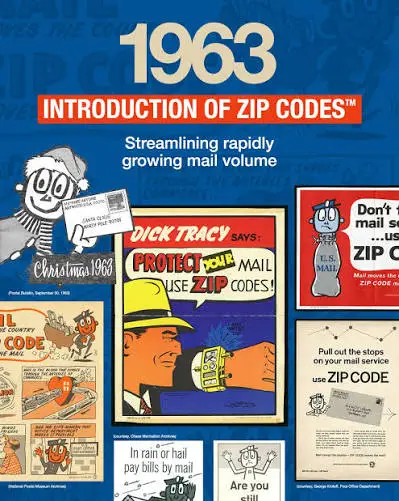
On July 1, 1963, the United States introduced the Zone Improvement Plan, better known simply as the ZIP code. Those five digits were created to help the growing mountain of American mail reach the right destination faster and with fewer mistakes.
The idea wasn’t born overnight.
During World War II, many experienced postal workers entered military service. With fewer trained employees sorting an ever-growing volume of letters, the Post Office began assigning zone numbers to large cities to make deliveries more accurate.
For a while, that worked.
Then America grew.
Families expanded.
Businesses flourished.
Mailboxes filled.
By the early 1960s, Americans were sending more than 66 billion pieces of mail every year. A single letter often passed through eight or more postal employees before reaching its destination. Every extra stop increased the chances of delays or mistakes.
Someone realized the system needed more than a patch.
It needed a better map.
Five Numbers That Changed Everything
The new ZIP code system divided the nation into organized delivery regions.
Each digit had a purpose.
The first identified a large section of the country.
The next narrowed the location even further.
By the final two numbers, the Postal Service knew exactly which post office should receive the letter.
It sounds simple today.
Back then, it was revolutionary.
Like most new ideas, however, it wasn’t immediately welcomed.
Many Americans resisted.
Some didn’t want another number to remember after Social Security numbers and changing telephone exchanges had already become part of daily life.
Businesses worried about the cost of updating their equipment.
Others simply disliked change.
That part of the story feels familiar.

The Friendly Mailman Named Mr. ZIP
The Post Office knew introducing a new system required more than rules.
It required encouragement.
That’s where a cheerful little cartoon mailman named Mr. ZIP entered the picture.

His smiling face appeared almost everywhere.
Post office windows.
Delivery trucks.
Buttons worn by mail carriers.
Television commercials.
Magazine advertisements.
Children even received coloring books featuring Mr. ZIP, helping an entire generation learn those five important numbers.
Little by little, Americans accepted the new system.
By the end of the 1960s, more than 80 percent of Americans routinely used ZIP codes, and most agreed they had become a good idea after all.
Today those five digits help everything from emergency services and census data to weather forecasts, shipping companies, insurance agencies, and online shopping.
Not bad for something many people once thought unnecessary.

Letters That Mean Something
I sometimes wonder what Grandma Cooper would think if she could see today’s world.
She’d probably laugh at the speed of it all.
Then she’d quietly pull out a sheet of stationery.
Because she understood something technology hasn’t changed.
People still like knowing someone took the time to think about them.
That’s why I still enjoy writing letters.
Whether introducing myself to someone I’ve never met or thanking a family after helping them buy a home, putting words on paper feels more personal.
Perhaps it’s slower.
Perhaps it takes a little more effort.
But not everything valuable has to be fast.
Sometimes the mailbox still delivers something email never quite can.
Final Thoughts
The ZIP code may have started as a practical solution to an overloaded postal system, but it became something much larger. Those five numbers quietly stitched together communities across America, helping letters, cards, and packages find their way home.
Grandma Cooper never viewed progress as the enemy.
She simply believed useful traditions deserved to stay useful.
Her words still echo every time I address an envelope.
“Simply because something becomes old doesn’t mean it is useless.”
I suspect that’s why I still enjoy putting pen to paper.
Some traditions aren’t worth keeping because they’re old.
They’re worth keeping because they still matter.
The Cooper Shortcut Camping Journey Trio 😊 PlusOne!
YOU MAY ALSO LIKE:



Leave a Reply