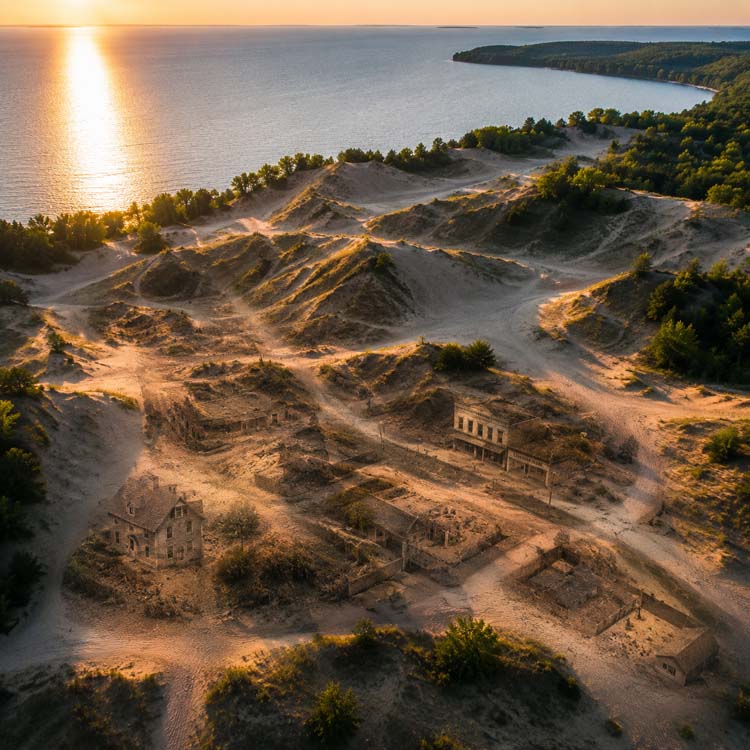
Michigan is filled with fascinating destinations, from towering sand dunes and pristine shorelines to historic lighthouses and forgotten communities. Yet few places capture the imagination quite like Singapore, Michigan—a thriving 19th-century lumber town that was slowly swallowed by shifting sand dunes along the Lake Michigan shoreline.
Today, Singapore is often called Michigan’s Lost City. Although the town itself disappeared more than a century ago, its story remains one of the most intriguing pieces of Michigan history. Visitors travel to the Saugatuck area every year hoping to glimpse the landscape where homes, businesses, and streets once stood before nature reclaimed them.
If you’re searching for unique Michigan attractions, hidden history, ghost towns, or unforgettable Lake Michigan adventures, a visit to the site of Singapore belongs on your travel list.

The Rise and Fall of Michigan’s Lost City
Singapore was founded in 1836 near the mouth of the Kalamazoo River in what is now the Saugatuck-Douglas area. Its location provided easy access to the vast timber resources that fueled Michigan’s booming lumber industry.
For several decades, the community prospered. Lumber mills operated around the clock, ships carried timber to growing cities throughout the Midwest, and businesses flourished along the waterfront. By the 1860s, Singapore had become one of the busiest lumber ports on Lake Michigan.
Then came an unexpected problem.
The very forests that supported the town’s economy were being removed at an unsustainable rate. As the trees disappeared, so did the natural barriers that held the massive Lake Michigan dunes in place. Wind-driven sand began creeping into streets, homes, and businesses.
Residents fought back as long as they could. Some dug out buildings repeatedly. Others relocated structures to safer ground. Ultimately, nature proved stronger than human determination.
By the late 1870s, much of the town was buried beneath drifting sand. Families abandoned their homes, businesses closed, and Singapore vanished from the map.
Today, much of the original town remains hidden beneath the dunes, earning it the nickname “Michigan’s Pompeii.”

Can You Still Visit Singapore, Michigan?
This is one of the most commonly searched questions about Michigan’s lost city.
The answer is yes—but with realistic expectations.
Visitors cannot walk through preserved streets or tour standing buildings because the town no longer exists above ground. Instead, you can explore the landscape where Singapore once stood and learn about its fascinating history.
The best way to experience Singapore is by visiting the towering dunes between Saugatuck and Lake Michigan. Standing atop these massive hills of sand makes it easy to imagine how an entire community could disappear beneath them.
The nearby waterfront areas, historical exhibits, and local museums provide additional insight into the town’s remarkable story.
Many visitors are surprised by how beautiful the area is. What was once a disaster for Singapore has become one of Michigan’s most spectacular natural attractions.

What Is There to Do While Visiting the Area?
Even if Singapore’s history is what brings you here, you’ll quickly discover there’s enough to fill an entire weekend.
The towering dunes are the star attraction. Hiking trails provide breathtaking views of Lake Michigan, especially during sunrise and sunset when the water and sand glow with warm colors.
A short drive leads into the charming downtown areas of Saugatuck and Douglas. Art galleries, boutique shops, waterfront parks, and boat cruises create a welcoming atmosphere that feels worlds away from everyday life.
The Kalamazoo River offers opportunities for kayaking, paddleboarding, and sightseeing cruises. During summer, visitors can explore the shoreline by boat while learning about the region’s maritime history.
Oval Beach consistently ranks among Michigan’s most beautiful beaches and provides an ideal place to relax after a morning of exploring the dunes.
History enthusiasts should also spend time learning about the region’s lumber industry, which played a major role in both the creation and destruction of Singapore.
Are There Any Campgrounds Nearby?
Absolutely, and this is one reason RV travelers love visiting the area.
Several excellent campgrounds are located within a short drive of Singapore’s historic site.
The highly regarded Saugatuck Dunes State Park area offers access to hiking trails, beaches, and natural scenery. Nearby private campgrounds provide options ranging from rustic tent sites to full-hookup RV accommodations.
Many RV travelers choose campgrounds near Saugatuck, Douglas, or Holland because they provide convenient access to the dunes, Lake Michigan shoreline, and local attractions.
Camping here offers something special. As evening settles in and the lake breeze drifts through camp, it’s easy to reflect on the community that once existed beneath the very sands surrounding you.
Where Should You Eat While Visiting?
One of the best parts of visiting the Saugatuck area is the dining scene.
For lunch, many visitors enjoy waterfront dining where fresh fish, burgers, sandwiches, and local specialties are served with views of the river or harbor. The relaxed atmosphere perfectly complements a day spent exploring.
Dinner is where the area truly shines.
Restaurants throughout Saugatuck and Douglas feature everything from fresh Lake Michigan fish and steaks to upscale farm-to-table cuisine. Seasonal ingredients, locally sourced produce, and creative menus make dining part of the overall experience rather than simply a stop between attractions.
Many visitors find themselves lingering over dinner while watching boats drift along the river at sunset—a fitting end to a day spent discovering one of Michigan’s greatest lost treasures.

Why Singapore Continues to Fascinate Visitors
Most ghost towns fade because industries disappear or populations move elsewhere. Singapore’s story feels different.
An entire town was overwhelmed by the natural environment it helped create.
The same lumber boom that brought prosperity ultimately removed the forests that protected the community. The resulting dunes buried homes, businesses, and memories beneath layers of sand that still shift today.
That combination of history, mystery, and natural beauty continues to draw visitors from across Michigan and beyond.
Unlike many historical destinations where the story ends in a museum display, Singapore’s story remains visible in the landscape itself.
The dunes are not merely scenery.
They are the reason the town disappeared.

Final Thoughts
Singapore, Michigan may no longer appear on modern maps, but its story remains very much alive. Few destinations combine natural beauty, fascinating history, outdoor recreation, and lakeshore charm quite like this stretch of Michigan’s western shoreline.
Whether you’re a history enthusiast, an RV traveler searching for unique destinations, a photographer chasing dramatic dune landscapes, or simply someone who enjoys discovering places most tourists overlook, Michigan’s lost city offers an experience unlike any other.
The next time you’re planning a trip along Lake Michigan, take a detour to the dunes near Saugatuck. Beneath the sand lies one of Michigan’s most remarkable stories—a forgotten city that continues to capture the imagination more than 140 years after it disappeared.
Happy travels,
The Cooper Shortcut Camping Journey Trio
YOU MAY ALSO LIKE:
A Stellar Campground Experience


Leave a Reply