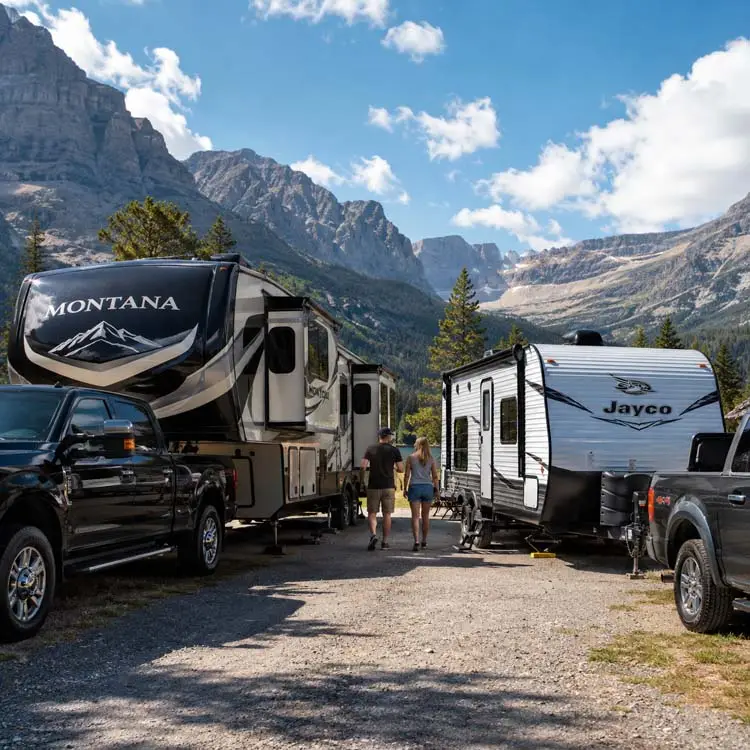
5th Wheel vs Travel Trailer: Which RV Is Right for Your Camping Style?
One of the biggest decisions new RV buyers face is choosing between a fifth wheel and a travel trailer. Both offer the freedom to explore America on your schedule, but they deliver very different camping experiences.
After more than 40 years of camping in everything from tents and pop-up campers to travel trailers, Class C motorhomes, and now a 45-foot fifth-wheel toy hauler, we’ve learned that there is no one-size-fits-all answer. The best RV depends on how you camp, where you travel, and what comforts matter most to you.
If you’re comparing a fifth wheel vs travel trailer, this guide will help you understand the advantages, disadvantages, towing differences, and lifestyle considerations of each.
What Is the Difference Between a Fifth Wheel and a Travel Trailer?
The primary difference is how the RV connects to the tow vehicle.
A travel trailer uses a traditional bumper-pull hitch attached to the rear of the tow vehicle.
A fifth wheel connects to a specialized hitch mounted in the bed of a pickup truck, positioning the pivot point directly over or slightly ahead of the rear axle.
This design difference affects everything from towing stability and maneuverability to interior space and storage capacity.

Why Many RVers Choose a Fifth Wheel
More Living Space
One of the biggest advantages of a fifth wheel is interior room.
Because part of the RV extends over the truck bed, manufacturers can create multi-level floorplans that offer:
- Larger living rooms
- Spacious kitchens
- Residential-style bathrooms
- Separate bedrooms
- Taller ceilings
- Additional storage
Many fifth wheels feature opposing slide-outs, creating an open-concept feel that rivals a small apartment.
Greater Tank Capacity
Most fifth wheels are designed for extended travel and longer stays.
You’ll often find:
- Larger freshwater tanks
- Bigger gray and black water tanks
- More battery storage
- Increased cargo carrying capacity
For boondockers and extended travelers, these larger capacities can be a major advantage.
Better Towing Stability
The hitch placement over the truck axle provides superior weight distribution.
Benefits include:
- Reduced trailer sway
- Improved handling
- Better control in crosswinds
- Easier highway towing
Many RV owners report that towing a fifth wheel feels more predictable and less stressful than towing a large travel trailer.
Easier Backing and Maneuvering
Backing a fifth wheel into a campsite often feels more intuitive because the pivot point is closer to the truck’s rear axle.
This typically results in:
- Quicker steering response
- More precise backing
- Better control in tight campsites
For many RVers, learning to back a fifth wheel is easier than mastering a long travel trailer.
Potential Drawbacks of a Fifth Wheel
Requires a Pickup Truck
A fifth wheel requires a pickup truck equipped with a fifth-wheel hitch.
This limits tow vehicle choices and may require upgrading to a heavy-duty truck.
Higher Purchase Price
Generally speaking, fifth wheels cost more than comparable travel trailers.
In addition to the RV itself, you’ll need:
- A fifth-wheel hitch
- A capable tow vehicle
- Higher maintenance budgets
Larger Campsite Requirements
Modern fifth wheels can exceed 40 feet in length.
Some older campgrounds, state parks, and national park campgrounds may have limited sites capable of accommodating larger rigs.
Always verify campsite dimensions before booking.
Why Many Campers Prefer Travel Trailers
Lower Entry Cost
Travel trailers are available in nearly every price range.
Whether you’re looking for a lightweight couples camper or a family bunkhouse, you’ll typically find more budget-friendly options compared to fifth wheels.
Greater Tow Vehicle Flexibility
Unlike fifth wheels, travel trailers can be towed by a variety of vehicles, including:
- SUVs
- Half-ton pickups
- Three-quarter-ton trucks
- Full-size vans
This flexibility allows many campers to use a vehicle they already own.
More Campsite Options
Because travel trailers are generally shorter and lighter, they fit into a wider range of campsites.
This can be especially valuable when visiting:
- State parks
- National parks
- Older campgrounds
- Forest service campgrounds
Keeps the Truck Bed Available
Since no hitch occupies the truck bed, owners can continue using the entire bed for:
- Firewood
- Bicycles
- Coolers
- Camping gear
- Generators
For some travelers, this extra cargo space is a significant benefit.
Travel Trailer Challenges
More Susceptible to Sway
Because the hitch point sits behind the rear axle, travel trailers can experience more movement from:
- Crosswinds
- Passing trucks
- Uneven roads
A quality weight distribution hitch and sway control system can dramatically improve towing performance.
Less Interior Space
Even similarly sized travel trailers often feel smaller inside than fifth wheels.
The lower ceiling height and single-level design can make the interior feel less spacious.
Smaller Storage Capacity
Travel trailers generally offer:
- Less basement storage
- Smaller holding tanks
- Reduced cargo capacity
This may not matter for weekend campers but can become important for extended trips.
Which RV Is Better for Full-Time Living?
For full-time RV living, many travelers prefer fifth wheels.
Their larger floorplans, residential amenities, higher ceilings, and increased storage make them better suited for long-term comfort.
However, many modern travel trailers are designed specifically for extended stays and can work exceptionally well for couples and solo travelers.
The best choice depends on your lifestyle and budget.
Questions to Ask Before You Buy
Before choosing between a fifth wheel and travel trailer, consider:
- How often will you travel?
- How long are your typical trips?
- What vehicle do you currently own?
- Do you plan to visit national parks frequently?
- Will you camp mostly in RV resorts or public campgrounds?
- How much living space do you need?
- What is your overall budget?
Answering these questions honestly will often point you toward the right RV.

Final Thoughts
The fifth wheel versus travel trailer debate has no universal winner.
If maximum living space, towing stability, and residential comfort are your priorities, a fifth wheel may be the perfect choice.
If affordability, campsite flexibility, and tow vehicle versatility matter most, a travel trailer could be the better fit.
The good news is that both options provide what RVers value most—the freedom to travel, explore new destinations, and create lasting memories along the way.
Choose the RV that matches your camping style, and you’ll spend less time wishing you bought something different and more time enjoying the journey.
After all, the best RV isn’t the biggest or most expensive one—it’s the one that gets you out there making memories.
YOU MAY ALSO LIKE:




Leave a Reply