As camping season winds down and cooler temperatures set in, deep-cleaning your RV before storage is one of the smartest steps you can take to protect your home on wheels. It’s more than just washing the outside and vacuuming the floors — it’s about safeguarding your investment from moisture, pests, and wear caused by months of sitting still.
Whether you’re a weekend camper or a full-timer taking a seasonal break, properly deep-cleaning your RV ensures you’ll hit the road next spring without unpleasant surprises. Here’s a detailed look at how we tackle our own end-of-season cleaning — plus a few expert additions to make sure nothing gets missed.

Why a Deep Clean Matters Before Storage
According to RVIA (Recreational Vehicle Industry Association), the average RV owner spends over $42,000 on their rig — and preventive maintenance, including cleaning, can extend the vehicle’s life by years. Dirt, grime, and humidity can wreak havoc during storage, leading to mold, corrosion, and pest infestations if ignored. A thorough cleaning doesn’t just make your RV shine — it preserves its value and ensures peace of mind.
Exterior: The Shield That Needs the Most Care
Our deep-cleaning routine starts at the top — literally. The roof is your first line of defense against leaks and rot. Climb up safely and inspect every inch for cracks or deteriorating caulking around vents, antennas, and air conditioners. Any weak spots should be re-sealed before washing.
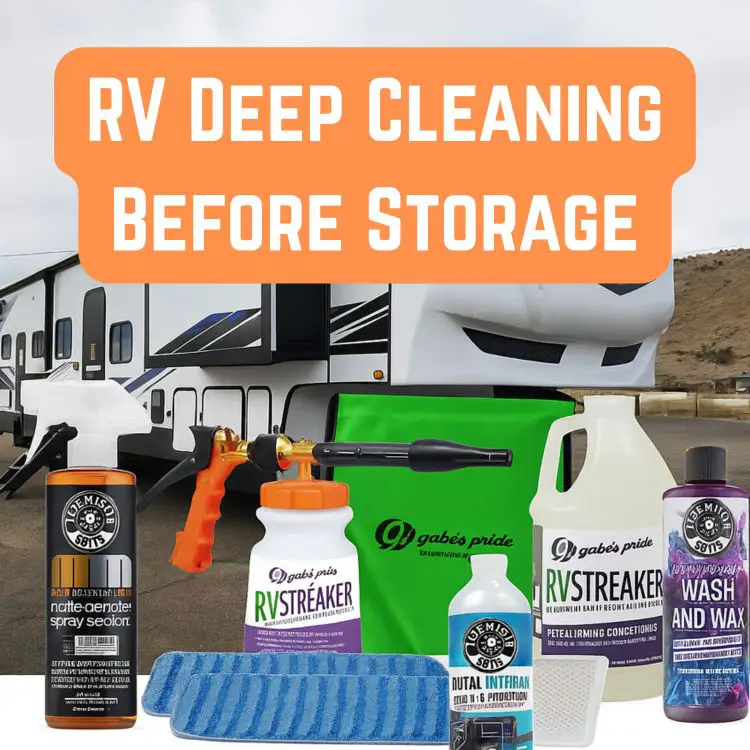
Once repairs are dry, we rely on Gabe’s Pride Roof and Exterior Cleaning Kit — after fifty years of RV ownership, nothing compares. Pairing it with Chemical Guys Extreme Bodywash & Wax gives a glossy, protective finish that blends natural carnauba and synthetic wax. This combo not only cleans but also shields the surface from UV damage during long-term storage.

Next, focus on the details: window seams, door frames, mirrors, and exterior lights. Replace cracked caulk and test for leaks as you rinse. Lubricate locks, hinges, and steps with a silicone-based spray to prevent corrosion and sticking.
Inspect your tires for uneven wear, bulges, or cracks — they’re often the first thing to deteriorate during storage. If they’re over six years old, it may be time for replacements. A good scrub and tire conditioner will prevent dry rot.
Before wrapping up, crawl underneath your rig. Look for gaps, cracks, or small openings — mice only need a hole the size of a pencil to squeeze in. Our Forest River Rogue Armored came well-sealed, but I still added metal grating beneath the onboard generator for extra peace of mind. A few hours here can save you a world of trouble later.
Interior: Cleaning with a Purpose
Inside, cleanliness equals comfort and protection. Begin with the refrigerator and freezer — defrost if needed, scrub with warm soapy water, and leave doors propped open with baking soda boxes to absorb odors. Wipe down the exterior using Chemical Guys Meticulous Matte Detailer Spray for a polished look that resists fingerprints.
Empty every cupboard and pantry. Crumbs and residue attract pests faster than you think. Clean appliances thoroughly — especially the toaster and coffee maker. My wife takes the extra step of packing dishes, glasses, and silverware into plastic totes for dust-free storage.
Don’t forget pet supplies. Remove all food, bowls, and bedding. Wash them thoroughly before packing them away to prevent odors and insects.
For soft furnishings, strip the RV completely. Remove clothing, towels, and linens — pests see them as nesting material. Launder everything, then store it indoors at home with scented dryer sheets layered between fabrics to keep them fresh.
Vacuum every corner and crevice. Move furniture, steam-clean upholstery, and mop floors. Wipe cabinet doors, leather, and vinyl with Chemical Guys Total Interior Cleaner & Protectant — a versatile product that cleans while leaving a protective finish.
Lastly, wash and inspect all windows and seals. Replace cracked knobs or screens. Clean ceiling fans, vent blades, and filters, then close vents securely for storage. A small pack of moisture absorbers placed inside can help prevent mold and musty odors during long winters.
Extra Protection Steps You Might Overlook
- Battery Care: Disconnect and remove your RV batteries. Store them in a warm, dry place and charge them periodically during the off-season.
- Propane System: Shut off and disconnect propane tanks. Cover the connections to keep out dirt and moisture.
- Water System: Drain and winterize the plumbing. Leftover water in lines or tanks can freeze and cause cracks.
- Interior Airflow: Leave cabinet doors open slightly to allow airflow and reduce stale odors.
- Cover Smart: Use a breathable RV cover that resists UV and mildew but still allows air circulation — never wrap your RV in plastic.
These added touches might feel small but play a big role in ensuring your RV wakes up in spring as clean as you left it.

Final Thoughts
Deep-cleaning your RV before storing it isn’t just another chore — it’s a love letter to your adventures past and future. When you invest the time now, you protect not only your rig but also the memories it holds.
Next spring, when you unlock that door and catch that fresh, ready-to-roll scent instead of musty air, you’ll know every moment of preparation was worth it.
Your RV carried you safely all year — now it’s your turn to return the favor.
YOU MAY ALSO LIKE:




Leave a Reply