There are moments in RV life that shape you forever.
Your first breathtaking mountain sunrise.
Your first campfire dinner under the stars.
And then… your first RV black water spill.
Let me tell you something no one brags about around the campground fire ring: you never forget the first time your RV black tank dumping chore goes horribly wrong.
We certainly didn’t.

The Black Tank Dumping Chore Sounded So Easy
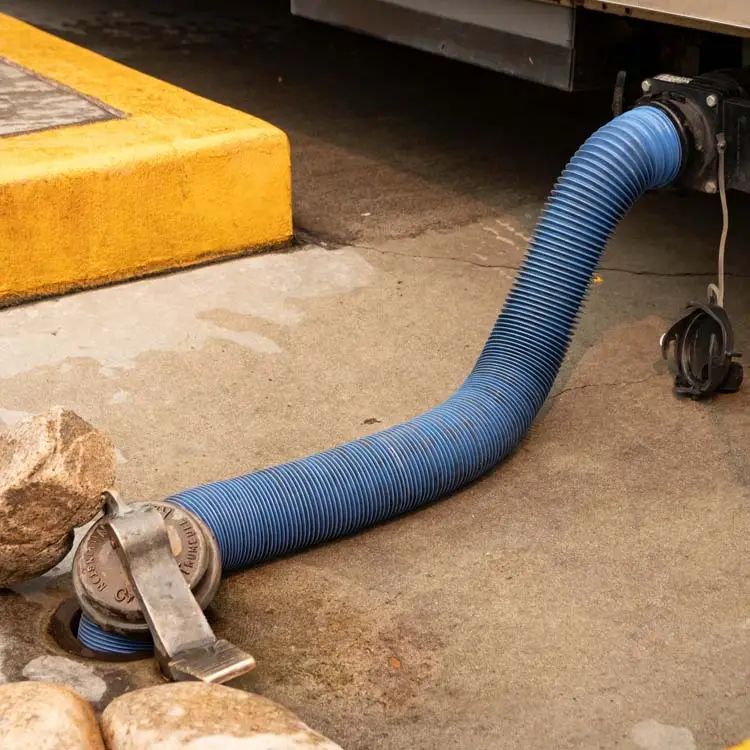
When we first brought our trailer home, everything felt manageable. Hook up the sewer hose. Pull the black tank valve. Let gravity do its thing. Rinse. Close. Done.
That’s what the videos showed.
That’s what the seasoned RVers made it sound like.
We had already mastered hitching, leveling, backing into campsites, and navigating fuel stops. Dumping the RV black tank seemed like just another routine task—unpleasant, perhaps—but simple.
Until it wasn’t.
There’s a strange confidence that comes with new ownership. You read the manual. You watch tutorials. You assume you’ve got it under control. And then one overlooked detail, one loose connection, one misjudged seal—and suddenly your peaceful campground scene turns into full-blown chaos.
And Then All Hell Broke Loose
It happened fast. Too fast.
The hose connection wasn’t fully locked. I was certain it was. But certain and correct are two very different things in the world of RV waste management.
The valve opened.
The pressure surged.
And in seconds, our first RV black water spill became a reality.
If you’ve never experienced it, consider yourself fortunate. If you have, you’re probably nodding right now.
There’s a split second where denial sets in. Surely that’s just gray water. Surely that’s not what I think it is.
But the smell tells the truth.
Your heart races. Your mind scrambles. Your spouse looks at you with that expression that says, “Please tell me this is not happening.”
It was happening.
And in that moment, RV ownership stopped being romantic and started being very real.
Our First RV Black Water Spill Clean Up Began
What matters most in a disaster is not perfection—it’s response.
Panic does nothing. Action solves everything.
We grabbed gloves. Extra gloves. Disinfectant. Fresh water hose. Paper towels. Trash bags. Anything within reach. The campground hosts were gracious, though I suspect they’ve seen their fair share of rookie mistakes.
The clean-up process was humbling, but it was also educational.
We learned the importance of:
Properly locking the sewer hose connection.
Checking the rubber seals.
Ensuring the dump station threading is secure.
Opening the black tank valve slowly.
Keeping the gray tank closed until you’re ready to rinse.
These aren’t glamorous RV tips, but they are essential.
There’s no shortcut when it comes to RV black tank maintenance. No rushing. No assumptions. You double-check everything. Then you check it again.
That day we also learned something even more important: every RVer earns their stripes.
Some earn them climbing steep mountain grades.
Some earn them in torrential rain.
And some of us earn them standing at a dump station, holding a disinfectant bottle, praying for forgiveness.
What That Black Tank Disaster Taught Us
That spill didn’t ruin RV life for us. It refined it.
It slowed us down. It made us more deliberate. It turned a dreaded chore into a disciplined routine. Today, dumping our black tank is almost ceremonial. Gloves on. Connections checked. Valves opened with purpose.
We now use clear elbow connectors so we can see exactly what’s flowing. We inspect gaskets regularly. We flush thoroughly. We never leave the site without confirming everything is secure.
And we share this story openly because new RV owners need to hear it.
No matter how polished your trailer is, no matter how advanced your setup, waste management is part of the lifestyle. Respect it, and it will reward you with smooth, stress-free travel. Ignore it, and it will humble you quickly.
If you’re new to RV camping, consider this your friendly warning: take your time at the dump station. Wear gloves. Double-check fittings. Invest in quality sewer hoses and connections. And never let overconfidence rush the process.
It’s not dramatic advice. It’s practical wisdom earned the hard way.
Since Then, The Adventures Have Been Amazing
Here’s the beautiful part.
That messy moment didn’t define our journey—it strengthened it.
Since then, we’ve logged countless miles, discovered breathtaking lakeshores, enjoyed quiet mornings in forest campgrounds, and made memories that far outweigh one unpleasant afternoon at a dump station.
The truth is, RV life isn’t about perfection. It’s about growth. It’s about learning. It’s about facing unexpected challenges and still choosing the open road the next morning.
You never forget your first RV black water spill.
But you also never forget why you started RVing in the first place.
And trust me—the sunsets are worth it.

Final Thoughts
If you’re stepping into the RV lifestyle, know this: mistakes happen. Even messy ones. The key is preparation, patience, and humility. Your RV black tank system deserves respect. Learn it. Understand it. Master it.
Because once you do, dumping becomes routine—and adventure becomes effortless.
And if a spill ever happens?
You’ll handle it like a seasoned traveler.
YOU MAY ALSO LIKE:




Leave a Reply