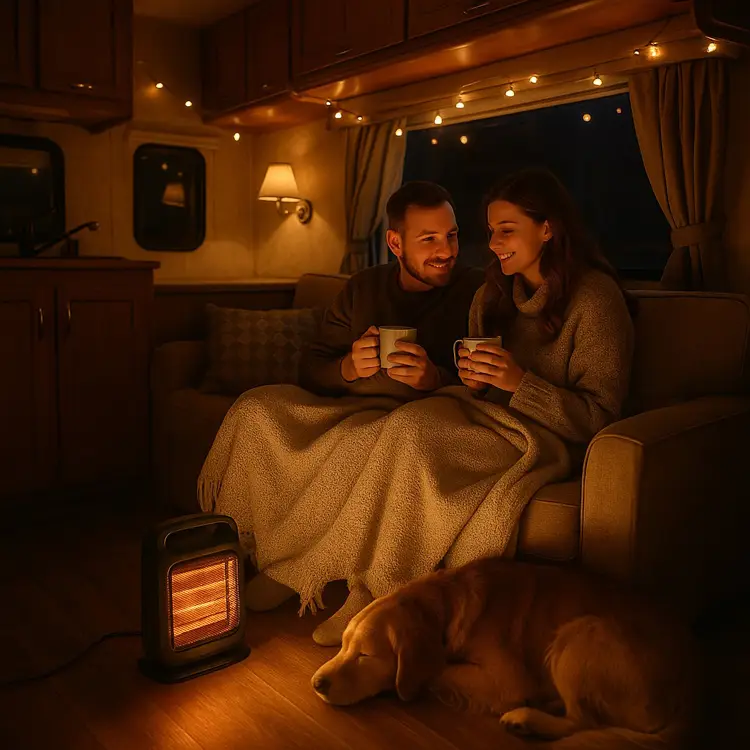
There’s nothing quite like waking up on a frosty morning, wrapped in blankets inside your RV, and reaching for the comforting hum of a space heater. For many RVers, especially during shoulder seasons (spring and fall months between peak summer and winter camping), a space heater feels like the perfect solution for staying cozy without draining your propane tank. But here’s the catch—while space heaters offer convenience and quick warmth, they also carry very real risks if not used correctly.
The National Fire Protection Association (NFPA) reports that space heaters are among the leading causes of home heating fire deaths. In an RV—where space is tight, materials are often highly flammable, and electrical systems are limited—the danger can be even greater. That doesn’t mean you can’t use one. It just means you need to approach the idea with knowledge, preparation, and caution.
In this article, we’ll break down the benefits, risks, and safety strategies of using a space heater in your RV, while answering some of the most common questions travelers ask.
Why Consider a Space Heater in Your RV?
Your RV’s propane furnace does an excellent job of heating the entire rig, but it also burns through fuel quickly. A small electric space heater, on the other hand, can:
- Deliver fast, targeted warmth to the bedroom, living area, or workspace.
- Reduce your propane usage, especially if you’re hooked up to shore power.
- Provide a backup or supplement to your main heating system.
It’s no wonder so many RVers plug one in when the temperatures dip. The key is learning how to do it safely.
Are Space Heaters Dangerous in an RV?
The short answer: they can be. Space heaters are one of the most common sources of fire in homes, and the risks amplify inside an RV. According to fire safety experts, more than 2,000 RV fires occur every year. In such a small space, fire spreads faster, and the chances of loss of life are much higher than in a house fire.
The most common dangers include:
- Proximity to combustibles: Curtains, bedding, or pet beds catching fire when placed too close.
- Electrical hazards: Overloaded circuits or plugging into extension cords.
- Accidents: A heater tipped over by a pet, child, or even movement inside the RV.
The takeaway? Space heaters can be used, but they demand extra caution in an RV setting.
Essential Space Heater Safety Tips for RVers
If you choose to use a space heater in your RV, these NFPA-recommended strategies could literally save your life:
- Keep a 3-foot clearance: Nothing flammable—furniture, blankets, or curtains—should be within three feet of your heater.
- Never leave it unattended: Always unplug the heater before leaving or going to bed.
- Plug directly into the wall: Skip the extension cords and power strips; they overheat easily.
- Use a stable surface: Hard, level flooring only—never rugs, carpet, or furniture.
- Buy smart: Choose newer heaters with auto shut-off for tip-overs and overheating. Look for a UL safety rating.
- Create a “kid-free zone”: Keep children and pets at least three feet away.
- Inspect often: If the cord or plug feels warm, unplug immediately.
And remember: many RV fireplaces are essentially decorative space heaters. Keep them clear of combustibles too.
What About Electrical Load Limits?
Unlike a traditional home, your RV electrical system is limited. Most RVs run on 15A or 30A circuits, meaning it’s very easy to overload your system with a single space heater plus other appliances.
- A typical space heater draws 12–15 amps on high. That’s nearly the entire load of a 15A circuit.
- Circuit breakers don’t always trip right away. They can sustain an overload for up to an hour, which means your wires and outlets may already be overheating before the breaker reacts.
- Continuous-duty appliances like heaters, fans, and portable A/C units should not exceed 80% of your circuit’s capacity—about 12 amps on a 15A circuit.
Pro tip: Use a simple device like a Kill-A-Watt meter to measure the actual draw of your appliances. This way, you can manage loads more accurately and avoid dangerous overloading.
Do I Really Need Extra Fire Protection?
Absolutely. Even the most cautious RVer should prepare for the worst-case scenario.
- Fire extinguishers: Don’t rely on the single one that came with your RV. Keep at least three—one in the kitchen, one near sleeping areas, and one outside in an unlocked compartment or tow vehicle.
- Escape plan: Know your exits, practice your escape route, and make sure everyone traveling with you does too. Seconds matter in an RV fire.
- Smoke and CO detectors: Test them regularly, and never remove the batteries.
Preparation turns a devastating risk into something manageable.
Final Thoughts
A space heater in your RV can transform cold nights into cozy ones, but it’s a double-edged sword. Used without caution, it can turn your rolling home into a tinderbox. The secret isn’t avoiding them altogether—it’s understanding your RV’s electrical limits, choosing the right equipment, and following strict safety practices.
If you’re heading out this season and considering bringing a space heater, treat it with the same respect you would an open flame. Stay mindful, stay prepared, and you’ll stay warm—and safe—on your adventures.
YOU MAY ALSO LIKE:
Starlink Our Remote Connection




Leave a Reply