Buying your first travel trailer is a big moment. It’s part excitement, part confusion, and—if we’re honest—a little bit of panic. You’ve just towed your shiny new home-on-wheels into the driveway, and now the questions begin: What’s a black tank? Why are there so many valves? Do I really need to winterize? If this sounds familiar, you’re not alone. Learning the language of RV maintenance and DIY repair can feel like decoding a foreign dialect—but don’t worry. Like any great adventure, it starts with a single step and a few smart tools.
In this article, we’ll help you crack the code. You’ll get familiar with the most important terms, systems, and repair essentials, plus strategies to learn fast and avoid expensive mistakes. Whether you’re weekend warriors or planning for full-time RV life, this guide will help you build confidence, one repair at a time.
The RV Maintenance Language Barrier
RV ownership doesn’t come with a translator, but maybe it should. Acronyms like GFCI, DSI, PEX, and EMS pop up in forums and manuals like a secret code. What does it all mean?
The truth is, RV terminology often borrows from multiple worlds: automotive mechanics, residential plumbing, and marine electrical systems. It’s a mashup. That’s why your first step is immersion—just like learning a language.
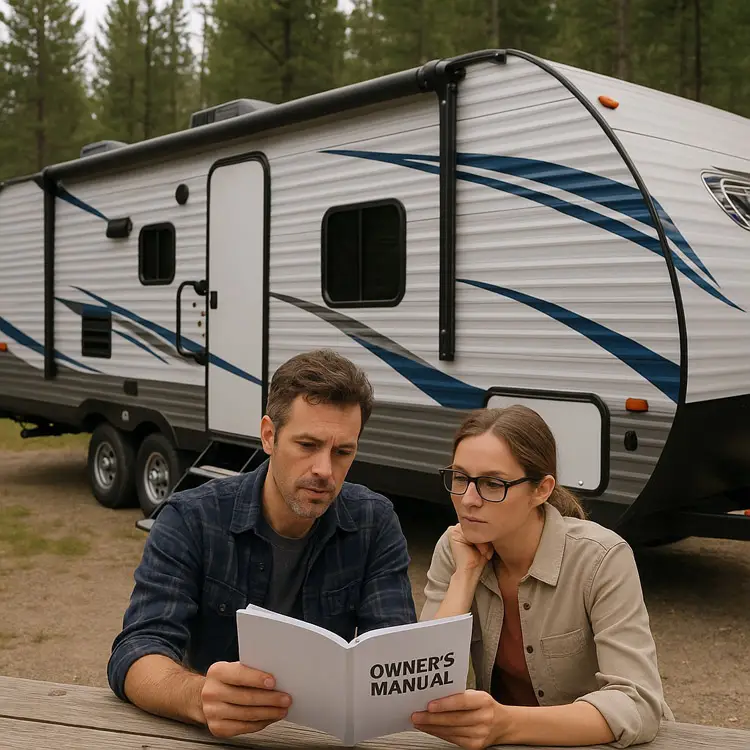
Start by reading your owner’s manual cover to cover (yes, really). While it may not be exciting bedtime reading, it will introduce you to terms like “shore power,” “anode rod,” and “inverter” with your specific model in mind. Next, hop onto YouTube channels like RVgeeks, Mortons on the Move, and Keep Your Daydream. These creators show real-life walkthroughs of RV maintenance jobs—from de-winterizing to fixing a leaky slide.

Learning By Doing (Mistakes Included)
Let’s be honest. You’re going to mess up. And that’s okay. Every seasoned RVer has a story about dumping the black tank too early, forgetting to plug in the power cord, or using the wrong sealant on a roof repair. Mistakes are your best teacher in RV life.
But to speed up the learning curve, tackle these three foundational areas first:
Water Systems Demystified: From Tanks to Taps
Your travel trailer has three main water systems:
- Fresh Water Tank – This holds the clean water you’ll use for drinking, cooking, and showering when you’re not connected to a city water supply. It’s critical to sanitize this system regularly to prevent bacteria or algae buildup. Use a sanitizing solution (often a diluted bleach mixture) and follow the flush procedure detailed in your owner’s manual.
- Gray Water Tank – This is where used water from sinks and showers goes. It’s not sewage, but it can still get stinky if not drained often. Pro tip: Use an environmentally safe tank treatment to reduce odors and residue.
- Black Water Tank – This holds waste from the toilet. Yes, it sounds intimidating—but with the right approach, it’s manageable:
- Always use RV-safe toilet paper.
- Dump the black tank only when it’s at least two-thirds full (this helps everything drain more effectively).
- Rinse the black tank regularly using a built-in flush system or an external wand.
Hookups & Hoses:
- Use a white potable water hose for drinking water only.
- A water pressure regulator is a must-have—too much pressure from a city hookup can damage your RV plumbing.
- Always have a hose splitter so you can run an extra line for cleaning or rinsing without disconnecting.
Understanding RV Power Systems: Plug In Without the Panic
Powering a travel trailer can be intimidating at first, especially when you’re juggling amps, converters, and batteries—but here’s how to keep it simple:
Shore Power (Plug-In Electric):
- Your RV likely comes with either a 30-amp or 50-amp power cord. Know the difference—plugging a 30-amp trailer into a 50-amp source without an adapter can fry your system.
- Always plug into a surge protector first. Power fluctuations at campgrounds are common and can damage appliances and electronics.
12V DC System:
- This is powered by your RV’s battery and runs essentials like lights, water pump, and slide-outs. It’s charged by shore power (via the converter), solar panels, or your tow vehicle’s alternator.
Inverter vs. Converter:
- A converter turns 120V AC (from shore power) into 12V DC (for lights and fans).
- An inverter does the opposite—it turns your 12V battery power into 120V AC so you can use outlets when off-grid.
Battery Basics:
- Check water levels in flooded lead-acid batteries monthly.
- Keep terminals clean and tight.
- Disconnect your battery when storing the RV unless you’re trickle charging it.
Generator Know-How (If Equipped):
- Use only RV-rated extension cords.
- Never run your generator in enclosed spaces or near windows—carbon monoxide is deadly.
- Keep it maintained with fresh oil, air filters, and proper fuel storage.
Preventive Maintenance: The Secret to Saving Money & Sanity
Preventive maintenance isn’t just about fixing what’s broken—it’s about preventing breakdowns in the first place. That’s where RV longevity and reliability really shine.
Seasonal Must-Dos:
- Spring Opening:
- Check seals and roof caulking for cracks.
- Flush and sanitize your fresh water tank.
- Test brakes, battery voltage, and tire pressure.
- Winterizing:
- Drain all water tanks.
- Bypass and flush the water heater (never use antifreeze in it).
- Add RV antifreeze to plumbing lines to prevent freeze damage.
- Remove or trickle-charge your battery.
Roof & Seal Maintenance:
- Water is your RV’s worst enemy. Regularly inspect and reseal all roof edges, vents, and seams.
- Use a non-petroleum-based sealant like Dicor or Sikaflex—compatible with your roof type (EPDM, TPO, etc.).
- Wash the roof twice a year and recoat as needed.
Slide-Outs & Moving Parts:
- Keep slide rails greased and seals conditioned (use RV-specific lubricants).
- Check gears and motors for dirt buildup and corrosion.
Tires:
- Replace every 5–7 years, regardless of tread.
- Check pressure before every trip, not during or after.
- Use a torque wrench to tighten lug nuts to spec, especially after long drives.
HVAC & Appliances:
- Vacuum furnace vents and intake grills.
- Clean the AC filter regularly and wash off condenser fins.
- Run your fridge on both gas and electric to make sure both systems work.
Investing in a few tools makes a big difference here—like a water pressure regulator, multimeter, leveling blocks, and a torque wrench for lug nuts. Each tool you use teaches you something new.
Finding the Best DIY RV Repair Resources
There’s a massive RV community out there—so use it. Online forums like iRV2.com, Facebook RV groups, and Reddit’s r/GoRVing are goldmines for real-life experiences and practical advice. Just search your issue and you’ll likely find ten people who’ve been there, fixed that.
Download mobile apps like RV LIFE Maintenance Tracker, which helps you organize service schedules, track repairs, and even get recall alerts for your specific model.
And when you do need parts? Avoid dealership prices by checking trusted sources like Amazon, eTrailer, and Camping World. Just make sure to cross-reference your part numbers carefully.
Practice Makes Confident Campers
Every DIY repair you take on builds your confidence—and cuts down your costs. In fact, according to RVIA (Recreation Vehicle Industry Association), RV owners who handle basic maintenance themselves save an average of $500–$1,200 per year.
Even small wins—like fixing a stuck stabilizer jack or troubleshooting a blown fuse—give you the confidence to tackle more. Before long, you’ll know the difference between Dicor and Eternabond, and you’ll be the one answering the questions at the campground.
Here’s a bonus tip: Keep a maintenance log. Record dates, repairs, part numbers, and any insights. It’s a lifesaver down the road, especially when diagnosing recurring issues or prepping to sell your RV.
When to Call in the Pros
While DIY is empowering, there’s a line. If you smell propane, see scorched wires, or hear odd noises from your axles—stop. These are signs that professional help is not optional. Electrical systems, brake work, and propane leaks are serious safety concerns.
It’s also smart to get a yearly professional inspection. Just like a car needs a tune-up, your travel trailer needs a once-over to catch the small stuff before it becomes big trouble.
The first season with your travel trailer will feel like a crash course in RV vocabulary, maintenance routines, and DIY repairs. It’s not always easy—but it is always worth it. There’s a unique satisfaction in figuring it out yourself, solving problems in real time, and becoming a more self-reliant traveler with every mile.
So take your time, ask questions, make mistakes, and celebrate the little victories. Before long, you’ll go from “What’s that switch do?” to “Don’t worry—I’ve got this.”
Welcome to RV life. The road ahead is yours to own.
YOU MAY ALSO LIKE:
Over 70? Why You Still Need to Check Your RV Roof Regularly
Uncover Tennessee’s Most Surprising, Fun, and Historic Secrets




Leave a Reply