There is something fitting about spending America’s 250th anniversary year traveling our own home state in search of history.
Michigan did not become a state until 1837, more than sixty years after the Declaration of Independence, but the story of America did not stop in 1776. It kept moving westward. It followed roads, waterways, industry, families, wars, inventions, prosperity, sacrifice and ordinary people trying to build something that would outlast them.
That is part of what Vicky and I have been looking for as we travel Michigan this year.
Not simply the places where history happened, but the places where someone decided history was worth remembering.
This week, that road took us to Grosse Pointe Farms along Lake St. Clair, where two stops only a couple of miles apart tell surprisingly different chapters of the American story.
One begins with the sound of bells.
The other becomes quietest when you stop to read the names on the wall.

Fifteen Bells Beside the Road
Joy Bells Park would be easy to drive past if you were concentrating only on getting somewhere else.
The small public park sits at the corner of Grosse Pointe Boulevard and Moross Road, on property associated with the city’s water treatment plant. It does not require a long hike, a full afternoon or much planning. In fact, its size is part of its charm.
Then you notice the tower.
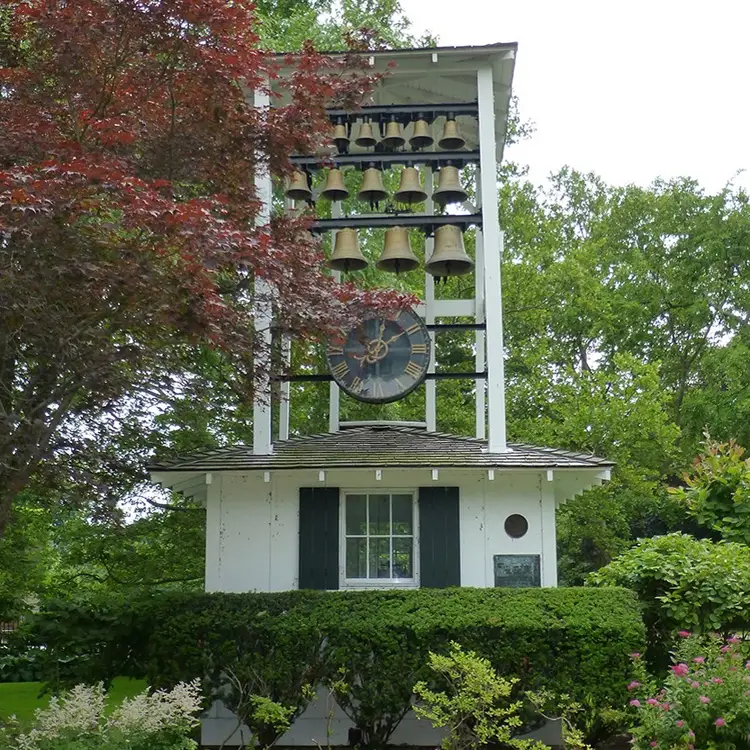
Fifteen bells hang there, and every hour a familiar sound carries through Grosse Pointe Farms. These are not decorative bells added to make a pleasant little park more interesting. They have a story.
Henry B. Joy commissioned them from the Paccard Foundry in the French Alps. Joy was a major figure in the early automobile industry and became an outspoken advocate for better American roads—eventually earning a reputation as the “Father of the Modern Highway System.”
For two people who have spent so much of their lives traveling those highways, that connection alone gave us reason to linger.
The bells originally stood on Joy’s estate. After Henry and his wife, Helen, died, the tower and bells eventually came into the city’s care. Today they still mark the hours and can also play tunes.
Think about that for a moment.
We arrived because we were chasing history during America’s 250th anniversary. Instead, standing beside a bell tower, we found ourselves thinking about the roads that made our own travels possible.
That is why these little stops matter.
History has a habit of connecting itself to your life when you give it enough time.
A Marker for America’s 250th
There is another reason Joy Bells Park belongs in our travels this year.
The Louisa St. Clair Chapter of the Daughters of the American Revolution dedicated an America 250 Patriots Marker here in September 2023. The marker honors the men and women whose courage and sacrifice helped achieve American independence during the Revolutionary War. (Revize)
That creates an interesting combination in such a small place.
The marker reaches backward toward the founding of the nation.
The bells remind us of an era when automobiles and improved highways were changing how Americans moved across that nation.
And there we were in 2026, traveling those roads because the country’s 250th birthday gave us one more reason to go looking for its stories.
Sometimes a stop does not have to be large to give you plenty to think about.
A couple of miles farther along the Lake St. Clair shoreline, however, history becomes much harder to miss.

The Moorings
The first thing that catches your attention at The War Memorial is the setting.
The former Alger estate sits along Lake St. Clair, and it would be very easy to become distracted by the grounds, gardens, water and architecture. The centerpiece is the Italian Renaissance-style home built for Russell A. Alger Jr., his wife Marion and their family.
Completed in 1910 and designed by New York architect Charles A. Platt, the house was named The Moorings. House and gardens were conceived together, taking advantage of the changing ground levels leading toward the lake. For roughly two decades, this was home to Russell and Marion and their children Josephine, Caroline—known as Fay—and Russell III. (The War Memorial)
Yet the most interesting chapter may be what happened after it stopped being simply their home.
Russell Alger died in 1930. Rather than allowing the estate’s story to end there, the family looked for a way it could continue benefiting the community.
From 1936 until 1948, The Moorings served as a branch of the Detroit Institute of Arts.
Then came 1949.
The newly formed Grosse Pointe War Memorial Association dedicated the estate to something far more lasting.
It would become a perpetual memorial to the 3,500 Grosse Pointe residents who served during World War II and the 126 who lost their lives.
But it would not become a memorial people visited only to look backward.
It would remain useful.
Educational programs, cultural activities, community gatherings and charitable work would give the old family estate an ongoing purpose. That combination—memorial and active community center—remains at the heart of The War Memorial today. (The War Memorial)
There is something about that idea I especially appreciate.
Remember the past.
Honor those who came before us.
And then use what they left behind to make life a little better for the people who come next.

Then You See the Names
Beautiful old houses invite you to look at architecture.
War memorials ask you to look at something else.
Names.
Near the grand staircase, bronze plaques preserve the names of Grosse Pointers who served during World War II. Other plaques recognize those who served during Korea, Vietnam and Operation Desert Storm, along with those who gave their lives and others killed while serving during peacetime. (The War Memorial)
A number like 3,500 is history.
A wall filled with names makes it personal.
Each name belonged to somebody who left home.
Some returned.
Some did not.
Every one of them belonged to a family that waited.
Perhaps that is why memorials affect us differently when we slow down enough to read them. Wars are recorded with dates, battles, generals and maps. Families remember an empty chair at the dinner table.
You don’t have to read every name before you understand what the plaques are saying.
Freedom has always had a human cost.
A Memorial That Stayed Alive
The War Memorial could have remained frozen in 1949.
Instead, it kept changing.
The Fries Auditorium and War Memorial Theater were added in 1962. An arts and education wing followed in 1977 and was later renovated. The Fred M. Alger Center opened in 2022, continuing the property’s long-standing combination of remembrance and community use. (The War Memorial)
Today, people come here for veteran-focused programs, educational opportunities, community events, weddings and other gatherings.
At first, holding celebrations at a war memorial might seem like an unusual combination.
The longer I thought about it, the more appropriate it seemed.
What better way to honor those who served than to make certain the place dedicated to them remains full of life?
Children learn here.
Families gather here.
Veterans are remembered here.
People celebrate marriages here.
The lake is still outside the windows.
Life continues.
Maybe that was the point all along.

At Water’s Edge
Outside, the story continues beside Lake St. Clair.
The sculpture Les Braves II: At Water’s Edge, created by French artist Anilore Banon, was installed on the lakefront in 2023. Its relationship to the setting is especially meaningful: it is a twin to Banon’s D-Day memorial on Omaha Beach in Normandy, France. (The War Memorial)
Standing before those rising forms with Lake St. Clair behind them brings another connection across time and distance.
Normandy is an ocean away.
Yet the sacrifice remembered there reached into communities such as Grosse Pointe and thousands of other American towns where sons, husbands, fathers, brothers and friends went off to war.
Suddenly that lakefront sculpture does not seem so far removed from the bronze names inside the Alger House.
They are telling different pieces of the same story.
Around the Campfire
Is Joy Bells Park worth stopping for if it is such a small park?
I think so, especially when you combine it with The War Memorial. Joy Bells is not an all-day destination, and that is precisely why it works well as part of a history drive through Grosse Pointe Farms. Give yourself enough time to see the tower, find the America 250 Patriots Marker and, if your timing cooperates, hear the bells mark the hour.
Can you tour the historic Alger House?
Yes. The War Memorial offers guided history tours of the Alger House. Current information says the tour lasts about 90 minutes, reservations are required, and tours are generally scheduled for the second Thursday of the month. Because dates and availability can change, check the current schedule before making a special trip. The historic house is wheelchair accessible and has an elevator serving all floors. (The War Memorial)
The War Memorial History Tours
Do you have to be a Grosse Pointe resident to visit The War Memorial?
No. The War Memorial states that everyone is welcome and that there are no residency or membership requirements. Buildings and grounds are generally open daily, although access can change when private events are taking place. One other detail for travelers: pets are not permitted on the grounds or inside the facilities except for service animals. (The War Memorial)
Could we reasonably visit both places on the same outing?
Absolutely. That is probably how I would recommend experiencing them. They are only a short distance apart, yet they tell two very different stories. Joy Bells Park is a quick, thoughtful roadside stop. The War Memorial deserves more time, particularly if you arrange a history tour.
Grandma Cooper Would Have Asked Another Question
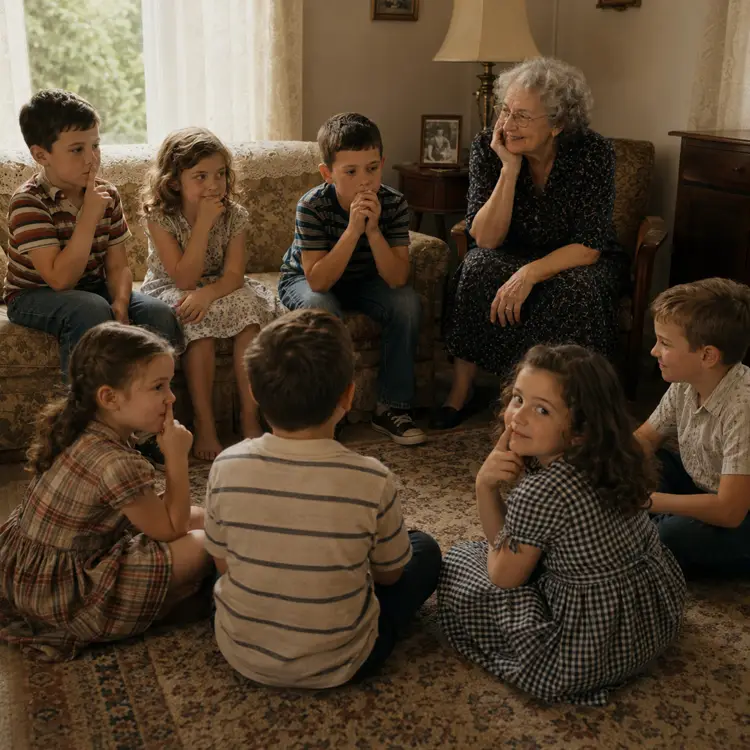
Every historic place we visit seems to bring Grandma Cooper along with us.
Not literally, of course.
But I can hear the curiosity she encouraged in us.
What is that?
Who built it?
Why is it here?
What happened next?
She taught us that learning did not end when the school bell rang for the last time. There was always another question worth asking and something worth discovering if you were willing to look.
I think she would have enjoyed this trip.
She might have listened to the Joy Bells and wanted to know who Henry Joy was. That answer would have led to automobiles and highways. A marker in the park would have taken us backward to the American Revolution. A drive down the road would have brought us to a 1910 family home, which became an art museum, which became a war memorial, which remained a gathering place for generations afterward.
One question leads to another.
Maybe that is what lifelong learning really looks like.
Not knowing all the answers.
Just never losing the desire to ask the next question.
Final Thoughts
When we decided to spend part of America’s 250th anniversary visiting historic places around Michigan, I don’t think either of us expected how often one story would lead us directly into another.
Joy Bells Park and The War Memorial are a perfect example.
We began with fifteen bells beside a road.
We ended beside Lake St. Clair thinking about American independence, the growth of the automobile, the roads connecting a nation, a family who gave their home to their community, and thousands of local men and women whose military service is preserved in bronze.
None of those stories stands alone.
Neither does ours.
That may be one of the best reasons to visit historic places in the first place. We aren’t simply looking backward at people who lived before us. We are discovering how their choices helped create the world we inherited—and being reminded that the choices we make today will someday become history too.
America’s 250th birthday gives us a reason to celebrate.
For Vicky and me, it has also given us a reason to keep driving, keep looking and keep learning.
And somewhere along the way, I suspect Grandma Cooper would remind us that there is always another road worth taking and another question worth asking.
Until our next journey together,
The Cooper Shortcut Camping Journey Trio 😊 PlusOne
YOU MAY ALSO LIKE:


Leave a Reply