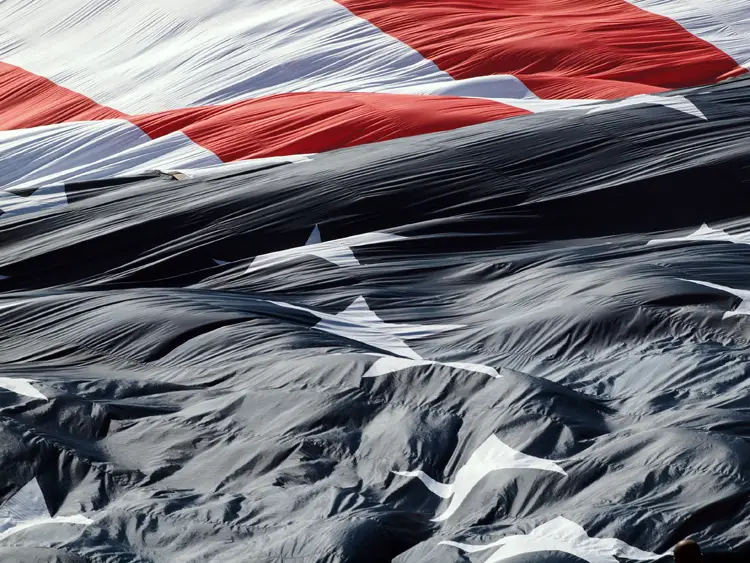
Few symbols are recognized around the world as quickly as the American flag. The Stars and Stripes has flown over battlefields, schools, churches, homes, campgrounds, and small-town parades for nearly 250 years. It has welcomed loved ones home, honored those who never returned, and reminded generations that freedom carries both privileges and responsibilities.
For many Americans, the flag is woven into life’s most memorable moments. We proudly display it on Independence Day, Memorial Day, Veterans Day, and Flag Day. We stand as the National Anthem is played before sporting events. As children, many of us learned to place our hand over our heart and recite the Pledge of Allegiance before we fully understood the meaning of the words.
Our family was no different.
From an early age, our children learned that the American flag deserved respect—not because someone told them to respect it, but because they understood what it represented.
The colors tell part of that story.
The red reminds us of valor and courage, honoring the sacrifices made to preserve our nation’s freedoms.
The white represents purity and innocence, reflecting the ideals upon which our country was founded and the hope that people of every background can live together in peace.
The deep blue, often called Old Glory Blue, symbolizes vigilance, perseverance, and justice. It reminds us that liberty must continually be protected and that unity remains one of America’s greatest strengths.
Those lessons stayed with our family in a way I never expected.
A Fifth Grader’s Simple Observation
One afternoon our son Nicholas burst through the front door after school.
“Dad! Dad! Our class gets to raise and lower the American flag!”
His excitement was contagious.
“That’s wonderful,” I replied. “So what’s wrong?”
His smile faded just a little.
“They’re folding it wrong.”
After talking together, we decided not to criticize. Instead, I contacted the school and asked if Nicholas and I could demonstrate the proper folding of the American flag for his fifth-grade class.
The school enthusiastically agreed.
That single visit became an annual tradition. Every year until Nicholas graduated, we returned to teach another group of fifth graders.
Looking back, we weren’t simply teaching students how to fold a flag.
We were teaching them why it mattered.

More Than Thirteen Folds
When we stood before each class, we explained that folding the American flag is performed with dignity, patience, and respect.
Every movement has a purpose.
Every fold is intentional.
Every student had an opportunity to participate, ask questions, and discover that this familiar ceremony carried generations of history with it.
Many students had seen a folded flag presented during a military funeral or displayed inside a shadow box, but few understood how it reached that familiar triangular shape.
So we began at the beginning.

Teach Your Family to Fold the American Flag
One of the greatest gifts you can give your children or grandchildren is not simply telling them to respect the American flag but showing them why generations have done so.
The folding ceremony is a wonderful family activity that encourages conversation about history, service, gratitude, and freedom.
Step 1 – Begin with Respect
Two people should hold the flag fully open, waist-high, stretched tight, and parallel to the ground.
Throughout the ceremony, the flag should never touch the ground.

Step 2 – The First Lengthwise Fold
Fold the flag in half lengthwise by bringing the striped portion upward over the blue field.
Carefully smooth the fold while keeping the flag taut.
Step 3 – The Second Lengthwise Fold
Fold the flag lengthwise once again.
The blue field of stars should remain on the outside and clearly visible.
Step 4 – Begin the First Triangle
Starting at the striped end, fold the squared corner upward to create the first triangle.
Step 5 – Continue the Triangle
Fold the outer point inward so the edge remains parallel with the open side of the flag.
Step 6 – Continue Folding
Repeat the triangular folding pattern, alternating from point to flat edge, moving steadily toward the blue field.
Each fold should remain neat, tight, and deliberate.

Step 7 – Finish the Ceremony
Continue until the entire flag has been folded into its familiar triangular shape.
Carefully tuck the remaining end deep inside the pocket formed by the previous fold.
When finished correctly, no red or white stripes should remain visible.
Only the blue field of stars is seen.
The completed triangle resembles the cocked hats worn by many soldiers during the American Revolution.
When Nicholas and I finished demonstrating the folding process, we paused before putting the flag away.
Then came the lesson the students remembered most.
What We Told Every Fifth Grader
“Nicholas and I always reminded the students that folding the American flag isn’t about trying to perform thirteen perfect folds. It is about showing respect. If your first attempt isn’t perfect, don’t be discouraged. Practice together as a family. With each fold, you’ll gain confidence—and perhaps an even greater appreciation for the men and women whose service has given that flag its meaning.”
The Traditional Meaning of the Thirteen Folds
Before sharing these meanings with each class, we always explained one important fact.
The meanings associated with the thirteen folds are a cherished ceremonial tradition observed by many military honor guards. They are not part of the official U.S. Flag Code, and the wording may vary slightly from one honor guard to another.
Regardless of the wording, the message remains one of gratitude, remembrance, faith, and service.
As we completed each fold, we shared its traditional meaning.
The First Fold honors life.
The Second Fold represents the belief in eternal life.
The Third Fold honors the veteran being laid to rest and those who gave their lives in service to our nation.
The Fourth Fold reminds us of our trust in something greater than ourselves during life’s most difficult moments.
The Fifth Fold is a tribute to our country.
The Sixth Fold reminds us where our hearts lie as we pledge allegiance to the flag of the United States of America.
The Seventh Fold honors the men and women of our Armed Forces who protect our freedoms.
The Eighth Fold remembers those who have passed before us and the mothers who continue to hold them in loving memory.
The Ninth Fold recognizes womanhood and the faith, love, and devotion that have helped shape the character of our nation.
The Tenth Fold honors fathers who have given their sons and daughters in defense of our country.
The Eleventh Fold represents the lower portion of the seal of King David and King Solomon in the Jewish tradition.
The Twelfth Fold symbolizes eternity in the Christian tradition.
The Thirteenth Fold leaves only the blue field of stars visible, reminding us of our nation’s enduring motto, “In God We Trust.”
By the time we finished, something had changed in the room.
The students no longer saw thirteen simple folds.
They saw gratitude.
They saw sacrifice.
They saw history.
Most importantly, they saw why respect is learned—not demanded.
One of America’s Most Sacred Traditions
Perhaps nowhere is the folding ceremony more meaningful than during a military funeral.
After a veteran is laid to rest, the honor guard carefully folds the American flag before presenting it to the next of kin.
The flag is handed over with words of gratitude on behalf of a grateful nation.

It is one of the most moving ceremonies many families will ever experience.
The folded flag becomes far more than cloth.
It becomes a family’s treasured reminder of a life lived in service to others.
Why the American Flag Still Matters
Our nation has experienced seasons of celebration and seasons of hardship.
Through them all, the American flag has remained a constant reminder that freedom carries responsibility.
It reminds us that courage is worth honoring.
Sacrifice should never be forgotten.
And gratitude should be passed from one generation to the next.

Those were the lessons Nicholas and I hoped every fifth grader carried home after our classroom visits.
Looking back today, I doubt every student remembers all thirteen meanings.
But I hope they remember something even more important—that respect is learned one lesson at a time.
If Nicholas and I helped even one child look at the American flag with greater appreciation, then every classroom visit was time well spent.
Sometimes the greatest lessons we leave behind aren’t written in books.
They’re passed from one generation to the next.

Final Thoughts
Teaching children about the American flag is about much more than memorizing facts or learning proper etiquette. It is an opportunity to share stories of courage, sacrifice, gratitude, and hope.
The next time you see Old Glory waving in the breeze, take a moment to appreciate what it represents. Better yet, gather your children or grandchildren, unfold an American flag together, and teach them how to fold it with care and respect.
One day, they may pass those same lessons on to someone else.
That is how traditions endure.
That is how respect is preserved.
And that is how a simple piece of fabric continues to unite generations of Americans.
Happy travels,
The Cooper Shortcut Camping Journey Trio 😊 PlusOne!
YOU MAY ALSO LIKE:




Leave a Reply