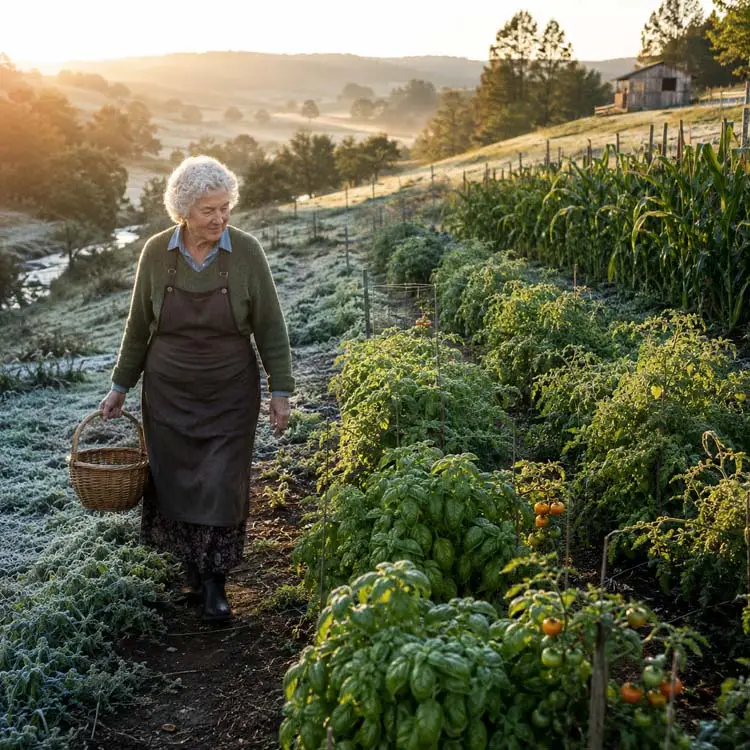
Grandma Cooper used to say, “Most folks think a garden is just dirt, seeds, and sunshine. The garden knows better.”
I didn’t understand what she meant when I was young. To me, a garden was simply a place where tomatoes grew and weeds appeared faster than anyone could pull them. But the older I get, the more I realize Grandma Cooper was teaching something far more important. She was teaching us to pay attention.
One spring morning, I stepped outside just after sunrise. The thermometer near the upper end of the garden read 48 degrees. It felt cool, but pleasant enough. A hundred feet downhill, near the little creek that wandered through the property, another thermometer read only 41 degrees.
Seven degrees may not sound like much.
To a basil plant, it means everything.
Had I planted basil seedlings down by the creek, they would have collapsed overnight, shivering in the cold air that settled there like water in a bowl. Up on the hillside, however, they stood tall and healthy, ready to greet the morning sun.
That is when I thought of Grandma Cooper.
She would have smiled and said, “The weather doesn’t treat every corner of the farm the same.”
She was right.
Even within a small garden, there are places that stay warmer, cooler, wetter, drier, windier, or calmer than the surrounding area. Gardeners call these differences microclimates. Grandma Cooper simply called it knowing your land.
The little flat area beside the creek is what I think of as the garden’s refrigerator. During spring, cool air slides downhill during the night and settles there. Frost arrives first in that spot and leaves last.
Yet six weeks later, that very same location becomes one of the warmest places on the farm.
Protected from cool breezes by brush and shrubs, the area soaks up sunlight from morning until evening. The chilly spring basin transforms into a summertime heat trap. It becomes the perfect place for corn, which eagerly stretches toward the sky.
Nature has a funny way of changing the rules.
Grandma Cooper always noticed these things.
When she walked through a yard, she wasn’t simply looking at flowers. She was studying sunlight, shadows, wind direction, and slopes. She knew that some places woke up earlier in the morning while others stayed warm long after sunset.
She understood that every yard has its own secret weather.
Most gardeners recognize this without realizing it. Nobody plants sunflowers in deep shade. Nobody places delicate flowers against a scorching wall that reflects heat all afternoon.
We naturally learn that certain plants belong in certain places.
What many people don’t realize is how dramatically small differences can affect success.
A concrete wall may store enough warmth to help tomatoes ripen earlier. A low spot may collect enough cold air to damage tender seedlings. A large tree may create shade while also stealing moisture from the soil beneath it.
Every landscape tells a story.

The trick is learning how to read it.
Grandma Cooper often compared gardening to getting acquainted with a new neighbor.
“You don’t know much at first,” she would say. “But if you pay attention long enough, they’ll tell you everything.”
The same is true of a garden.
Watch where frost appears first. Notice where snow melts earliest. Observe where the soil dries quickly after a rainstorm. Pay attention to where the wind always seems to blow.
Before long, the garden begins sharing its secrets.
One year, I decided to experiment with a row of golden heirloom tomatoes. Behind them, I placed an old wooden trellis. My hope was that the dark wood would absorb heat during the day and release it during the evening.
Sure enough, those tomatoes ripened nearly two weeks earlier than identical plants growing just a few feet away.
By Thanksgiving, I was still enjoying fresh tomatoes from vines that should have finished long before.
Grandma Cooper would have approved.
She believed gardening should always include a little curiosity.
“You never know until you try,” she liked to remind us.
That lesson applies to more than gardens.
The same spirit of observation helps us solve problems, improve skills, and discover opportunities others miss. Sometimes success comes from grand plans. Sometimes it comes from noticing a small detail that everyone else overlooked.
The wind teaches that lesson particularly well.
Some years, my pumpkins grow large enough to impress the neighbors. Other years, they struggle to reach the size of a softball.
The difference often comes down to summer winds.
A cold breeze arriving day after day can rob plants of warmth and moisture. That’s why farmers have planted windbreaks for generations. Rows of trees and shrubs don’t simply beautify a property. They create protection.
The challenge is patience.
A windbreak planted today may take years to reach its full potential.
Grandma Cooper never minded waiting.
She understood that worthwhile things often take time.
Trees grow slowly. Gardens improve season by season. Knowledge accumulates one observation at a time.
That is perhaps the greatest lesson hidden within every garden.
Small differences create big outcomes.
A neighbor living just a quarter mile away may grow vegetables that refuse to thrive in your yard. A few degrees of temperature spread across an entire growing season can completely change what succeeds and what struggles.
Fortunately, nature rewards those who pay attention.
You may not be able to move your garden uphill or relocate your property to a warmer climate. But you can learn where the warm corners, cool pockets, sunny slopes, and sheltered spaces already exist.
The answers are often right in front of us.
Grandma Cooper knew that.
She knew that every backyard contains hills and valleys, warm places and cool places, opportunities and challenges. Most of all, she knew that the garden is always teaching lessons to anyone willing to listen.
So the next time you step outside, pause for a moment.
Notice where the morning sun arrives first.
Watch where the shadows linger.
Feel the breeze.
Look for the places where frost gathers and where warmth remains.

You may discover that your yard has its own secret weather.
And if you listen closely enough, you might just hear Grandma Cooper whispering,
“The garden knows better.”
YOU MAY ALSO LIKE:
Leave a Reply