Few things can spoil an RV trip faster than a rough ride. Cabinets rattle, dishes shift, furniture takes a beating, and every pothole seems to send a shockwave through your travel trailer or fifth wheel. Many RV owners assume this is simply part of the experience, but the truth is that most factory-installed RV suspension systems leave plenty of room for improvement.
The suspension system is one of the most overlooked components on a travel trailer or fifth wheel. While RV buyers often focus on floor plans, décor packages, and entertainment systems, the suspension quietly determines how comfortable, stable, and safe every mile of your journey will be.
If you’ve ever wondered whether upgrading your RV suspension is worth the investment, the answer is often yes. Adding quality shock absorbers, upgrading leaf springs, or installing modern suspension components can dramatically improve ride quality while helping protect your RV and everything inside it.
Let’s take a closer look at why upgrading your RV suspension can be one of the smartest improvements you can make before your next adventure.
Why Most Factory RV Suspension Systems Fall Short
Many travel trailers and fifth wheels leave the factory equipped with basic leaf spring suspension systems. While these systems are designed to carry weight efficiently, they often lack one critical component: effective dampening.
Leaf springs absorb some of the impact from bumps and road irregularities, but without quality shock absorbers, the suspension continues to bounce long after the initial impact. This constant movement transfers stress throughout the RV.
Over time, excessive suspension movement can contribute to:
- Premature tire wear
- Cracked cabinet joints
- Loose screws and fasteners
- Broken dishes and fragile cargo
- Increased trailer sway
- Poor towing stability
- Accelerated suspension wear
For RVers who travel thousands of miles annually, these issues can become both frustrating and expensive.

What Do Shock Absorbers Actually Do?
Think of leaf springs as the component that absorbs the impact while shock absorbers control the rebound.
When your trailer hits a bump, the springs compress and then attempt to return to their original position. Without shocks, the suspension continues oscillating up and down.
Quality shock absorbers:
- Control suspension movement
- Reduce bouncing
- Improve tire contact with the road
- Increase towing stability
- Minimize trailer sway
- Reduce stress on the RV frame and contents
The result is a smoother, more predictable towing experience.
Signs Your RV Suspension Needs an Upgrade
Many RV owners don’t realize how much their suspension has deteriorated until they experience a properly upgraded system.
Some common warning signs include:
Excessive Bouncing
If your trailer continues bouncing after hitting a bump, the suspension may not be controlling movement effectively.
Increased Trailer Sway
Crosswinds, passing semi-trucks, and lane changes should not cause excessive side-to-side movement.
Uneven Tire Wear
Suspension deficiencies often show up first on your tires.
Interior Damage
Loose cabinet hardware, broken dishes, and cracked trim frequently indicate excessive suspension movement.
Harsh Ride Quality
If every road imperfection feels magnified, your suspension may need attention.
Benefits of Upgrading Your RV Suspension
Better Ride Quality
The most noticeable improvement is comfort.
Premium shocks absorb road imperfections more effectively, reducing jolts and vibrations transmitted throughout the trailer.
Your passengers may not feel the difference while towing, but your RV certainly will.
Improved Stability and Handling
One of the biggest advantages of upgraded shocks is increased stability.
When entering curves, dealing with strong crosswinds, or passing large trucks, quality shocks help keep the trailer planted and predictable.
This increased control reduces driver fatigue and improves confidence behind the wheel.
Protection for Your Investment
Today’s RVs often cost anywhere from $40,000 to well over $150,000.
Every mile traveled subjects that investment to vibration and impact stress.
An upgraded suspension helps protect:
- Appliances
- Electronics
- Furniture
- Plumbing connections
- Cabinetry
- Flooring
- Structural components
The suspension upgrade often pays for itself by preventing costly repairs later.
Reduced Wear on Tires and Suspension Components
Quality shocks help maintain better tire contact with the road surface.
This leads to:
- More even tire wear
- Improved braking performance
- Longer tire life
- Reduced suspension stress
Choosing the Right RV Suspension Upgrade
Not all shock absorbers are created equal.
Before purchasing a suspension upgrade, consider several important factors.
Trailer Weight Matters
The shock absorber must be matched to the weight of your trailer.
An under-rated shock will quickly lose effectiveness and wear prematurely.
Always verify:
- Gross Vehicle Weight Rating (GVWR)
- Loaded trailer weight
- Axle ratings
Gas-Charged Shocks Are Usually Best
Gas-charged shocks offer superior performance compared to traditional hydraulic shocks.
Benefits include:
- Better dampening
- Reduced shock fade
- Longer service life
- Improved responsiveness
These advantages make them particularly valuable for RV applications.
Verify Compatibility
Most newer travel trailers utilize axles from companies such as Lippert, making suspension kits widely available.
However, always verify:
- Axle size
- Suspension configuration
- Mounting requirements
- Available clearance
Consider Complete Suspension Systems
Many RV owners start with shocks but eventually upgrade additional components such as:
- Heavy-duty shackles
- Wet bolt kits
- Equalizers
- Reinforced spring hangers
- Upgraded leaf springs
A complete suspension package often delivers the greatest improvement.
Installing Shocks on a Leaf Spring Suspension
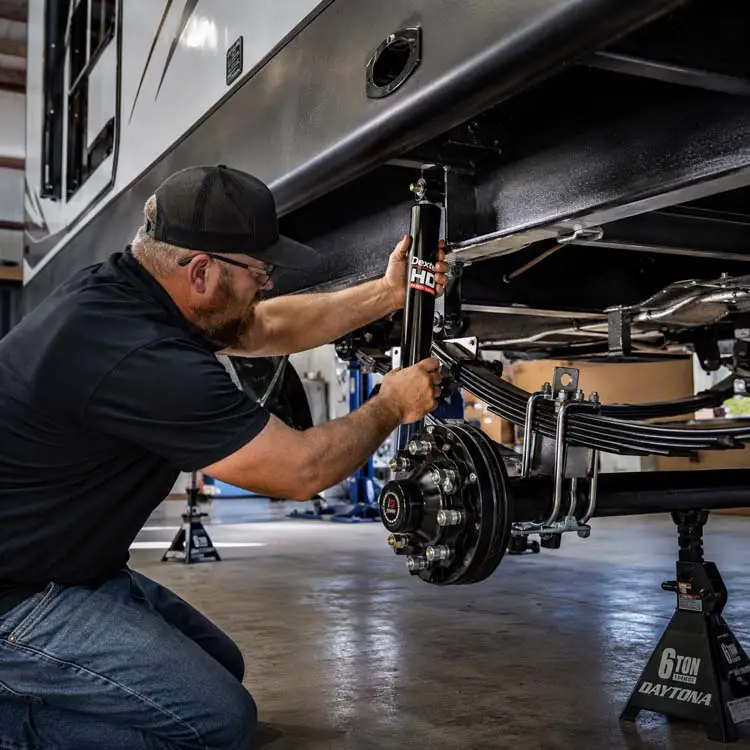
Installing shocks is a project many experienced RV owners can complete themselves with proper tools and safety precautions.
The process generally involves:
- Safely raising and supporting the trailer
- Removing wheels if necessary
- Installing mounting brackets
- Attaching shocks
- Torquing hardware to specifications
- Performing a test drive
The most important part of the process isn’t speed—it’s safety.
Never work beneath a trailer supported solely by a jack. Always use properly rated jack stands and work on stable, level ground.
Leaving the trailer connected to the tow vehicle while performing the installation can also provide additional stability.
Frequently Asked Questions About RV Suspension Upgrades
Are RV suspension upgrades worth the money?
For most RV owners, yes.
If you regularly travel long distances, tow on rough roads, or own a larger fifth wheel or travel trailer, suspension upgrades often provide noticeable improvements in ride quality, stability, and component longevity.
How much does it cost to upgrade RV suspension?
Costs vary significantly depending on the components selected.
Basic shock kits may cost a few hundred dollars, while complete suspension systems with upgraded equalizers, wet bolts, and springs can exceed several thousand dollars including installation.
Can I install RV shocks myself?
Many mechanically inclined RV owners successfully install shocks themselves.
However, if you’re uncomfortable lifting and supporting a heavy trailer, professional installation may be the safest option.
How long do RV shocks last?
Quality RV shocks often last between 30,000 and 50,000 miles or more depending on road conditions, trailer weight, and usage patterns.
Will upgraded suspension reduce trailer sway?
Yes. While suspension upgrades are not a substitute for proper weight distribution and hitch setup, quality shocks can significantly reduce sway and improve overall stability.
Beyond Shocks: Other Suspension Improvements Worth Considering
As RV suspension technology continues to improve, more owners are exploring advanced options beyond traditional shock absorbers.
Popular upgrades include:
- Rubber equalizer systems
- Independent suspension conversions
- MORryde suspension systems
- Wet bolt upgrades
- Heavy-duty shackles
- Dexter suspension enhancements
- Air ride suspension systems for larger fifth wheels
These upgrades can further improve ride quality and durability, especially for full-time RVers and frequent travelers.

Final Thoughts
Your RV’s suspension system works harder than almost any other component on your trailer. Every pothole, expansion joint, gravel road, and uneven campground entrance puts stress on the suspension, and everything attached to it.
While factory suspension systems are often adequate, they rarely deliver the ride quality, stability, and protection that experienced RVers desire. Upgrading your RV suspension with quality shocks and related components can transform the towing experience, reduce wear and tear, and help protect one of the largest investments many travelers make.
The next time you’re planning upgrades for your travel trailer or fifth wheel, don’t just focus on what happens inside the RV. Take a close look underneath. A suspension upgrade may be the improvement you feel every mile of every journey.
YOU MAY ALSO LIKE:
Unveiling the Hidden Costs of Owning an RV




Leave a Reply