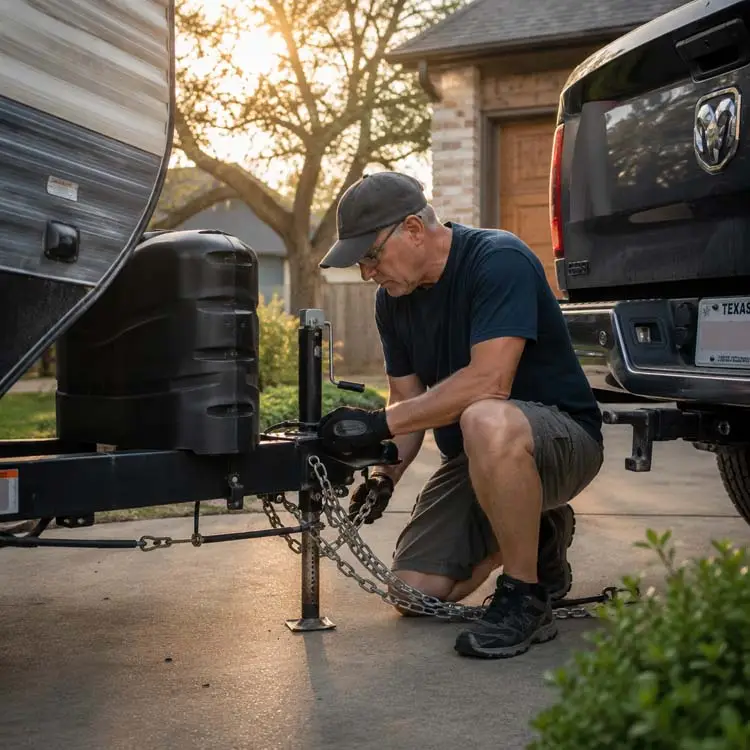
There’s a moment almost every RV owner reaches sooner or later. You’re standing beside your travel trailer getting ready to leave for the campground you’ve visited dozens of times before. The route is familiar. The campground is close to home. You’ve made the trip without problems for years.
Then you watch a YouTube video showing a detailed towing checklist that looks long enough to prepare a commercial aircraft for takeoff.
Check tire pressures.
Inspect wheel bearings.
Verify hitch height.
Check trailer brakes.
Test breakaway switch.
Torque lug nuts.
Inspect safety chains.
Confirm weight distribution.
And suddenly you start wondering…
“Do I really need to do all of this every single time?”
It’s a fair question. After all, many experienced RV owners tow their trailers for years without a single incident. When your routine feels comfortable and familiar, it’s easy to believe the risks only happen to someone else.
Until they don’t.
The truth is, most towing accidents don’t happen because someone lacked experience. They happen because familiarity quietly replaced consistency.
The Dangerous Confidence That Comes With Familiarity
One of the biggest misconceptions in RV towing is the belief that short trips are somehow safer than long ones.
In reality, many trailer accidents occur within a relatively short distance from home because drivers lower their guard. The mindset changes. You stop thinking about the drive because you already know every turn, every stoplight, and every entrance into the campground.
That confidence can slowly become complacency.
You skip checking the hitch because it “looked fine last time.”
You assume the trailer brakes still work properly because they did two weekends ago.
You don’t inspect the tires because they’ve always held air before.
Unfortunately, mechanical failures rarely send warnings ahead of time.
A tire blowout doesn’t care whether you’re traveling 30 minutes or 300 miles. A loose hitch component can fail on the shortest drive just as easily as on a cross-country trip.
That’s why seasoned RV owners often say the same thing:
“Your routine is what protects you when life gets unpredictable.”
“If It Isn’t Broke, Don’t Fix It” Sounds Good Until Something Breaks
There’s wisdom in that old saying, but towing a travel trailer is different than leaving well enough alone around the house.
Safe towing isn’t about fixing things that aren’t broken. It’s about catching problems before they become dangerous.
Many trailer issues develop slowly and silently.
Wheel bearings gradually wear down.
Trailer tires age long before the tread disappears.
Brake wiring corrodes over time.
Suspension bolts loosen little by little.
Weight distribution changes when gear gets rearranged.
Everything may appear perfectly normal right up until the moment it isn’t.
That’s why experienced RV travelers don’t rely solely on luck or past success. They rely on habits.
The Short Checklist That Matters Most
Now let’s be honest. Not every towing checklist online is realistic for the average weekend camper.
Some YouTube creators build elaborate inspection routines because content creation rewards detail and complexity. That doesn’t mean you need a 45-minute pre-trip process every time you leave your driveway.
But there are several non-negotiable checks every travel trailer owner should perform before towing.
Not because you’re inexperienced.
Because towing safely means respecting the weight and forces involved every single time you pull onto the road.
Before every trip, make sure:
Your Hitch Is Properly Secured
This sounds obvious, yet improperly coupled trailers remain one of the most common towing problems. Always visually confirm the coupler is fully seated and locked onto the hitch ball.
Don’t simply assume.
Actually look at it.
Many experienced RV owners also perform a simple tug test before leaving.
Safety Chains Are Correctly Connected
Chains should cross underneath the coupler rather than hang straight down. If the coupler ever disconnects, crossed chains can help cradle the tongue instead of allowing it to strike the pavement.
It takes seconds to check and could prevent catastrophic damage.

Trailer Lights and Brake Signals Work
A burned-out light may seem minor until another driver fails to see your braking intentions.
Check running lights, turn signals, and brake lights before every trip. It’s one of the fastest safety checks you can perform.
Tire Pressure Is Correct
Improper tire pressure is one of the leading causes of trailer tire failures.
Underinflated trailer tires generate excessive heat, especially during warmer weather. Even a short drive can become dangerous if a weakened tire overheats.
Many RV tires age out before they wear out. If your trailer tires are more than five or six years old, inspect them carefully for cracking or sidewall damage.
Trailer Brakes Are Working Properly
If you have electric trailer brakes, test them before pulling away.
A properly adjusted brake controller can dramatically improve stopping distance and control during emergency braking situations.
According to towing safety organizations, properly functioning trailer brakes significantly reduce stopping distances and improve stability during sudden maneuvers.
That matters more than many RV owners realize.
Experience Is Valuable — But Habits Are Safer
One reason experienced RV owners sometimes skip checklists is because towing becomes second nature over time.
You know how your trailer feels behind the truck. You know how it tracks through curves. You know how it brakes.
That experience absolutely matters.
But routine inspections matter too.
Professional pilots use checklists before every flight despite thousands of hours of experience. Experienced truck drivers inspect their equipment daily. NASCAR crews inspect race cars that performed perfectly the day before.
Not because they expect failure every time.
Because consistency prevents small problems from becoming major ones.
The Cost of Skipping Simple Checks
Most pre-trip inspections take less than ten minutes.
That’s a small investment compared to:
- A damaged trailer
- A roadside tire blowout
- A destroyed wheel bearing
- A detached trailer
- A preventable accident
Even minor towing incidents can quickly cost thousands of dollars in repairs.
More importantly, unsafe towing risks lives — yours, your passengers, and everyone sharing the road with you.

Confidence and Caution Can Exist Together
You don’t need to become fearful every time you tow your travel trailer.
You also don’t need to overcomplicate the process.
Safe towing lives somewhere in the middle.
The goal isn’t perfection. The goal is consistency.
A calm, repeatable routine creates confidence because you know you’ve covered the basics before leaving home.
And honestly, the peace of mind alone is worth it.
There’s something relaxing about pulling onto the highway knowing your trailer is ready for the road ahead.
Final Thoughts
If you’ve towed your travel trailer for years without incident, that’s something to appreciate. Experience matters. Familiarity helps. Confidence behind the wheel comes with time.
But safe towing habits are not about correcting past mistakes. They’re about protecting your future travels.
The campground may only be thirty minutes away. The route may feel routine. The trailer may have handled flawlessly for years.
None of those things guarantee the next trip.
That’s why even seasoned RV owners should slow down long enough to check the essentials before every tow.
Not because something is broken.
Because staying safe is easier than recovering from preventable problems later.
And sometimes the smartest thing an experienced camper can say is:
“I’ve been lucky long enough to know I shouldn’t depend on luck.”
YOU MAY ALSO LIKE:
Ankle-Biters on Board: Navigating RV Life with Kids
Navigating RV Floor Plans Like A Pro!




Leave a Reply