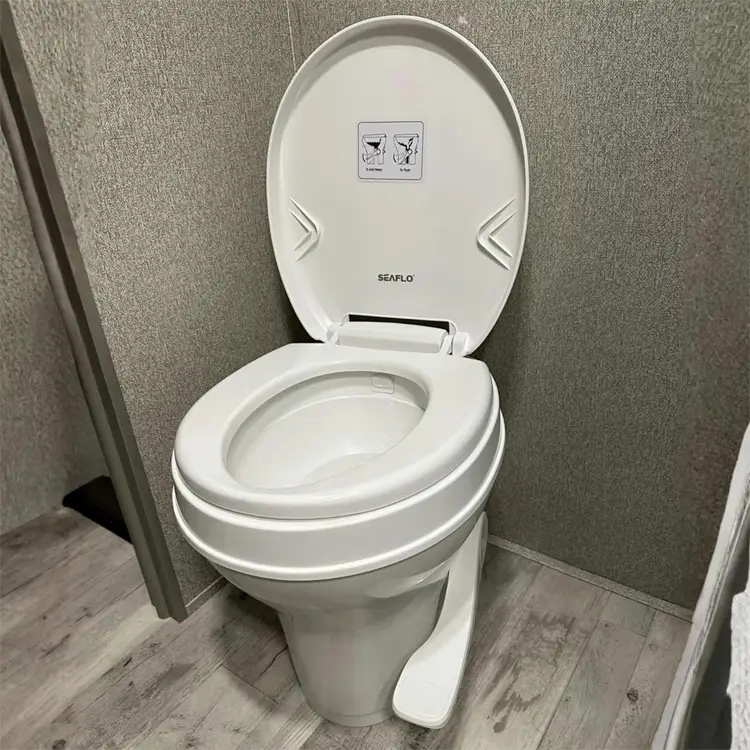
There are few things more unsettling in an RV than stepping into the bathroom and realizing the toilet is leaking at the base. It’s not just unpleasant—it’s a warning sign. Left unchecked, a small leak can quietly rot subflooring, create lingering odors, and turn a simple repair into a costly rebuild.
The good news? An RV toilet leaking at the base is one of the most common RV plumbing issues—and thankfully, one of the most manageable DIY repairs. In most cases, the culprit is a worn or damaged flange gasket located beneath the toilet. With a bit of preparation and a calm approach, this repair is well within reach for most RV owners.
Let’s walk through exactly how to fix it, what to look for, and how to prevent the problem from coming back.
Why RV Toilets Leak at the Base
Unlike residential toilets that rely on wax rings, RV toilets use foam or rubber flange gaskets. These gaskets are designed to handle movement, vibration, and travel—but over time, they compress, dry out, or shift.
Industry repair data suggests over 70% of RV toilet base leaks are caused by a failing gasket, not a cracked toilet or tank. That’s important, because it means the solution is usually inexpensive and straightforward.
Common causes include:
- Normal gasket wear over time
- Loose mounting bolts after miles of travel
- Slight floor flex in older or heavily used RVs
- Improper alignment during a prior installation
What To Do If Your RV Toilet Is Leaking at the Base
The only reliable way to confirm the issue is to remove the toilet and inspect what’s underneath. That sounds intimidating—but in reality, it’s a controlled, step-by-step process.

Removing the RV Toilet
Start by dumping and thoroughly rinsing the black tank. A simple trick to reduce odors during removal is adding two capfuls of liquid fabric softener to the tank after dumping—it helps neutralize lingering smells.
Before lifting anything, prepare a safe place to set the toilet once it’s removed. Cardboard layered with old towels works well and protects your RV’s flooring and fixtures.
Turn off the city water connection or water pump, then flush the toilet to release any remaining pressure in the line. Disconnect the freshwater supply from the back of the toilet—this is where a small mirror and headlamp really shine.
Next, remove the two mounting bolts at the base of the toilet. Lift the toilet straight up, keeping it level, and place it carefully in your prepared area. Take a moment here—this is where dropped hardware can accidentally find its way into the black tank if you’re not careful.

Inspecting the Floor Flange and Gasket
With the toilet removed, the problem usually reveals itself quickly.
Start with the floor flange. Look for cracks, warping, or movement. A flange that isn’t firmly secured to the floor or properly bonded to the waste pipe can allow leaks even with a new gasket. If you find structural damage here, repairs may be required before reinstalling the toilet—or a visit to an RV service center may be wise.
If the flange looks solid, the gasket is almost certainly the issue. Even if the flange is damaged, always replace the gasket whenever the toilet is removed. RV gaskets are inexpensive, and reusing an old one is a gamble that rarely pays off.
Be sure to purchase the correct foam or rubber gasket for your toilet model—this is not the place for a residential wax ring. The new gasket should be mounted on the base of the toilet, not on the floor flange.
Reinstalling the RV Toilet the Right Way
Careful alignment is key to preventing future leaks. Slowly lower the toilet over the T-bolts, making sure the mounting holes line up cleanly. Rushing this step can tear the new gasket before the toilet ever touches the floor.
Secure the toilet using the mounting nuts, tightening evenly and gently. Over-tightening is one of the most common mistakes—it can crack the toilet base or distort the gasket. Once snug, sit on the toilet and check for movement. If there’s any wobble, tighten just a bit more.
Reconnect the freshwater line carefully, avoiding cross-threading or excessive force. Turn the water back on, flush several times, and inspect the base closely. A dry floor and steady footing mean the repair was successful.
At this point, the leak should be gone—for good.

Must-Have Tools for RV Plumbing Repairs
RV plumbing demands a slightly different toolkit than household repairs. Tight spaces, lightweight materials, and constant motion mean precision matters.
A PEX tubing cutter and crimping tool are invaluable since most RVs use PEX lines. Having spare PEX tubing, couplings, and fittings on hand allows for quick, reliable repairs without disturbing aging connections that may fail once touched.
Pipe clamps and plugs can save the day when a leak appears mid-trip, allowing you to isolate a problem without shutting down the entire water system. Teflon tape and pipe sealant are essential for threaded connections, especially in an RV where vibration can loosen fittings over time. Using both together creates a more durable seal.
Plumber’s grease helps restore smooth operation to stiff faucet handles while also improving sealing surfaces. Colored paper towels make leak detection easier—water shows up instantly. A small wire brush ensures reused threaded fittings seal properly.
Basic tools like a six-inch adjustable wrench, compact Channellock pliers, and a reliable headlamp round out a kit that’s small, lightweight, and incredibly effective.
The golden rule of RV plumbing applies here: the more you disturb, the more you risk creating new problems. Replace only what’s necessary, keep fittings minimal, and do the job carefully the first time.
Final Thoughts
An RV toilet leaking at the base can feel urgent—and it should. Water damage in an RV spreads quietly and expensively. Fortunately, this is one of those repairs where a little knowledge goes a long way.
By addressing the issue early, replacing the gasket correctly, and reinstalling the toilet with care, you can stop the leak before it becomes a much larger problem. Better yet, you gain confidence in your ability to handle essential RV maintenance wherever the road takes you.
A dry floor, a solid toilet, and peace of mind are well worth the effort.
YOU MAY ALSO LIKE:
The Grand Canyons Beyond Arizona




Leave a Reply