
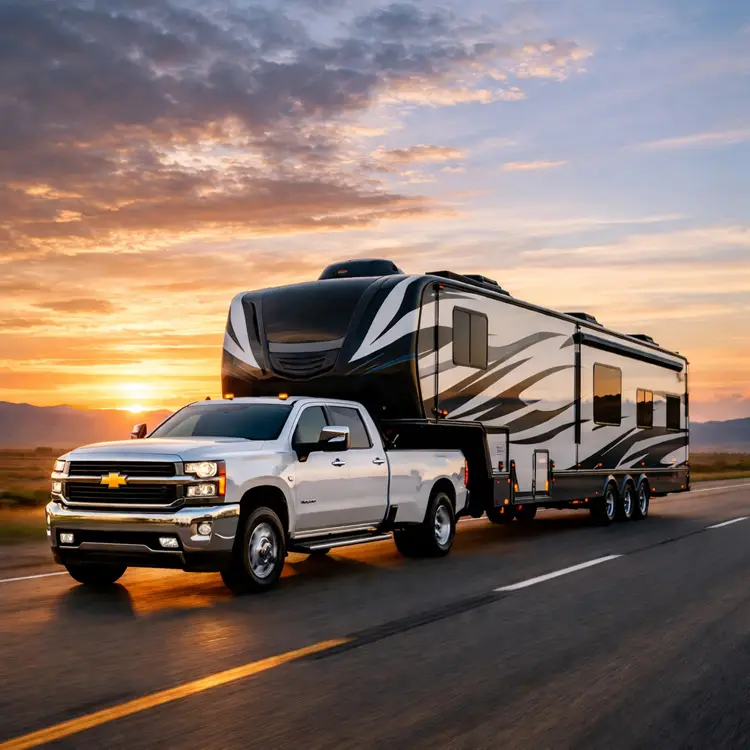
When we were both preparing for retirement, the conversations weren’t just about dates on a calendar or places we wanted to see. They were about what life would look like next—and how we wanted to travel through it. One decision led quickly to another. We sold our motorhome and committed to a fifth-wheel toy hauler, knowing it would give us flexibility, storage, and freedom for the long haul.
That decision, however, was only the beginning.
Once the fifth wheel was chosen, the real research started. I spent countless hours digging through owner forums, manufacturer specs, maintenance histories, and long-term reliability reports. Slowly, dozens of options were eliminated until only a couple of fifth-wheel models remained. But buying the trailer was just step one. The more critical question followed immediately:
What truck is truly capable of towing a heavy fifth-wheel safely, comfortably, and reliably—today and years from now?
Gas or diesel?
¾-ton or 1-ton?
Dually or single rear wheel?
Long bed or short bed?
If you’ve been asking yourself the same questions, you’re not alone—and you’re in the right place.
Choosing the Right Truck for a Fifth-Wheel RV
With so many trucks on the market, choosing the right one can feel overwhelming. Payload ratings, tow capacities, horsepower numbers, torque curves, axle ratios—it’s a language of numbers that can confuse even experienced RVers.
Here’s the truth many people discover too late: towing a fifth wheel is not the same as towing a travel trailer or a boat. Fifth wheels put a significant amount of weight directly in the truck bed. That pin weight alone often exceeds what many gas trucks can safely handle, especially as fifth-wheel sizes continue to grow.
If your fifth wheel approaches or exceeds 18,000 pounds loaded, the choice becomes much clearer. A gas truck may technically move it, but that doesn’t mean it should.
Understanding Gas vs. Diesel Engines
A gas truck runs on gasoline using spark-ignition combustion. Spark plugs ignite a fuel-air mixture, creating power. Gas engines often rev higher, produce strong horsepower numbers, and work well for lighter towing or daily driving.
A diesel engine operates very differently. It relies on compression ignition—highly pressurized air ignites the fuel without spark plugs. That fundamental difference changes everything: performance, longevity, fuel efficiency, and towing capability.
This distinction matters far more than most buyers realize.
Why Diesel Trucks Dominate Fifth-Wheel Towing
When towing heavy loads, diesel trucks consistently outperform gas trucks in ways that directly affect safety, comfort, and long-term cost.
Diesel engines generate significantly more torque at lower RPMs. Torque—not horsepower—is what moves heavy trailers from a dead stop, holds speed on long grades, and reduces strain on the drivetrain. A diesel doesn’t have to work as hard, and that shows in real-world towing performance.
Fuel efficiency is another major advantage. On average, diesel trucks deliver 25–30% better fuel efficiency under load compared to gas trucks. While diesel fuel often costs more per gallon, fewer fuel stops and better mileage help offset that difference, especially for long-distance travelers.
Longevity and resale value also favor diesel. It’s common to see diesel trucks surpass 300,000 miles with proper maintenance. Gas engines, by comparison, often reach the end of their reliable lifespan closer to 200,000 miles. That durability translates into stronger resale value years down the road.
Why Many RVers Regret Buying a Gas Truck
Gas trucks can be excellent daily drivers, but when paired with a heavy fifth wheel, their limitations become obvious.
They produce less torque, which means more strain when climbing grades or pulling through wind and uneven terrain. Gas engines also operate at higher RPMs, leading to increased wear when towing heavy loads for extended periods.
Fuel efficiency drops dramatically under load, and while maintenance costs for gas engines may appear lower on paper, the increased workload can shorten engine life when used beyond its ideal design.
Data backs this up. According to industry towing comparisons, the same truck model equipped with a diesel engine can often tow 5,000 pounds or more than its gas counterpart. That margin matters when safety, braking distance, and drivetrain longevity are on the line.
Diesel Maintenance: Myth vs. Reality
Yes, diesel trucks have higher upfront costs, and some parts are more expensive. Not every repair shop specializes in diesel engines. However, diesel engines generally require less frequent maintenance because they operate at lower RPMs and lack many wear-prone components found in gas engines, such as spark plugs and ignition systems.
When properly maintained, diesel engines often cost less per mile over the life of the truck—especially when used for towing, which is exactly what they’re built for.
¾-Ton or 1-Ton? Dually or Single Rear Wheel?
Once the diesel decision was made, we faced the next round of choices.
A ¾-ton truck may handle lighter fifth wheels, but payload limits can disappear quickly once pin weight, passengers, hitch, and gear are added. A 1-ton truck offers significantly more payload capacity, giving you a safety buffer that matters far more than many realize.
Dual rear wheels provide extra stability and higher payload ratings, but they also add width and complexity. For our needs, we chose a single rear wheel configuration to keep daily usability simple—especially when navigating fuel stations and automatic car washes.
Long Bed vs. Short Bed: A Practical Decision
Bed length affects turning clearance and hitch options. Long beds offer more flexibility and fewer concerns with cab-to-trailer contact. Short beds can work well with the right hitch, but they often require additional planning.
We ultimately chose a long-bed configuration, prioritizing ease of towing and peace of mind over compact convenience.

Our Final Choice—and Why
In the end, we selected a new 2024 Chevrolet Silverado 3500 HD (SRW), powered by the proven 6.6-liter Duramax diesel, paired with a long bed and single rear wheels. This wasn’t about buying the biggest truck on the lot—it was about choosing the right truck for our lifestyle, our fifth-wheel toy hauler, and the miles we knew were ahead of us.
Two years later, that decision has proven itself. We’ve logged 22,000 completely care-free miles, towing with confidence through changing terrain, long highway days, and real-world travel conditions. The stability, torque, and overall driving comfort have reinforced what the research suggested from the beginning: a properly matched one-ton diesel doesn’t just tow—it transforms the entire RV experience.
Pairing the truck with smart fuel strategies, including the Open Roads App, further simplified long-distance travel, turning what could have been stressful fuel stops into predictable, budget-friendly parts of the journey. Looking back, the choice wasn’t just practical—it was one of the best long-term decisions we made as we stepped into this next chapter of travel.
Final Thoughts
Choosing the right truck for towing a fifth-wheel RV isn’t about brand loyalty or chasing horsepower numbers. It’s about understanding how weight, torque, fuel efficiency, and longevity work together in real-world conditions.
For us, diesel wasn’t just the better option—it was the only option that truly made sense. The confidence that comes from knowing your truck is built for the job changes the entire towing experience.
How did you decide? And if you’re still deciding, hopefully this helps you make the choice you won’t second-guess miles down the road.
YOU MAY ALSO LIKE:
Open Roads App & Innovative Toll Solution
Christmas Eve Santa Sleigh Story



Leave a Reply