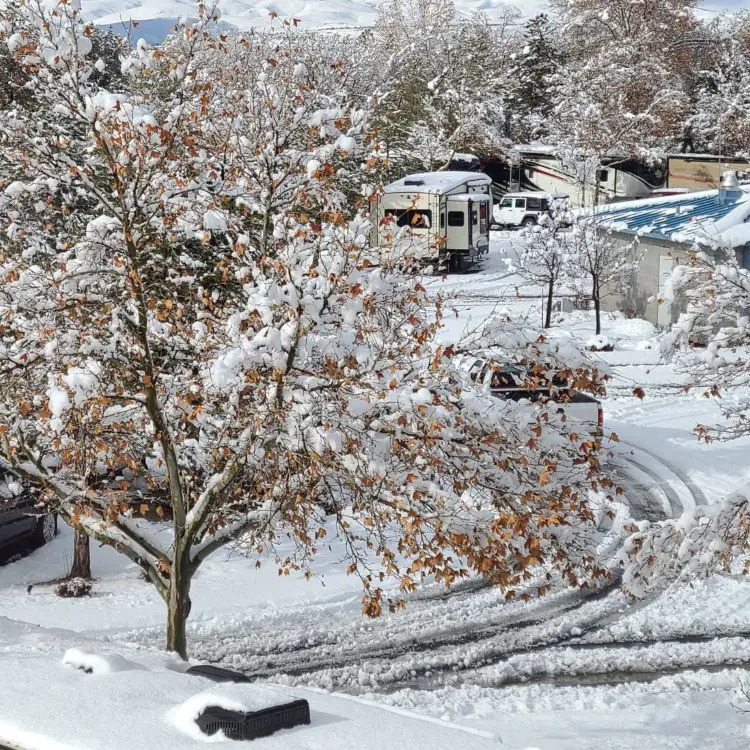
Before Winter Arrives, Give Your RV the Attention It Deserves
The first hard freeze has a way of changing priorities.
One week you’re talking about where to camp next. The next, you’re watching the forecast, wondering if tonight will be the night temperatures dip below freezing.
Over the years we’ve learned something that every experienced RVer eventually discovers.
Winter doesn’t damage an RV overnight.
It damages the little things you didn’t notice before winter arrived.
A tiny roof crack becomes a leak. A weak battery refuses to crank the engine in the spring. A forgotten water line freezes and splits while your camper quietly waits for warmer weather.
After more than fifty years of camping—from tents and pop-ups to travel trailers, motorhomes, and now our fifth-wheel toy hauler—we’ve learned that a few hours of preventive maintenance each fall can save weeks of repairs later.
If your camping season is winding down, here’s the checklist we rely on before putting our RV away for winter.

Start with the Roof
If there is one place that deserves your attention before winter, it’s the roof.
Snow may look beautiful sitting on top of your camper, but water has an incredible ability to find the smallest opening.
Wash the roof so cracks and worn sealant are easy to spot. Carefully inspect around:
- Roof vents
- Skylights
- Air conditioner
- Plumbing vents
- Solar panel mounts
- Ladder attachments
- Front and rear roof seams
If sealant is beginning to separate or crack, repair it before freezing temperatures arrive.
Waiting until spring often means repairing water damage instead of preventing it.
Inspect Every Exterior Seal
Rubber seals work hard throughout the year.
Summer heat dries them out.
Autumn temperature swings make them shrink.
Winter allows moisture to sneak inside.
Walk completely around your RV and inspect every window, compartment door, slide-out, and entry door.
Replace damaged weather stripping and touch up deteriorating sealant before moisture has an opportunity to work its way into the walls.
A tube of sealant costs far less than replacing rotten wall framing.
Watch for Hidden Moisture
One lesson we’ve learned is that leaks rarely announce themselves.
Sometimes all you’ll notice is a faint musty smell.
Other times the windows begin collecting more condensation than usual.
Pay attention to signs like:
- Foggy windows
- Water stains
- Soft wall panels
- Bubbling fiberglass
- Musty odors
- Delamination
A quality pinless RV moisture meter can detect hidden moisture before visible damage appears, making it one of the smartest diagnostic tools you can own.

Winterize the Plumbing System
Frozen plumbing remains one of the most expensive mistakes RV owners make.
If your RV won’t be used in freezing temperatures, winterize the water system before the first hard freeze.
That includes:
- Drain the fresh water tank.
- Empty both holding tanks.
- Bypass the water heater.
- Remove water from every supply line.
- Pump RV-safe antifreeze through the plumbing.
- Protect outdoor showers, faucets, and low-point drains.
Never use automotive antifreeze inside an RV plumbing system.
Only non-toxic RV antifreeze is designed for potable water systems.
Give Your Battery Some Attention
Cold weather is tough on batteries.
A battery stored partially discharged may not survive the winter.
Before storing your RV:
- Clean battery terminals.
- Check electrolyte levels on serviceable batteries.
- Fully charge the battery.
- Disconnect parasitic loads.
- Use a quality battery maintainer if power is available.
You’ll appreciate this simple step the first warm weekend of spring.
Check Tires Before They Sit
RV tires naturally lose air during storage.
Underinflated tires can develop flat spots and place unnecessary stress on the sidewalls.
Before storing:
- Inflate to manufacturer specifications.
- Inspect for weather cracking.
- Cover tires from direct sunlight.
- Move the RV occasionally if practical.
Proper tire care extends tire life and helps ensure they’re ready for your next adventure.
Protect the Interior
Winter isn’t just hard on the outside of an RV.
Interior moisture can quietly create mold, mildew, and unpleasant odors.
Before closing the door for the season:
- Remove food.
- Leave cabinet doors slightly open.
- Defrost and prop open the refrigerator.
- Place moisture absorbers inside.
- Open interior blinds to reduce window condensation.
- Vacuum thoroughly.
A clean, dry RV is far more enjoyable to reopen in the spring.
Wash and Wax Before Storage
It can be tempting to skip washing your RV when camping season ends.
Don’t.
Road salt, bugs, tree sap, and dirt continue damaging the finish all winter.
A thorough wash followed by a quality coat of wax protects gel coat, decals, and painted surfaces until spring returns.
It’s much easier to maintain a clean finish than restore an oxidized one.
Check In Throughout the Winter
Even a properly winterized RV deserves an occasional visit.
Every few weeks, take a quick walk around.
Look for:
- Snow accumulation
- Ice dams
- Water intrusion
- Tire pressure changes
- Rodent activity
- Battery condition
A fifteen-minute inspection can prevent an expensive surprise months later.

Winter Maintenance Is Really Spring Preparation
I’ve come to believe that winter maintenance isn’t about preparing for cold weather.
It’s about preparing for your next camping season.
Every seal you inspect, every battery you charge, every water line you protect, and every roof seam you repair is one less thing standing between you and your first trip of spring.
We’ve learned that lesson through decades of camping, and it’s one that’s paid for itself many times over.
When warmer weather finally arrives, we’d much rather be planning our next destination than spending those precious weekends repairing damage that could have been prevented.
A little work today keeps tomorrow focused where it belongs—on making memories down the next road.
Another Cooper Shortcut worth remembering.
Happy travels,
The Cooper Shortcut Camping Journey Trio 😊 PlusOne!
YOU MAY ALSO LIKE:




Leave a Reply