Your Complete Guide to RV Winter Camping Before, During, and After a Winter Storm
There are moments in RVing you’ll never forget.
One of mine happened after we had settled into bed for the night. Like we’ve done for decades, a fan hummed quietly in the bedroom. My bride, Vicky, and I can’t sleep without one. We raised our children with fans running in their bedrooms, and apparently, that tradition isn’t ending anytime soon.
Sometime during the night, I woke to something that immediately felt wrong.
The bedroom was cold. Really cold.
Then Vicky asked, “Why is it so cold in here?”
I jumped out of bed, turned off the fan, switched on the furnace, and hurried back under the covers. While waiting for warm air to reach the bedroom, curiosity got the better of me. I raised the window shade over the dresser.
That was a mistake.
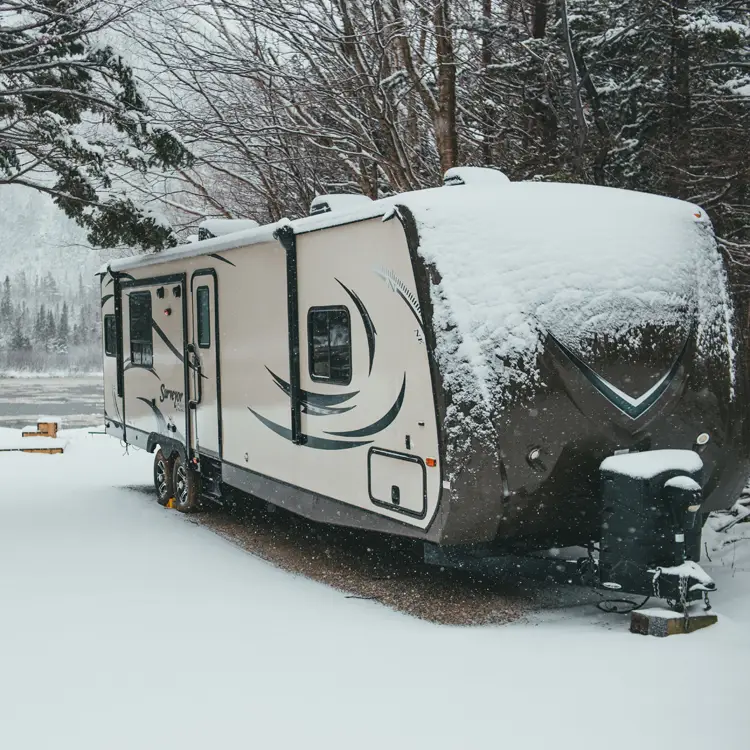
Outside sat nearly six inches of fresh snow.
I couldn’t believe it.
Most RVers don’t intentionally chase winter storms, but sometimes Mother Nature has different plans. Whether you’re full-time RVing, taking a late-season camping trip, or simply get caught by an unexpected cold front, knowing how to protect your RV from freezing temperatures can save thousands of dollars in repairs—not to mention make your camping trip much more comfortable.
Here’s what we’ve learned over 50-plus years of camping.
Before the Storm: Prepare Your RV Before Temperatures Drop
Winter weather rarely gives much warning. A forecast calling for 40°F during the day can easily become 18°F overnight.
The key is preparing before everything freezes.
Our fifth wheel is equipped with a heated wet bay, heat tape on vulnerable plumbing, insulated holding tanks, and additional freeze protection because we often travel well into the colder months. Even so, we still take extra precautions anytime temperatures are expected to remain below freezing.
Here are the steps we recommend.
Fill Your Fresh Water Tank
If overnight temperatures are expected to fall below about 20°F, disconnect your city water hose.
Instead:
- Fill your freshwater tank.
- Disconnect the hose.
- Drain the hose completely.
- Store it where it won’t freeze solid.
Using your onboard water system eliminates one of the biggest freeze risks.
One tip we’ve learned over the years is to avoid completely filling the freshwater tank. Leaving it around three-quarters full provides a little room for expansion if temperatures unexpectedly become severe.
Protect Your Holding Tanks
Frozen dump valves can ruin your day.
Before temperatures plunge:
- Add RV antifreeze to both gray and black tanks.
- Keep your dump valves closed.
- Wait until tanks are mostly full before dumping.
Leaving valves open during freezing weather allows small amounts of liquid to freeze inside the drain hose and create an icy blockage.
Keep Your Propane Tanks Full
Your furnace is your best defense against freezing pipes.
Never wait until the tanks are nearly empty.
If a storm is approaching, top them off beforehand. During prolonged cold weather, propane disappears much faster than many new RVers expect.
Cold Weather RV Supplies Worth Carrying
These are inexpensive items that can make an enormous difference when freezing weather arrives unexpectedly.
Reflectix Window Insulation
Reflectix helps reduce heat loss through RV windows and can be cut to fit in just a few minutes. We usually secure it with painter’s tape so it removes easily.
Foam Pipe Insulation
Any exposed plumbing underneath the RV should be insulated whenever possible.
Heat Tape
Heat tape protects vulnerable water lines and can prevent expensive plumbing repairs during extended cold spells.
Indoor-Safe Space Heater
If you’re plugged into shore power, an electric ceramic heater helps reduce propane consumption while keeping the living area comfortable.
If using any portable heater, always follow manufacturer safety guidelines and never leave it unattended.
Heated Blanket
A heated blanket uses very little electricity while making chilly evenings surprisingly comfortable.
RV Antifreeze
Always carry extra.
You’ll eventually need it.
Diesel Fuel Treatment
If your tow vehicle or motorhome has a diesel engine, winter anti-gel treatment should already be in the fuel tank before temperatures become extremely cold.

During the Storm: Stay Comfortable and Stay Put
When snow begins falling, your safest decision is often the simplest one.
Stay where you are.
Large RVs and fifth wheels don’t stop quickly on snow or black ice. Waiting another day is almost always cheaper than repairing collision damage.
While you’re waiting out the storm:
Dress in Layers
Avoid cotton whenever possible.
Wool and synthetic materials continue insulating even if they become damp from perspiration.
Let the Furnace Do Its Job
Many RV owners try saving propane by turning the furnace down too low.
Remember…
The furnace doesn’t just heat the living area.
On many RVs it also sends warm air into enclosed underbellies and utility compartments where plumbing is located.
That heat helps prevent frozen water lines.
Cook Something Warm
Cold weather is the perfect excuse to make comfort food.
The oven or slow cooker adds warmth inside the RV while filling it with wonderful smells.
Some family favorites include:
- Crockpot Chicken Noodle Soup
- Slow Cooker Hobo Dinner
- Skillet Garlic Butter Chicken Thighs
- Oatmeal Scotchies
Sometimes good food is just as important as a good furnace.
Use the Campground Bathhouse
If the campground restroom remains open, use it.
Every gallon you don’t send into your holding tanks is one less gallon that could freeze during extended cold weather.
Besides…
The walk provides just enough exercise to warm you up.
Monitor the Forecast
Winter storms change quickly.
Keep checking:
- Road conditions
- Wind advisories
- Ice warnings
- Campground notifications
A sunny morning doesn’t always mean it’s safe to travel.
After the Storm: Inspect Before You Pull Out
Once the snow stops, resist the urge to hitch up immediately.
Take a slow walk around your RV.
Look for:
- Frozen water lines
- Damaged hoses
- Ice around stabilizers
- Snow buildup on slide toppers
- Icicles hanging from the roof
- Frozen sewer connections
If your RV remained warm throughout the storm, congratulate yourself—you probably prevented a very expensive repair bill.
Then ask yourself one question:
What could I improve before the next cold snap?
Every winter camping experience teaches something new.
A Few Lessons We’ve Learned
Winter camping isn’t for everyone.
But if you’re prepared, it can be incredibly peaceful.
Snow-covered campgrounds are quieter.
Campfires seem warmer.
Hot coffee tastes even better.
And waking up to fresh snow outside your RV can become one of those memories you’ll talk about for years.
Preparation is what separates an unforgettable adventure from an expensive disaster.
Pack the right gear.
Watch the weather.
Trust your instincts.
If conditions become unsafe, don’t be afraid to stay an extra day.
The road will still be there tomorrow.
Final Thoughts
Some of our favorite camping memories happened when our plans changed unexpectedly. A surprise snowfall wasn’t on the itinerary, but it reminded us that RVing is as much about adapting as it is about traveling.
With a little preparation, freezing temperatures don’t have to end your adventure. They simply become another chapter in the story you’ll tell around future campfires.
After all, the best RV stories usually begin with, “You won’t believe what happened that morning…”
Happy travels,
The Cooper Shortcut Camping Journey Trio 😊 PlusOne!
YOU MAY ALSO LIKE:
Is Retiring in an RV Right for You?



Leave a Reply