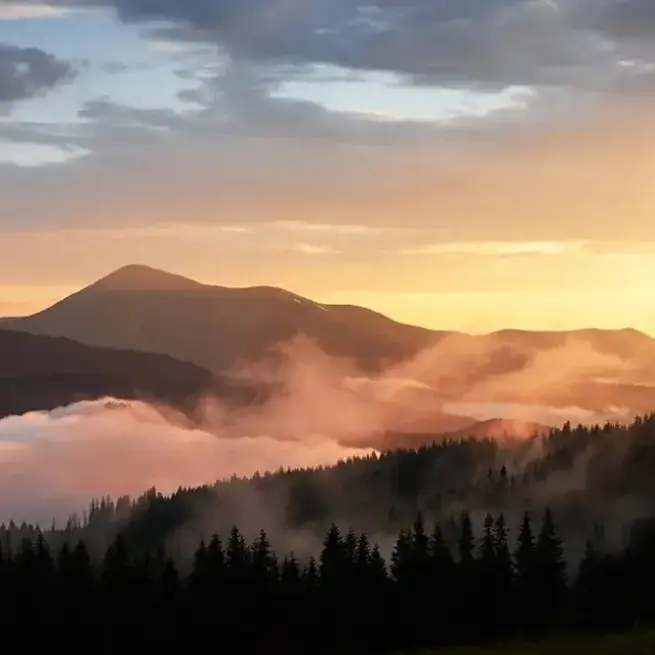
Few places have captured our hearts quite like the Great Smoky Mountains National Park. We’ve traveled through many beautiful corners of America, but every time we cross into the Smokies, it feels like coming home. Mist drifts through the mountain valleys each morning, rushing streams carve their way through ancient forests, and every winding road seems to reveal another unforgettable view.
Our most recent visit reminded us why the Great Smoky Mountains continues to be America’s most visited national park. Whether we were relaxing at our campsite, exploring scenic mountain roads on our Harley-Davidson Tri-Glide, hiking forest trails, or simply enjoying the quiet around an evening campfire, every day offered another reason to slow down and appreciate God’s remarkable creation.
If you’re planning your first visit—or your tenth—here’s what we’ve learned from our own adventures to help make your Smoky Mountain camping trip one you’ll never forget.

Why Camp in Great Smoky Mountains National Park?
There are beautiful national parks across America, but the Smokies offer something few others can match: incredible diversity packed into one destination.
More than 800 miles of hiking trails wind through old-growth forests, waterfalls, peaceful mountain streams, historic settlements, and panoramic overlooks. Wildlife is abundant, especially if you’re willing to start your mornings early.
The park also sits within easy driving distance of welcoming mountain communities like Gatlinburg, Pigeon Forge, Townsend, Bryson City, and Cherokee. That means you can spend your day immersed in nature and still enjoy dinner at a local restaurant before returning to your campsite.
For RV travelers, that’s the perfect combination.
Choosing the Best Smoky Mountain Campground
One of the first decisions you’ll make is where to stay. Fortunately, there isn’t a bad choice.
Elkmont Campground
If you’re looking for a central location with easy access to hiking trails, Elkmont is hard to beat. The nearby Little River creates a peaceful soundtrack throughout the day, while trails like Laurel Falls and the Little River Trail begin just minutes from your campsite.
This campground is especially popular during spring wildflower season and throughout October when fall colors reach their peak.
Cades Cove Campground
History and wildlife come together beautifully here.
The nearby 11-mile Cades Cove Loop Road passes preserved churches, log cabins, working mills, and open meadows where white-tailed deer, wild turkey, black bears, and other wildlife frequently appear.
We recommend arriving before sunrise if wildlife photography is on your list.
Cosby Campground
Cosby often feels quieter than many of the park’s better-known campgrounds.
Several excellent hiking trails begin nearby, making it an outstanding choice for campers who prefer spending their days on foot rather than driving from trailhead to trailhead.
Cataloochee Campground
Located on the North Carolina side of the park, Cataloochee rewards visitors willing to travel a little farther.
Its beautiful valley is famous for one unforgettable resident—elk.
Watching these magnificent animals grazing across the open meadows during sunrise or sunset is an experience you’ll likely remember long after returning home.
RV Camping in the Smokies
Although RV camping inside the national park is incredibly popular, it’s important to know what to expect before you arrive.
Unlike many commercial campgrounds, National Park Service campgrounds are designed to preserve the natural setting rather than provide resort-style amenities.
Inside the park you’ll find:
- Picnic tables
- Fire rings
- Restrooms
- Cold running water
- Dump stations at select campgrounds
What you won’t find are:
- Full hookups
- Electrical service
- Sewer hookups
- Shower facilities
If you’re traveling in a larger fifth-wheel or motorhome and prefer additional comforts, nearby private campgrounds around Gatlinburg, Pigeon Forge, Townsend, Sevierville, and Bryson City offer full-hookup sites, swimming pools, laundry facilities, Wi-Fi, and many other conveniences.
For longer stays, that’s often the option we recommend.
Reservations Fill Quickly
The popularity of Great Smoky Mountains National Park cannot be overstated.
Many campsites book months in advance, especially during:
- Spring wildflower season
- Summer vacations
- Peak fall foliage
- Holiday weekends
Reservations for frontcountry campgrounds typically open six months ahead of your arrival date.
If your preferred campground is already full, don’t give up.
Campers frequently cancel reservations, so checking availability regularly—or setting campsite availability alerts—can often pay off.
The Best Time to Visit the Smokies
Every season offers a different experience.
Spring
Wildflowers blanket the forest floor, waterfalls flow at their strongest, and wildlife becomes increasingly active.
Summer
Families fill the campgrounds while hikers enjoy long daylight hours. Expect warm afternoons and occasional mountain thunderstorms.
Fall
Autumn transforms the Smokies into one of America’s premier fall color destinations.
Mid-October through early November usually provides the most spectacular foliage, although higher elevations often change first.
Winter
Snow occasionally dusts the mountain peaks while crowds nearly disappear.
Although some roads may temporarily close because of snow or ice, winter offers a peaceful beauty many visitors never experience.

Wildlife Watching
Seeing wildlife is one of the highlights of every Smoky Mountain visit.
Common sightings include:
- White-tailed deer
- Wild turkey
- Black bears
- Elk
- Coyotes
- Numerous bird species
Remember that these are wild animals.
Always observe from a safe distance, never feed wildlife, and carry binoculars instead of trying to move closer.
Some of our favorite memories have simply been sitting quietly with a cup of coffee while watching nature wake up around us.
Scenic Drives You Shouldn’t Miss
Even if hiking isn’t your favorite activity, the Smokies offer unforgettable drives.
Our favorites include:
Newfound Gap Road (US-441)
The only paved highway crossing the national park connects Tennessee and North Carolina while climbing over 5,000 feet in elevation.
Nearly every overlook offers another photo opportunity.
Cades Cove Loop Road
History, wildlife, mountain scenery, and peaceful valleys combine into one of the park’s signature experiences.
Arrive early to avoid traffic and improve your chances of spotting wildlife.
Foothills Parkway
One of America’s most underrated scenic drives.
This beautifully engineered roadway offers sweeping mountain vistas without the congestion often found elsewhere inside the park.
Every visit reminds us why we continue coming back.

Experience the Smokies at Sunrise… or Sunset
If you ask us what has become our favorite experience in the Great Smoky Mountains, the answer comes without hesitation—a sunrise ride along the Foothills Parkway.
Before daylight breaks, the mountain air is surprisingly crisp, no matter the season. We always pack an extra jacket, and we’ll admit that the heated seats and hand grips on our Harley-Davidson Tri-Glide Ultra are appreciated more than ever during those early morning rides.
As the first hints of daylight begin to appear, the mountains seem to awaken slowly. Low clouds cling to the hillsides while ribbons of fog drift through the valleys below. We’ve found that this is also when wildlife is most active. Black bears often emerge along the roadside, and elk quietly graze in the open meadows before the day’s traffic begins.
Then comes the moment that’s difficult to describe.
As you wind through one curve after another, tiny droplets of mountain mist brush against your face while the first rays of sunshine begin piercing the clouds. The cool morning air gradually gives way to the warmth of the rising sun, and for a brief time it feels as though the mountains, the clouds, and the sunlight are all competing for the same stage.
It’s peaceful.
It’s exhilarating.
And if we’re being honest, it’s a feeling that’s hard to explain until you’ve experienced it yourself.
There are mornings when it almost seems as if the clouds and the rising sun are engaged in a friendly contest to see which one will claim the mountains first. Those few quiet moments are pure Smoky Mountain magic.
The Great Smoky Mountains truly earn their name during those quiet morning hours.
Not everyone enjoys an early alarm clock, and that’s perfectly okay.
If sunsets are more your style, make plans to arrive at Morton Overlook along U.S. Highway 441, just north of Newfound Gap. It offers one of the park’s most spectacular sunset views as the sun settles perfectly between layer after layer of mountain ridges stretching toward the horizon. Parking is extremely limited, so arriving 90 minutes to two hours before sunset is well worth the extra time.
Another excellent option is the Sunset View Overlook on the Foothills Parkway near Townsend. While it doesn’t receive the same attention as Morton Overlook, it offers broad west-facing views, easier parking, and a much quieter setting to watch the day come to a close.
Whether you choose sunrise or sunset, you’ll discover that the Great Smoky Mountains have a way of slowing life down—and reminding you why you came in the first place.
Hiking for Every Experience Level
You don’t have to be an experienced backpacker to enjoy the Smokies.
Popular hikes include:
- Laurel Falls
- Kuwohi Observation Tower (formerly Clingmans Dome)
- Alum Cave Trail
- Abrams Falls
- Deep Creek Waterfalls
- Little River Trail
Each offers something unique, whether you’re looking for waterfalls, mountain views, historic sites, or peaceful forest walks.
A Few Helpful Tips Before You Go
A little preparation makes every trip more enjoyable.
- Download maps before entering the park.
- Cell service can be unreliable.
- Pack layers, even during summer.
- Start popular hikes early.
- Carry plenty of water.
- Keep food properly stored at your campsite.
- Respect wildlife and leave no trace.
Simple planning allows you to spend more time enjoying the mountains and less time solving unexpected problems.
Beyond the National Park
The Smokies are surrounded by wonderful communities worth exploring.
Gatlinburg offers restaurants, attractions, and shopping.
Pigeon Forge features family entertainment, museums, and dinner shows.
Bryson City provides a quieter mountain-town atmosphere with easy access to outdoor adventures.
Cherokee offers Native American history and cultural experiences.
Each destination adds something different to your Smoky Mountain vacation.
Final Thoughts
Every camping trip leaves behind memories, but some places stay with you long after you’ve unpacked the RV.
For us, the Great Smoky Mountains is one of those places.
It’s where quiet mornings beside rushing streams become treasured memories. It’s where winding mountain roads lead to breathtaking overlooks, wildlife appears when you least expect it, and evenings around a campfire remind you that life’s greatest pleasures are often its simplest.
Whether you’re exploring the park for the first time or returning for another adventure, the Smokies have a remarkable way of making every visit feel new.
If you’ve been thinking about planning a Great Smoky Mountains camping trip, don’t wait too long. America’s most visited national park continues to inspire millions of visitors every year—and after spending time there yourself, you’ll understand exactly why.
Happy travels,
The Cooper Shortcut Camping Journey Trio 😊 PlusOne!
YOU MAY ALSO LIKE:
Michigan’s Unmissable Summer Spots with a Winter Twist


Leave a Reply