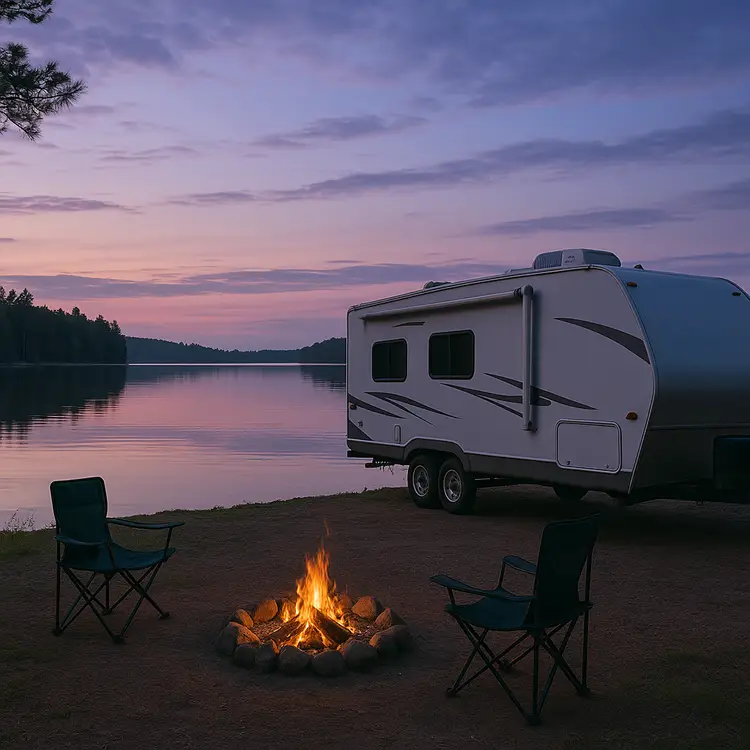
There’s something undeniably freeing about pulling your RV off the beaten path and settling in under a canopy of stars, far from noisy campgrounds and crowded parks. If that sounds like your kind of adventure, then boondocking in Michigan might just be the answer to your outdoor dreams. But where can you legally do it, is it safe, and what should you know before setting up camp?
With over 4 million acres of state forests, national forestlands that hug the Great Lakes, and wilderness areas so remote you might forget what day it is—Michigan is quietly one of the best states for RVers looking to unplug, unwind, and boondock in true backcountry fashion. Let’s explore the possibilities, the rules, and the insider tips that can turn your next RV trip into a memorable off-grid getaway.

What Is Boondocking—And Can You Really Do It in Michigan?
Boondocking, often called dispersed camping, means camping without hookups or designated campsite infrastructure. In Michigan, the answer is a solid yes—boondocking is legal and welcomed on both state and federal public lands. In fact, Michigan is home to two national forests and dozens of state forest areas where free RV camping is allowed with only a few basic requirements.
The Huron–Manistee National Forests, covering over 978,000 acres across the Lower Peninsula, are prime spots for secluded stays just off scenic forest roads. Likewise, the Hiawatha National Forest and Ottawa National Forest in the Upper Peninsula offer some of the most peaceful lakeside camping experiences imaginable.
Michigan’s Department of Natural Resources (DNR) also allows free camping on state forest land, provided you’re more than a mile from a designated campground, stay no longer than 15 consecutive days, and display a simple free camp registration card on your site.
The Best Places to Boondock in Michigan (Without a Reservation)
Imagine waking up to the sound of Lake Superior’s waves gently lapping the shore or watching a misty sunrise from your RV nestled deep in the Manistee National Forest. That’s not a fantasy—that’s boondocking in Michigan.
Many seasoned RVers swear by the Green Road/Nordhouse Dunes area near Ludington. Just inland from Lake Michigan, this spot blends stunning dune landscapes with peaceful pine forests. Even better? You’re steps away from the beach, and it’s totally free.
Head further north and you’ll find the Mouth of the Two Hearted River, tucked along the Lake Superior shoreline in the Upper Peninsula. It’s rustic, remote, and ideal for those looking to trade cell signal for solitude. You’ll also find peaceful forest pull-offs along FR-3156 in the Hiawatha National Forest that offer level space, lake access, and pure quiet.
In the Lower Peninsula, Luzerne, Marzinski, and the various pull-offs scattered throughout the Manistee National Forest provide easier access for larger rigs and reliable cell service for those balancing work and wilderness.
Is Boondocking in Michigan Safe?
The short answer? Yes, absolutely.
Michigan’s public lands are considered very safe for RV camping. Most dispersed sites are peaceful, quiet, and far from urban distractions. Like anywhere, you should always follow basic safety protocols: let someone know your location, secure your valuables, keep wildlife at a respectful distance, and check fire restrictions with the local ranger station.
Cell service can be spotty in deep forest areas, especially in the Upper Peninsula. While that might be a dealbreaker for some, many RVers welcome the forced unplug. If you need coverage, scout areas with verified service ahead of time using apps like Campendium, iOverlander, or USFS Motor Vehicle Use Maps.
Essential Tips for a Great Boondocking Experience
Whether it’s your first time or your fiftieth, boondocking in Michigan rewards those who respect the land and prepare smartly. Plan to arrive during daylight so you can scout your spot safely. Bring everything you need—especially drinking water, waste management gear, and enough fuel or solar to power your setup for the length of your stay.
And remember: boondocking is a privilege. These public lands belong to all of us, and Leave No Trace principles aren’t just a suggestion—they’re essential. Pack it in, pack it out, and leave your campsite better than you found it.
Final Thoughts: Why Michigan Might Be the Best Boondocking State You Haven’t Tried Yet
Michigan isn’t always at the top of people’s RV destination lists—but maybe it should be. With its sprawling wilderness, quiet forest roads, pristine Great Lakes shoreline, and generous free camping rules, the Great Lakes State is a boondocker’s paradise waiting to be discovered.
So if you’re ready to trade reservations for freedom, hookups for campfires, and traffic noise for the call of loons at dusk, it might be time to point your RV toward Michigan. The road less traveled? It’s alive and well here—and it’s more beautiful than you imagined.
Happy travels,
The Cooper Shortcut Camping Journey Crew
YOU MAY ALSO LIKE:
Michigan’s Most Photographed Places
14 Must-Visit Places Near Sturgis



Leave a Reply